Exploring a Case Study on the Redesign of Learning Environments at Hillside First School Using Personalized Wall Art.
Summary
Hillside First School aimed to improve its setting by incorporating wall art that motivates students and encourages a passion for reading while reinforcing fundamental values such as Respect, Ambition and Perseverance through three main sections. A historical figures wall with inspiring quotes, a literary wall featuring famous books, and a values wall highlighting the school's core principles engagingly and cohesively. Adding these unified visual elements has successfully transformed the school environment into a space that inspires thoughtfulness, self-improvement and educational growth.
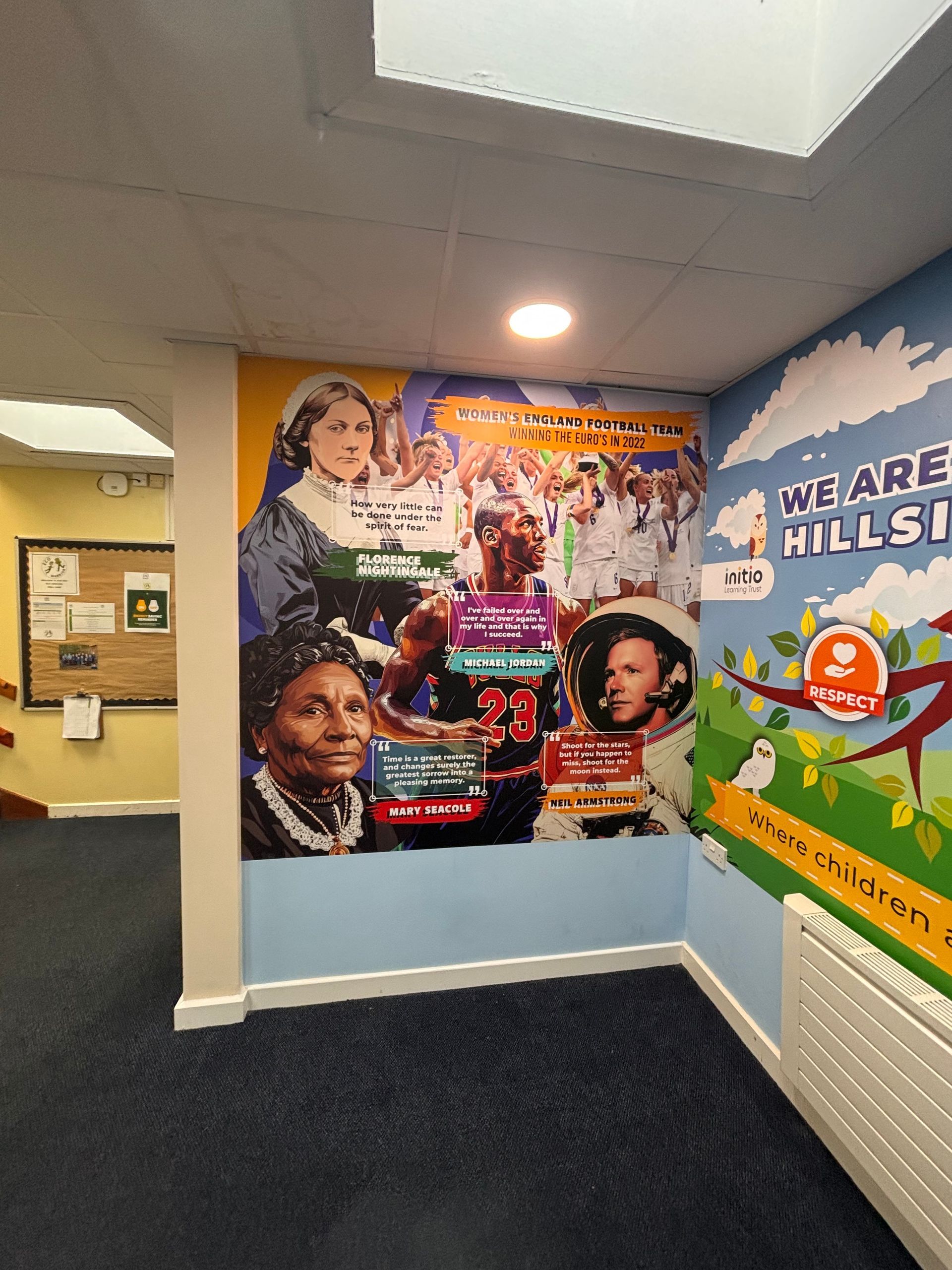
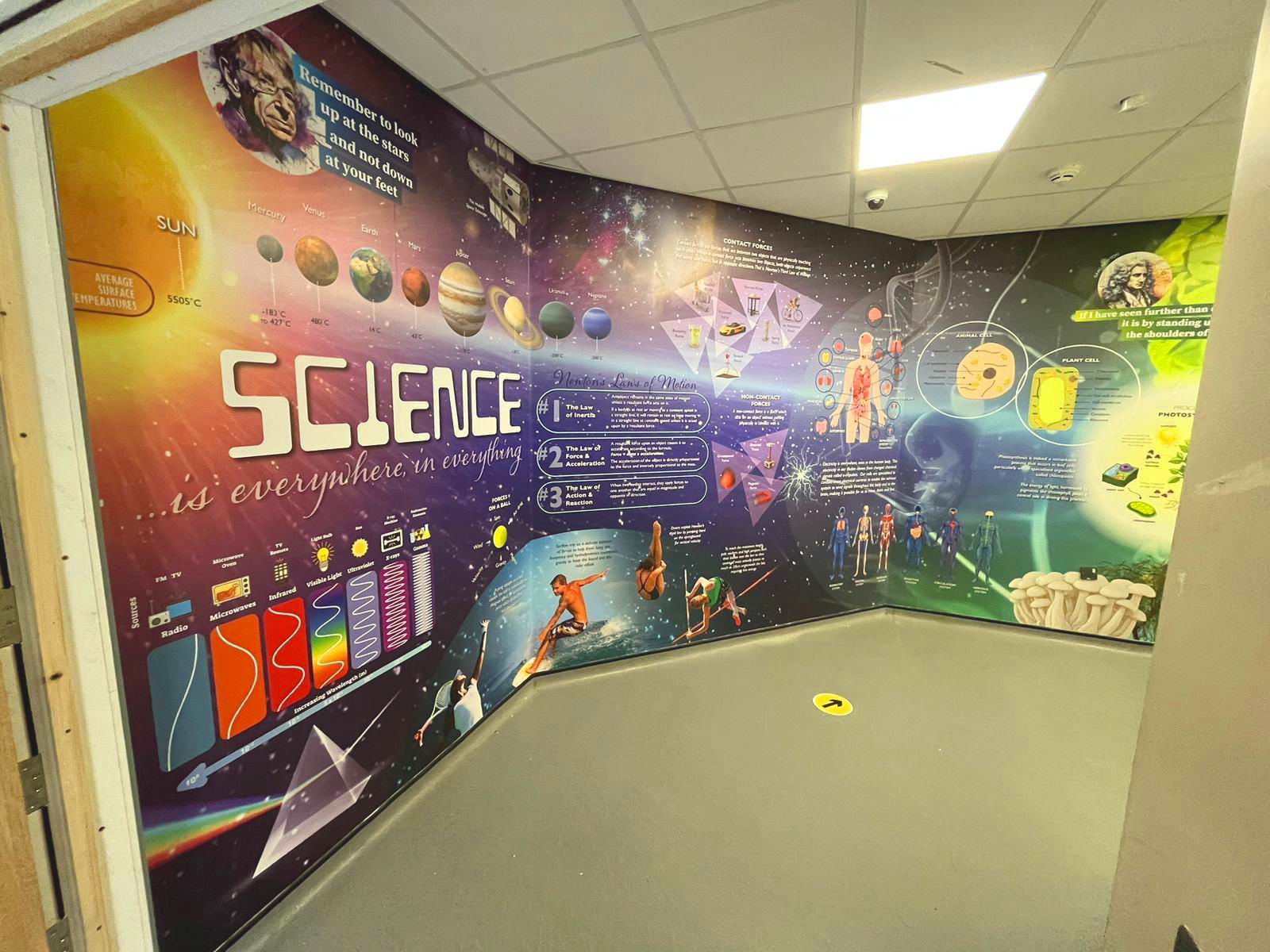
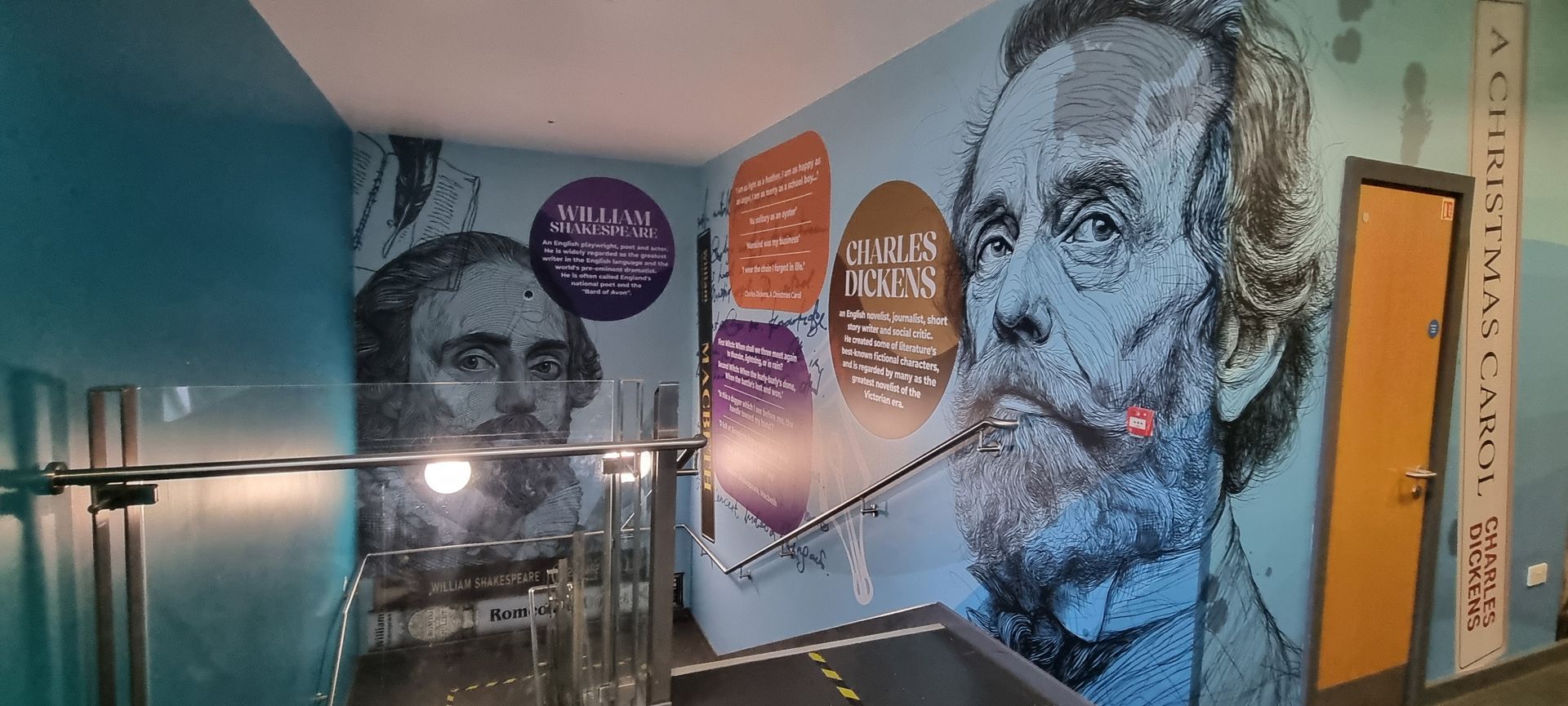
Section 1 of the room showcases a collection of inspiring individuals and their noteworthy quotes.
Goal
- In this part of the curriculum, students learn about individuals from the past and present who demonstrate determination and bravery while excelling in their endeavours. Each person is highlighted with a statement that resonates with the institution's values.
Characteristics of Design
- Notable Individuals Pointed Out: This content spotlights prominent figures such as Florence Nightingale and Mary Seacole. These individuals were specifically selected for their achievements and unwavering determination in their respective areas of expertise. Their stories serve as motivating examples for students to look up to and draw inspiration from.
Quotes:
- These quotes embody values like perseverance and bravery. For instance, Michael Jordan once said, “I’ve failed over and over again in my life, and that is why I succeed" This quote teaches students that tenacity in the face of setbacks leads to triumph.
- The vibrant and striking visuals and text arrangement were crafted to draw students in as they walk by, inspiring them to stop momentarily and engage with the messages on display.
Result
- The wall inspires students and encourages them to believe in their ability to achieve greatness through perseverance and a positive outlook. It reflects the school's goal of nurturing resilient individuals with diverse skills and firm ambitions.
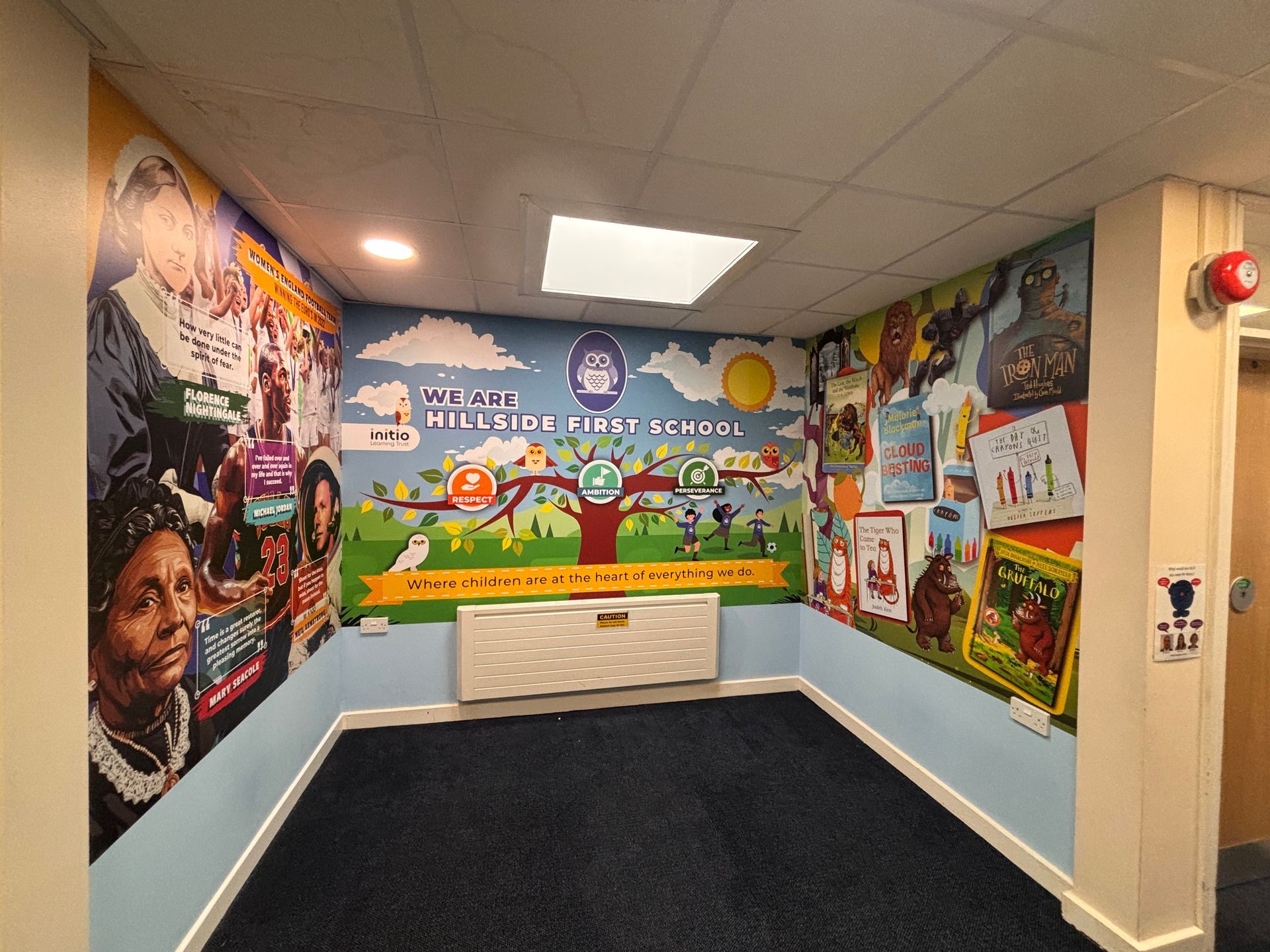
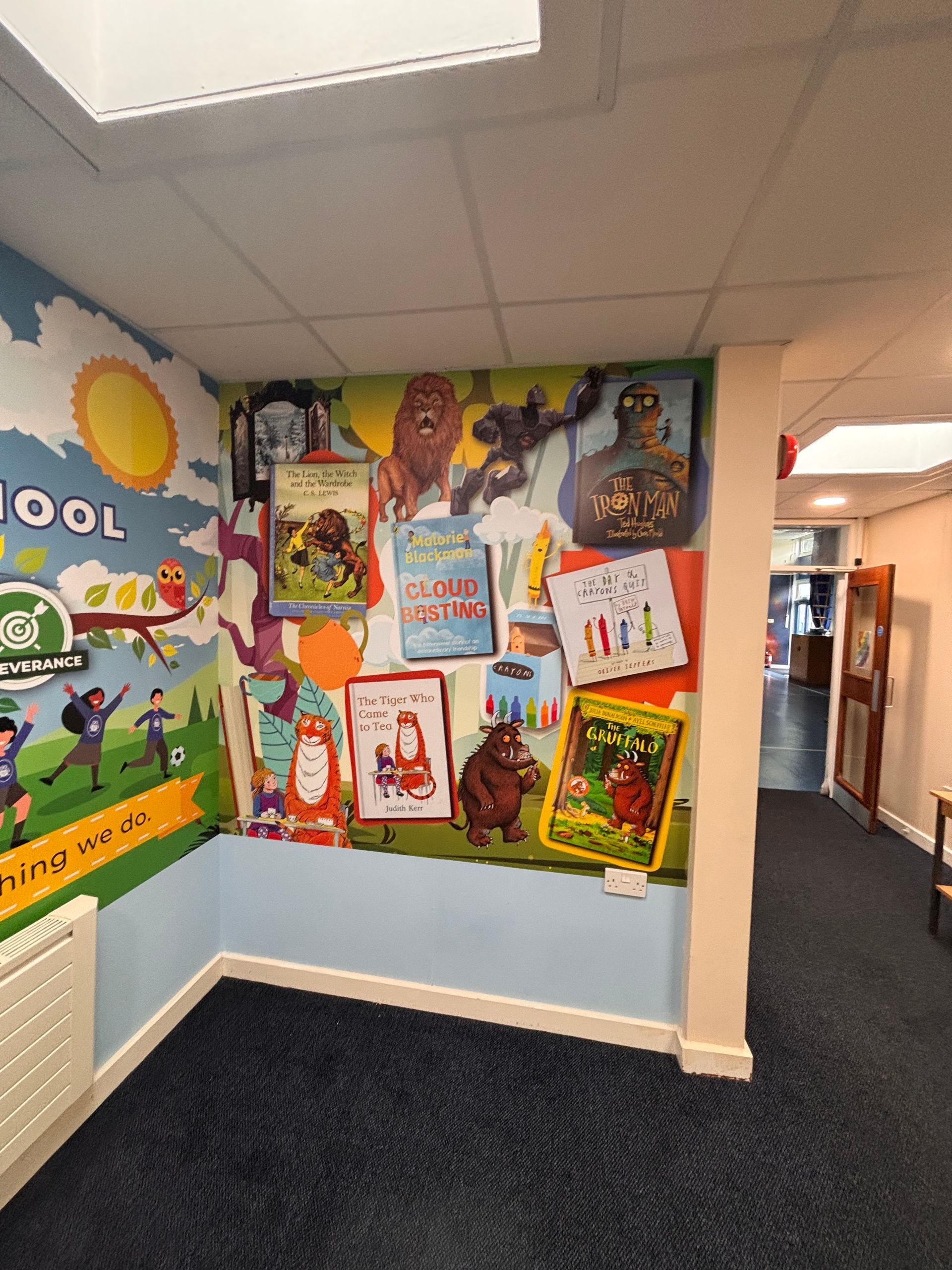
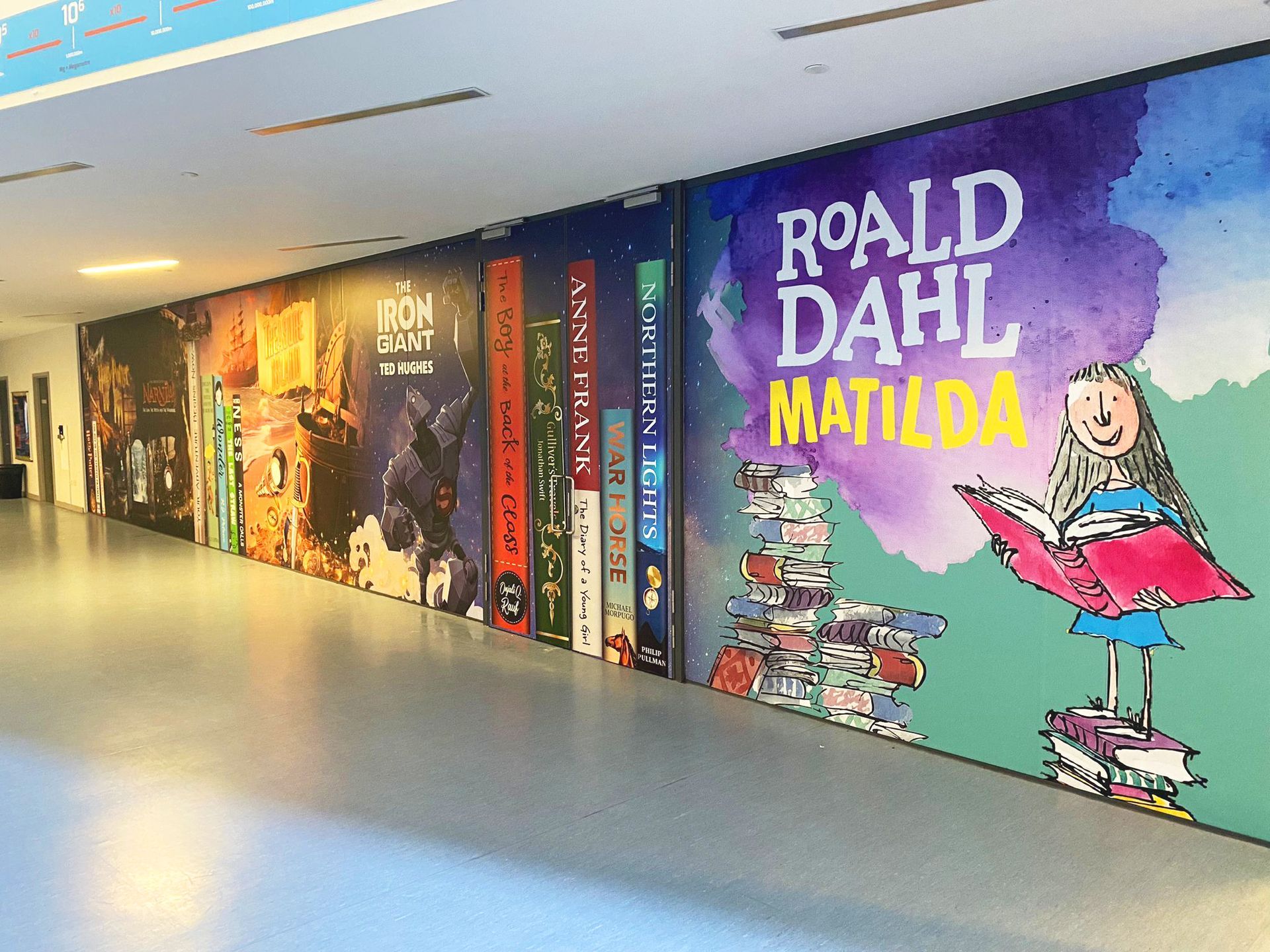
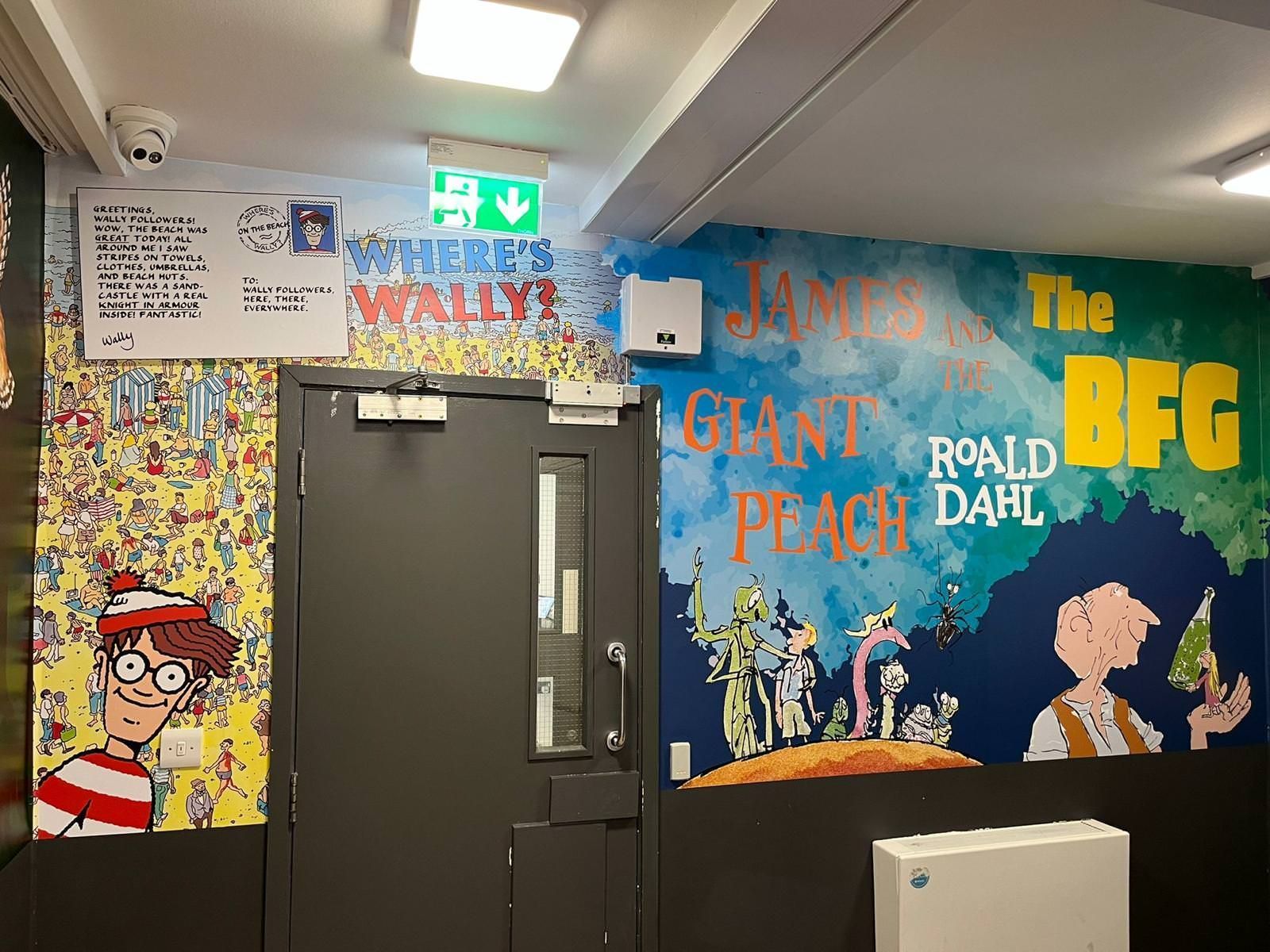
Section 2 focuses on the Literacy Wall featuring books.
Goal achieved.
- The reading wall was created to foster a passion for books by displaying timeless children's stories that teach life lessons. Each book cover is chosen to connect with students and inspire them to delve into the world of literature.
Characteristics of Design
- Prominent classic books are showcased for their themes of bravery and friendship that resonate well with students in the age group.
- The wall features book covers to encourage students to explore these stories and spark their interest in reading.
- Vibrant and captivating colours draw in the students with a design that turns reading into an adventurous journey. The book covers stand out against backgrounds that add to the charm of the wall display.
Result
- This dedicated space has helped embed reading into the school's fabric and encourages students to read and expand their literacy knowledge.
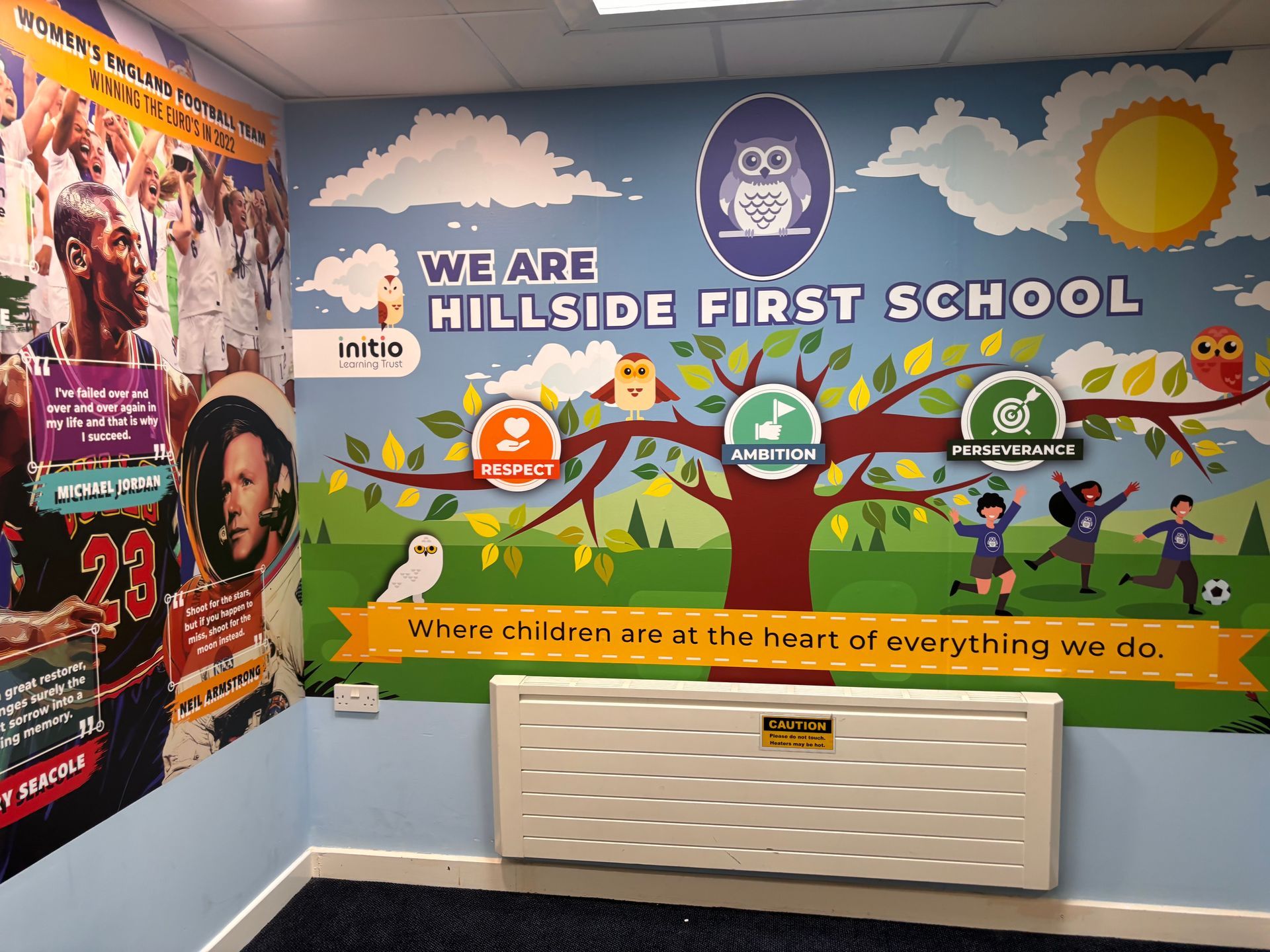
Section 3 details the principles displayed on the Core Values Wall—Respect, Ambition and Perseverance.
Goal
- The wall of core values at Hillside First School was designed to emphasise the school's beliefs in Respect, Ambition and Perseverance. This area acts as a prompt for the expected academic norms within the school community.
Characteristics of Design
- The symbolic tree structure showcases growth and resilience through a tree graphic, with each fundamental value depicted as a branch, illustrating how these values nurture the development of every student.
Core Values Highlighted;
- Encouraging kindness and understanding through visuals reminds students to appreciate themselves and those around them.
- They encourage students to aspire towards their dreams by using symbols of accomplishment to motivate them to set and work towards their goals.
- Perseverance is illustrated through cues of determination to educate students on the significance of resilience and staying power.
- The graphics, for students, are vibrant and captivating, with welcoming icons and symbols that attract learners and simplify the concepts for comprehension and retention.
Result
- The school's values wall reminds students of its beliefs and standards for their daily lives. Teachers have observed that students are likelier to mention these values in their conversations, demonstrating comprehension and respect for the school's code of conduct.
In summary
- The unique wall designs at Hillside First School have transformed the school's atmosphere into an educational setting. The installation, which incorporates figures, timeless literary motifs, and fundamental school principles, has fostered a space that aligns with the school's dedication to nurturing well-rounded students.
- The project showcases how visual storytelling can significantly impact education. Using images to motivate and educate students while promoting behaviour, Hillside First School has effectively established an environment that enhances learning and fosters values and a passion for literature among its students.
- The school's core values are reinforced through its presence in a format that helps students embrace these principles and foster a culture of positivity and respect within the school community.
- Wall graphics that showcase motivational and educational themes can spark curiosity and prompt students to consider the messages conveyed while they learn about literary figures.
Closing Statements
The unique wall designs at Hillside First School embody the core principles of the school's beliefs. They motivate students with figures while fostering a welcoming atmosphere for learning purposes. This initiative illustrates the role of wall graphics in enhancing educational settings by nurturing a sense of pride, encouraging curiosity, and fostering a communal spirit among individuals.
Contact us if you want to enhance your school's atmosphere with wall designs that ignite creativity and promote learning.