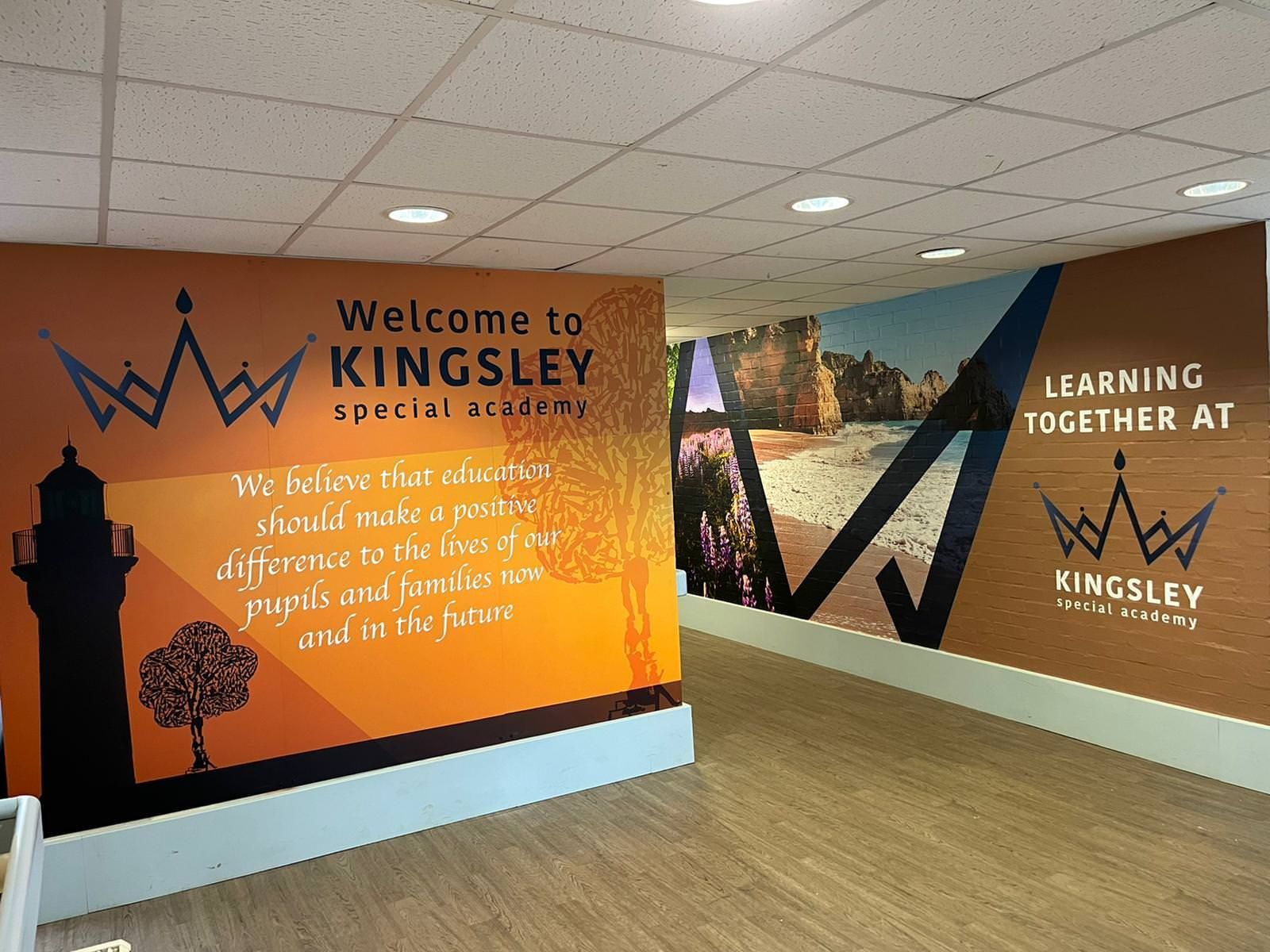
Designing visually appealing school spaces with wall graphics can impact students' well-being and learning experience. Here are some key aspects to consider when creating environments that foster comfort, happiness and academic growth;
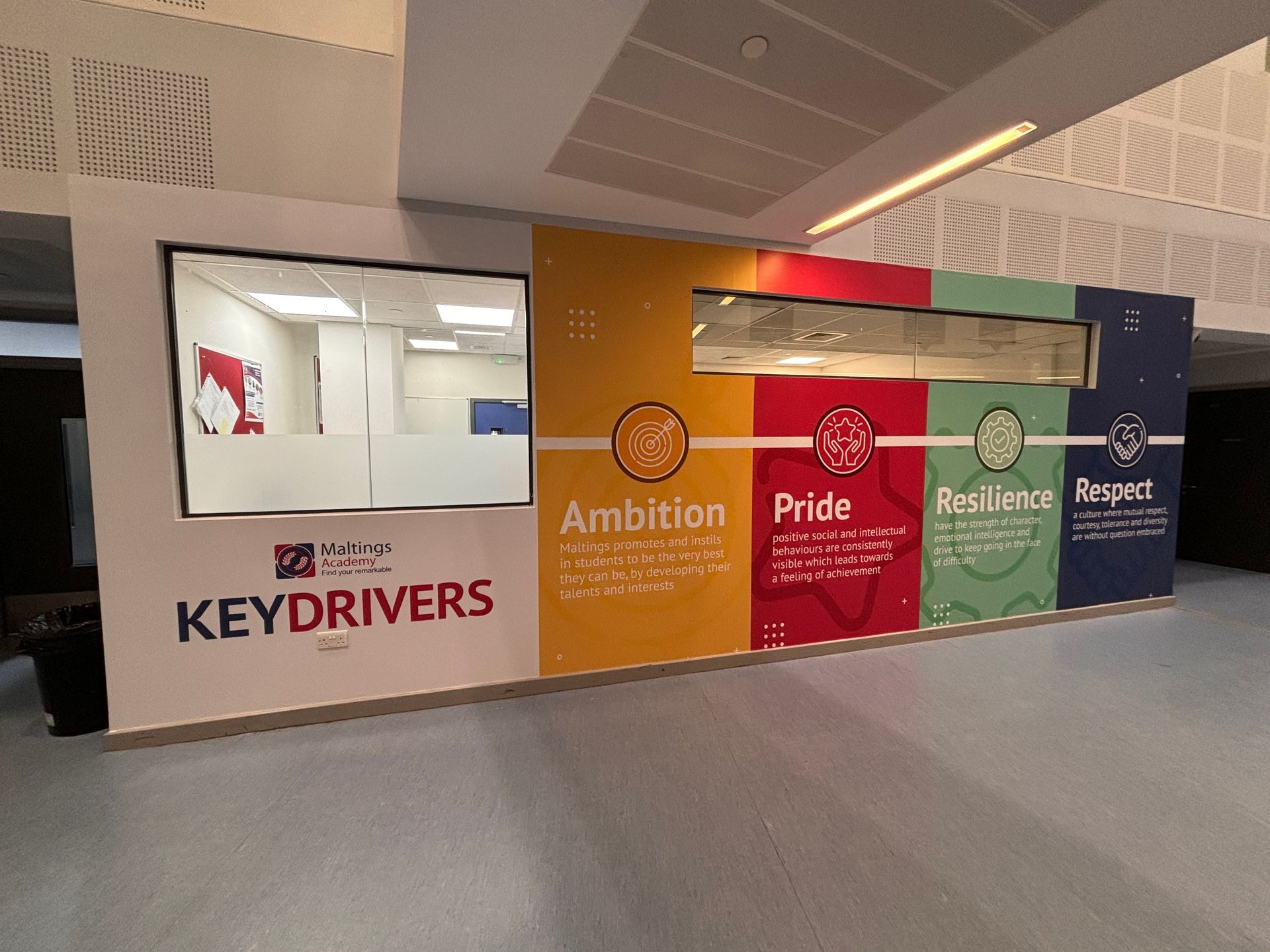
Critical Elements for Attractive Wall Graphics
1. Understanding Color Psychology;
- Opt for calming colours such as blues, greens, and pastels for areas dedicated to study or relaxation, such as libraries and reading corners.
- Consider using energising colours like yellows, oranges, and reds in spaces intended to boost energy and creativity, like art rooms and collaborative areas.
2. Incorporating Natural Elements;
- Integrating nature-inspired designs featuring elements like trees, flowers, landscapes, and water bodies plays a crucial role in creating a serene and welcoming ambience, enhancing the learning environment's role in establishing.
- Implement biophilic design principles by incorporating patterns and images that mimic forms to strengthen the connection with nature, ultimately reducing stress levels and enhancing focus.
3. Embracing Artistic Expression;
- Encouraging student involvement by showcasing their artwork in designated areas instils a sensenership and creates an inviting atmosphere, fostering a positive learning environment of pride and ow.
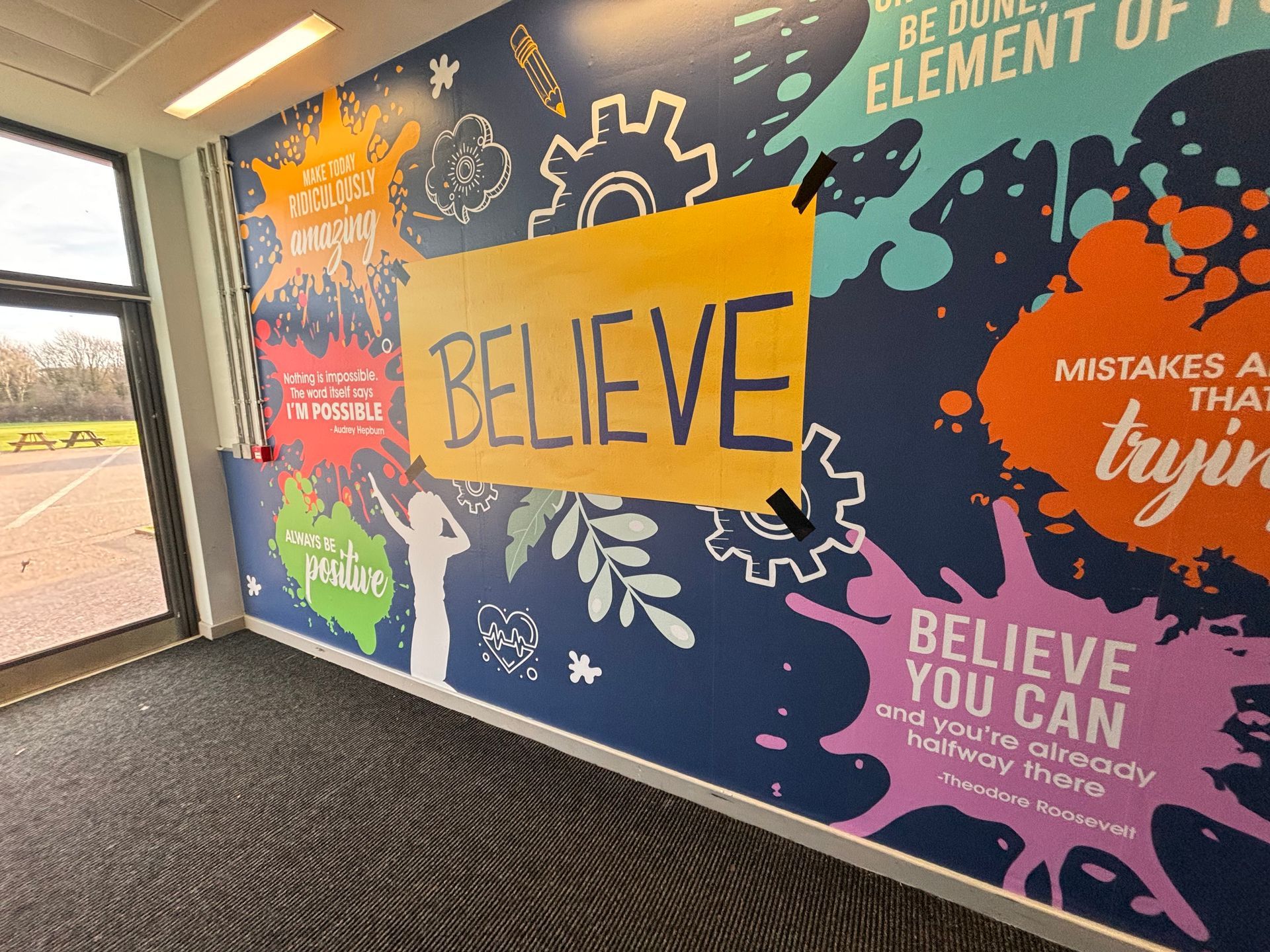
Inspirational Messages: Include quotes and affirmations to boost students' morale and foster a mindset.
Functional Design;
- Interactive Areas: Develop spaces where students can interact with visuals, like surfaces or puzzle walls.
- Educational Appeal: Ensure that the environment is visually appealing while also serving purposes reinforcing classroom lessons.
Ideas for Specific Subjects
Science;
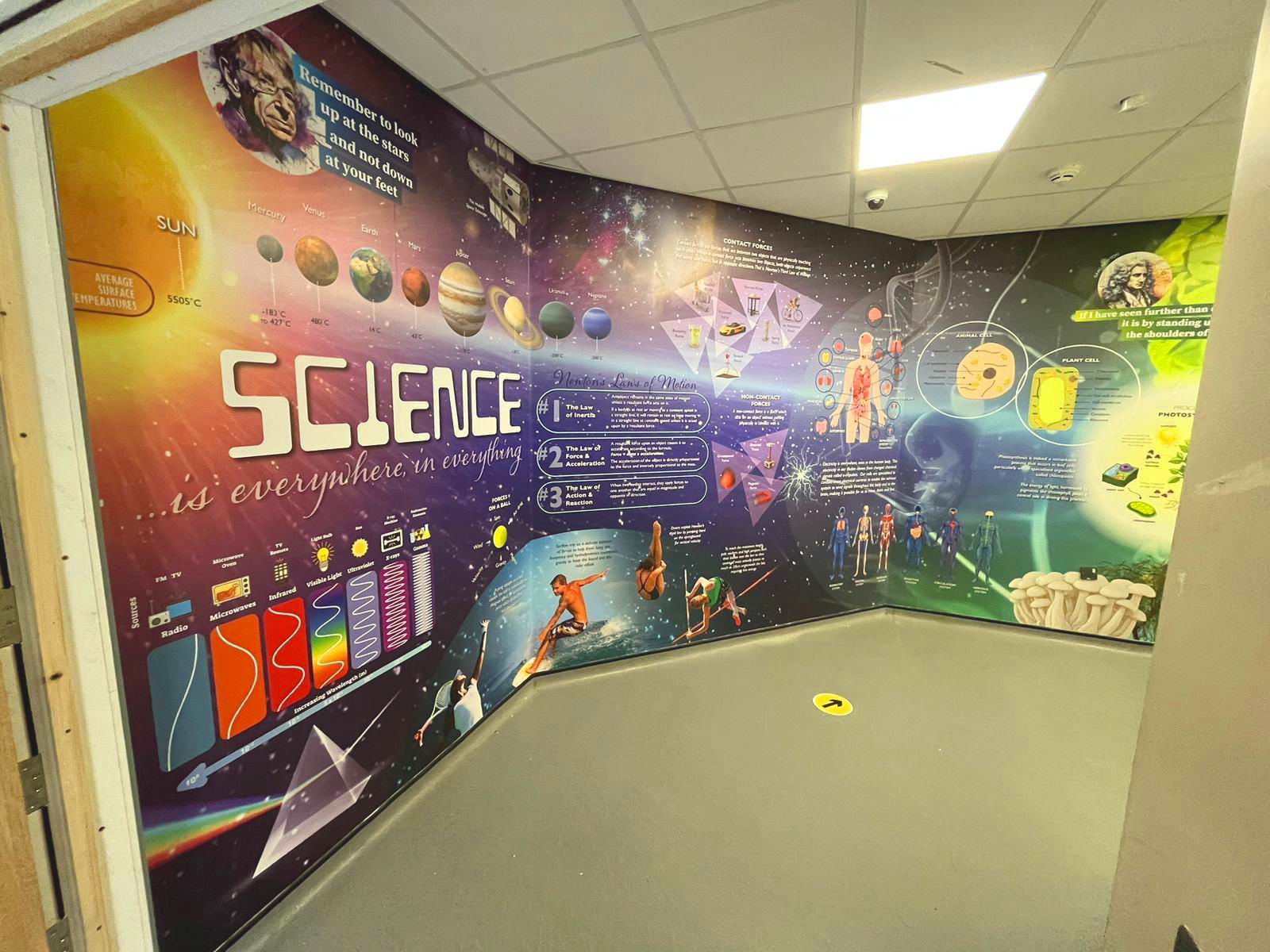
- Natural Settings: Paint murals of ecosystems, outer space or underwater worlds using colours and intricate details to engage students.
- Scientific Concepts: Depict processes strikingly, such as the water cycle, plant growth or atomic structures.
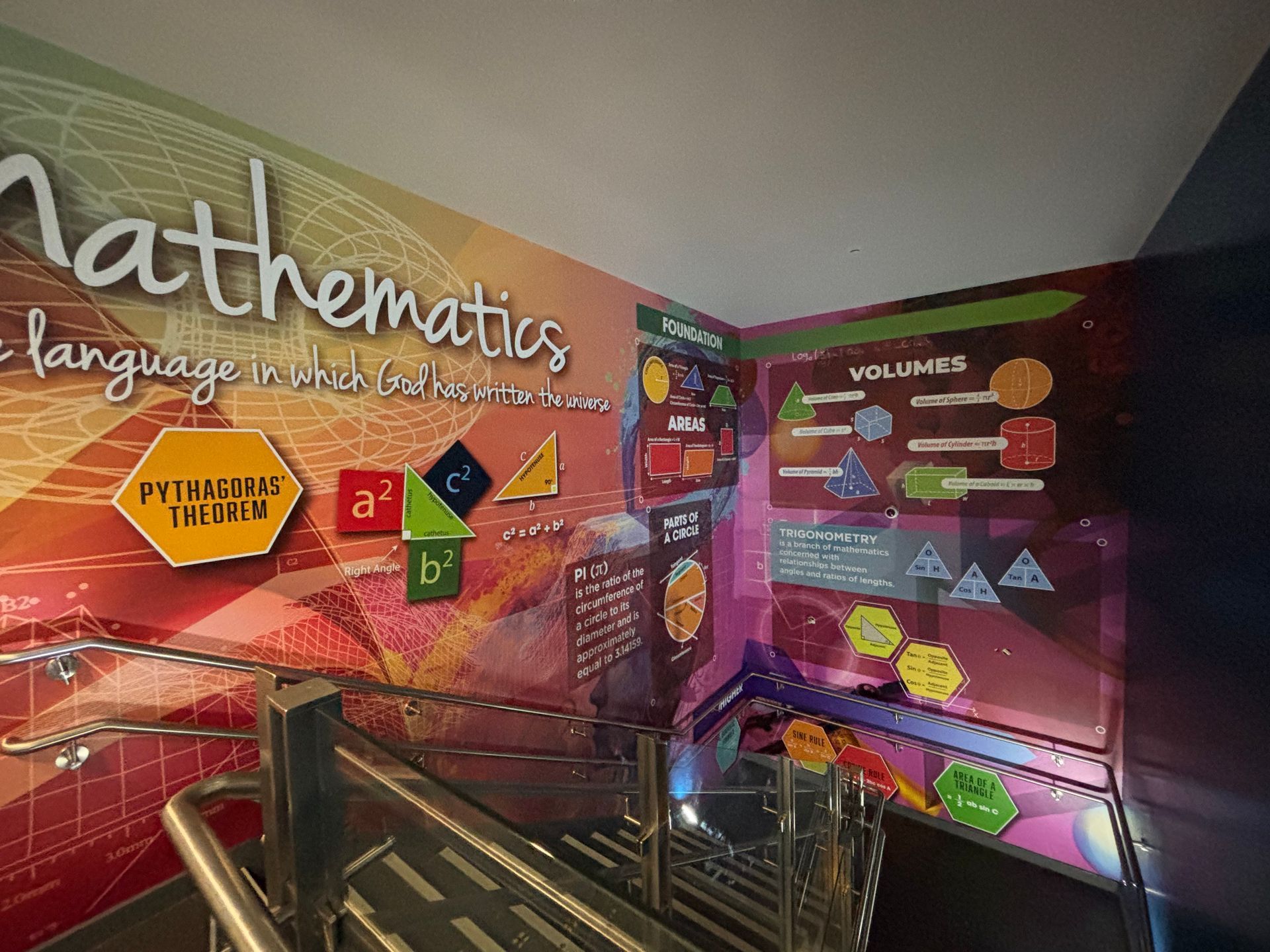
Mathematics;
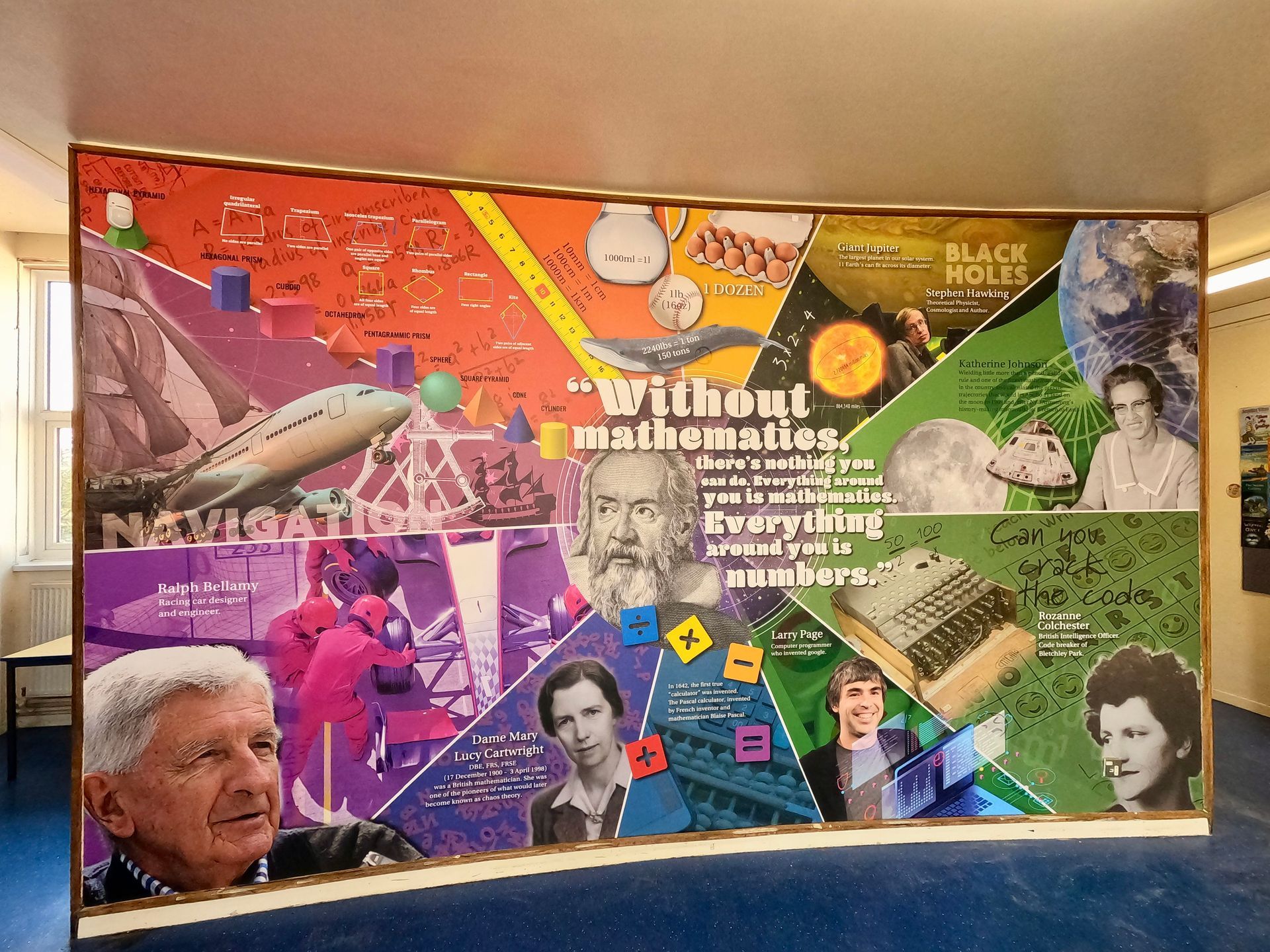
- Mathematical Artwork: Integrate fractals, tessellations and other math-inspired, aesthetically pleasing, and educational patterns.
- Visual Representations: Use graphics to showcase ideas, like the Fibonacci sequence, ratios, and geometric shapes, appealingly.
History;
- Cultural Legacy: Design walls celebrating cultures and historical eras with rich elements that capture the essence of each period.
- Timelines and Maps: Incorporate map styles and artistic renditions of timelines to make history study visually captivating.
Language Arts;
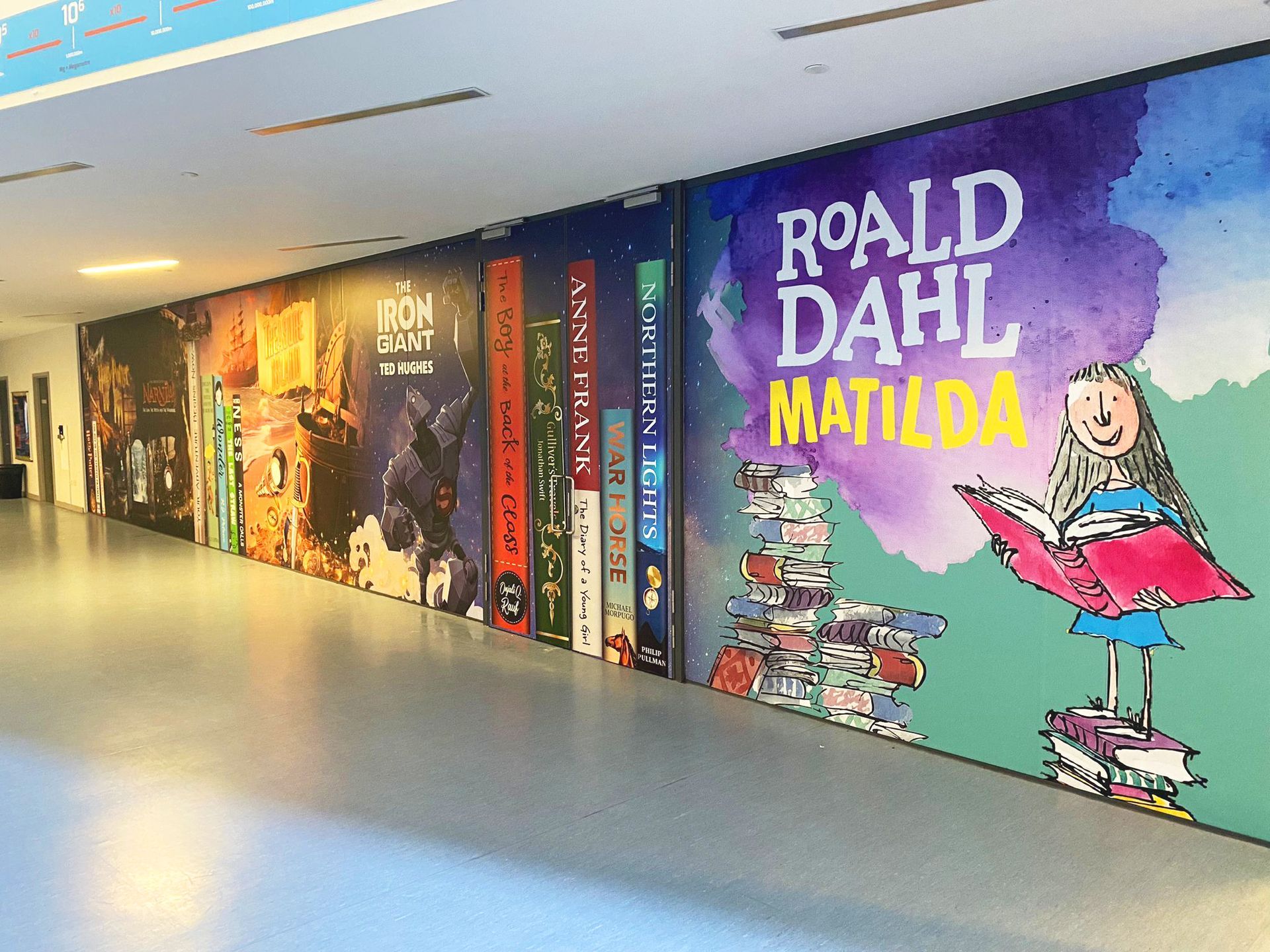
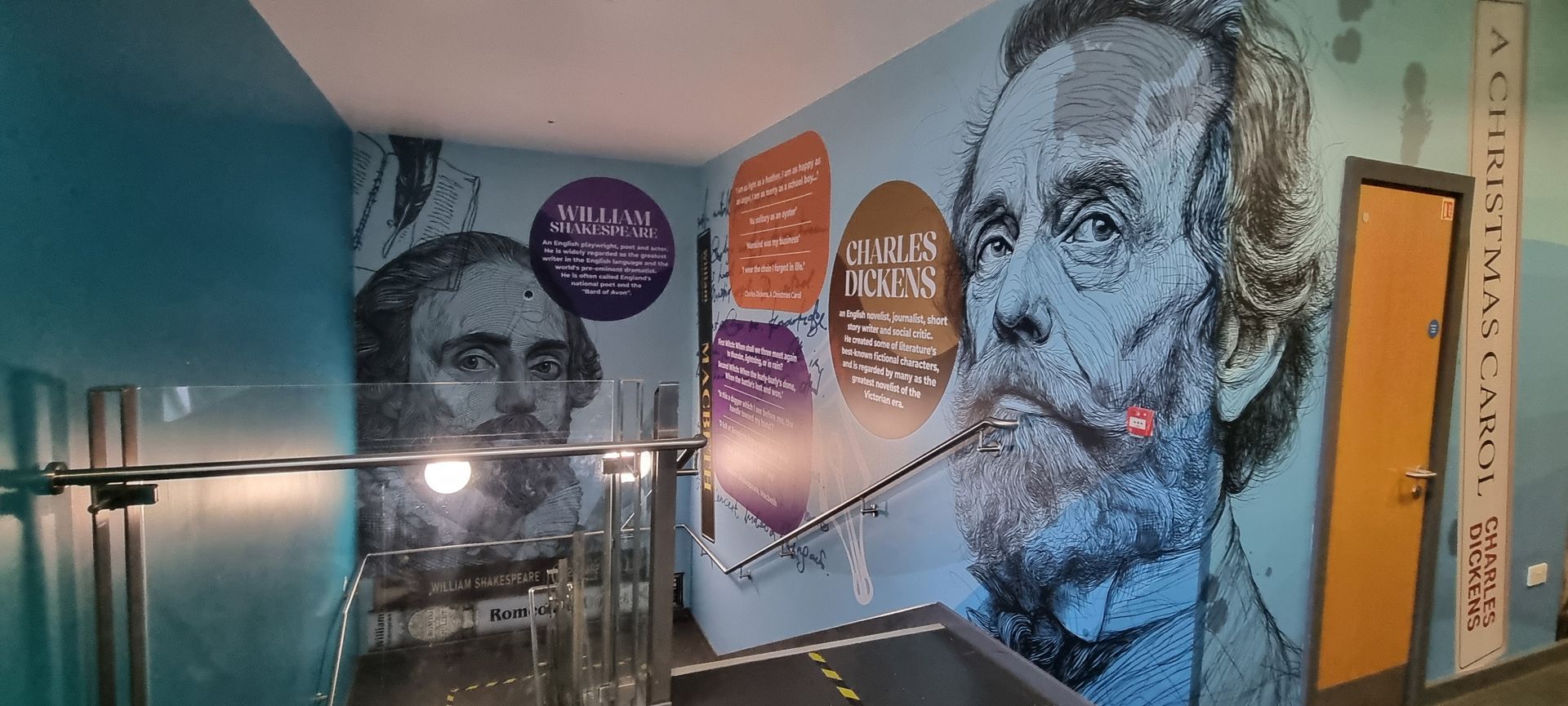
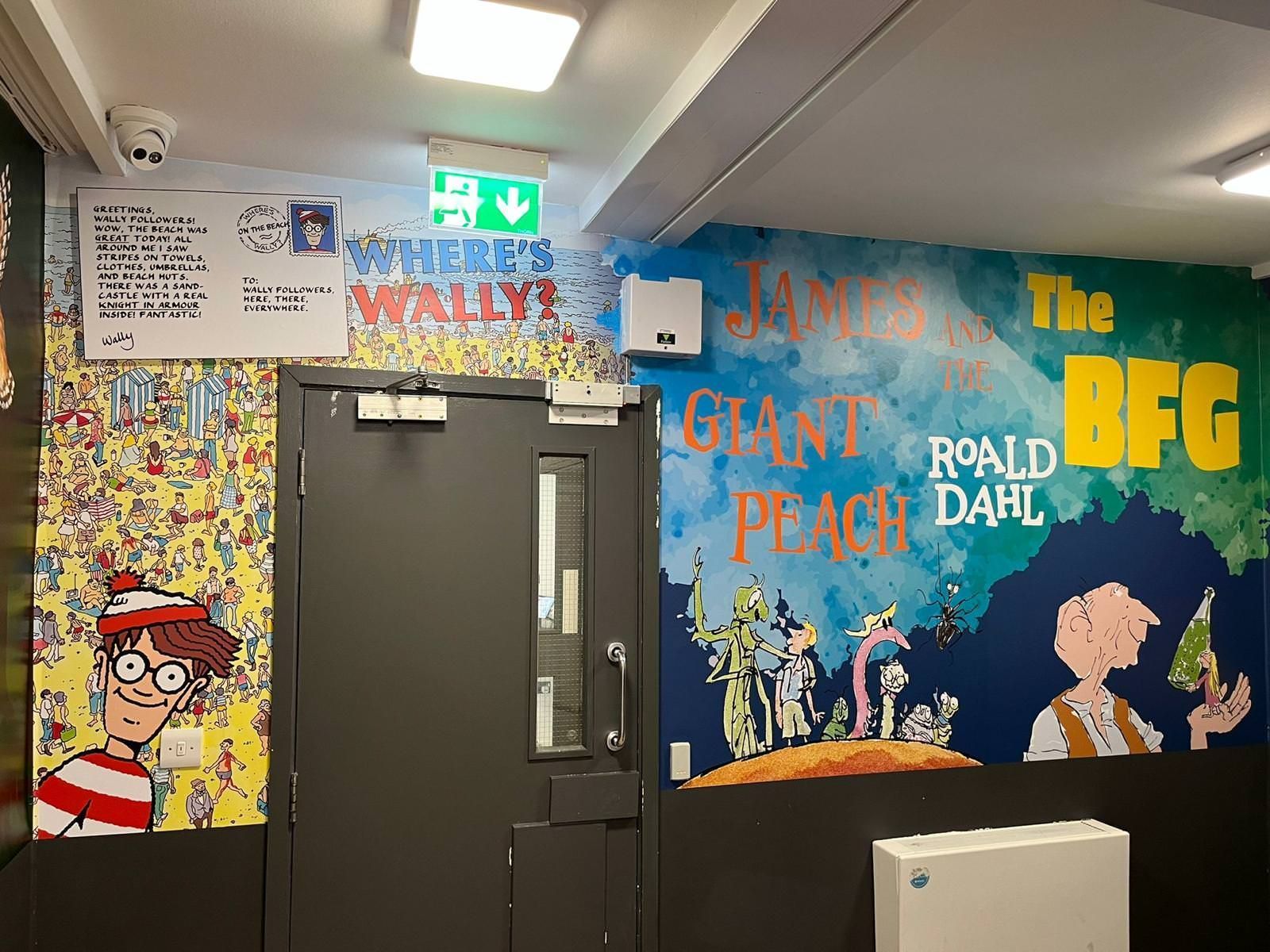
- Exploration of Literary Themes: Utilise illustrations and vibrant hues to bring to life scenes from literature through murals.
- Grammar Gardens: Develop graphics with garden themes where each "flower" symbolises a part of speech or literary device.
Art;
- Celebration of Art Movements: Present visually stimulating portrayals of art movements showcasing works and the distinctive styles of various eras.
- Creative Spaces: These are areas where students can actively contribute to evolving murals that foster a constantly changing setting.
Implementation Strategy
1. Building Partnerships with Stakeholders;
- Engaging the School Community: Involve students, educators, and parents in the design process to ensure the visuals resonate with the community's values and preferences.
- Collaboration with Skilled Artists and Designers, Partnering with artists to craft tier, visually striking designs.
2. Utilization of Premium Materials;
- Emphasis on Durability: Opt for easy-to-maintain materials that preserve the vibrancy and integrity of the graphics over time.
- Safety Considerations: Ensure all materials used are safe, non-toxic and suitable for school settings.1. Sustainable Measures;
- Friendly Choices: Select materials and printing techniques to reduce environmental impact.
- Emphasise Sustainability; Integrate sustainability and environmental care themes into the elements.
2. Consistent Interaction;
- Updates: Periodically update the visuals to maintain an engaging environment.
- Feedback System: Establish a process for gathering input from students and teachers to enhance and adjust the designs.
3. Education and Guidance;
- Teacher Development: Offer educators training sessions on using wall graphics as aids.
- Student Introduction: Educate students about the purpose of the graphics, encouraging interaction with and appreciation of the designs.
Illustrative and Functional Wall Graphics Ideas
1. Reading Nooks;
- Book Inspired Artwork; Depict. Characters from books to craft an enchanting reading space.
- Cosy Colour Palette: Utilise soothing colours to create an inviting and snug atmosphere.
2. Corridors;
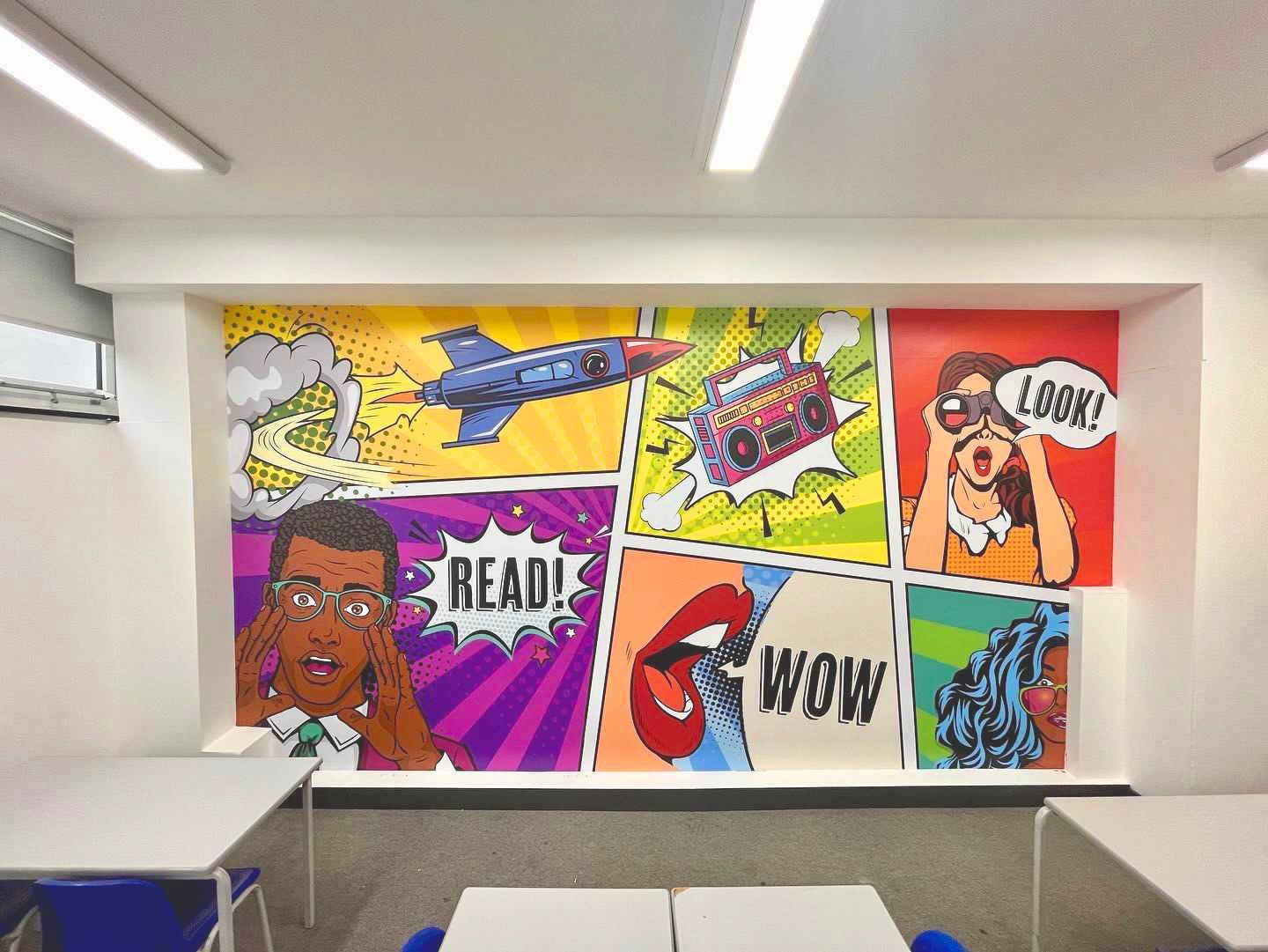
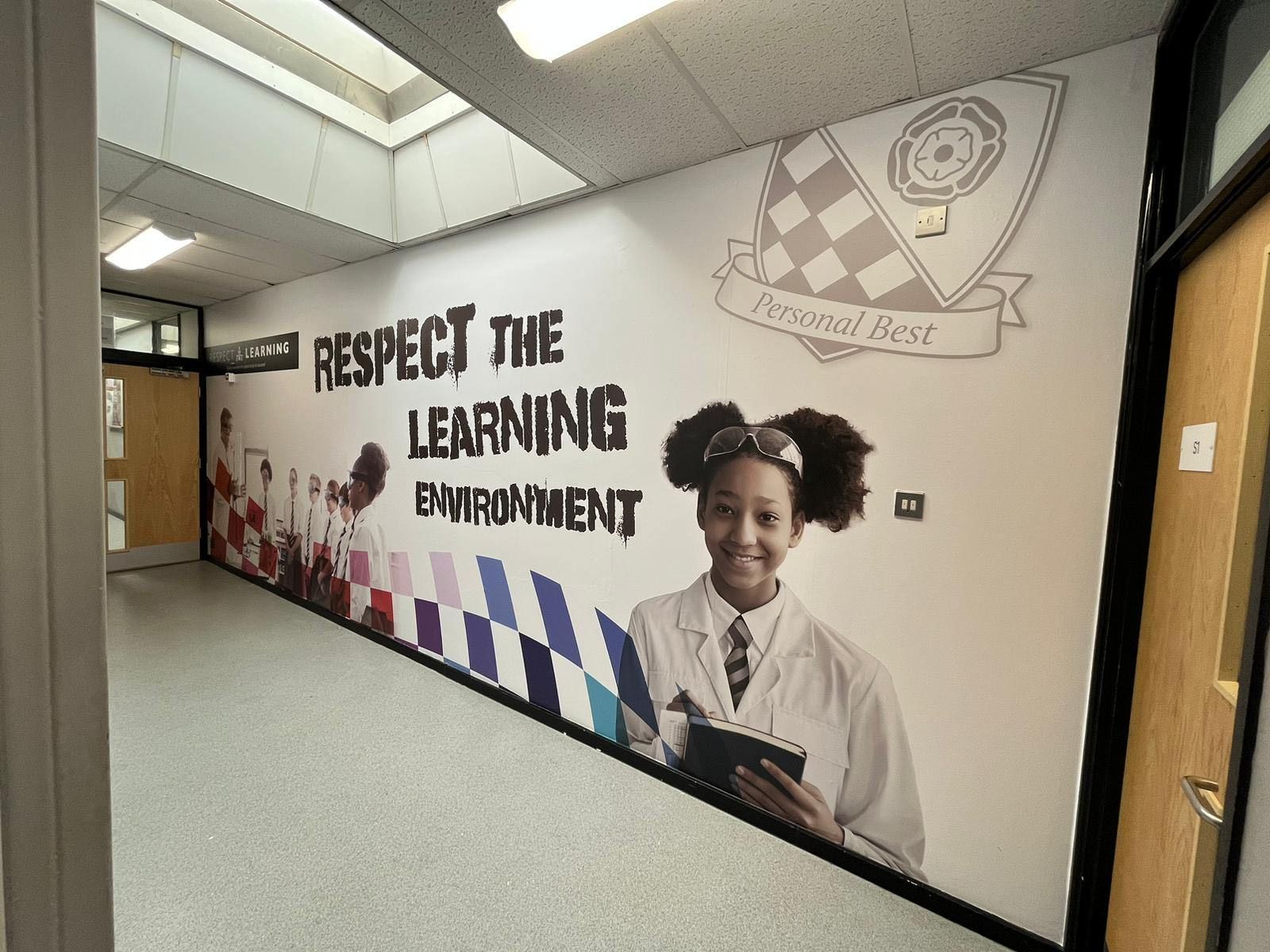
- Motivational Pathways: Adorn hallways with quotes, vibrant hues and compelling visuals that inspire students during transitions between classes.
- Informative Tidbits: Incorporate facts or puzzles along the walls to spark curiosity.
3. School Cafeterias;
- Encourage healthy eating through murals depicting fruits, vegetables and balanced meals.
- Embrace cultural diversity by featuring a variety of cuisines and their rich histories.
By incorporating these design elements and approaches, educational institutions can craft appealing settings that elevate the ambience and positively impact students' well-being and academic journey.