Why the ‘Silent Teacher’ Will Change the Way You Look at School Wall Graphics

Walk through your school corridors during lesson time. It’s quiet. The doors are closed, and the heavy lifting of teaching is happening inside the classrooms. Or so it seems.


But what about the walls around you? Those vast, often empty expanses of brick and plaster aren't just structural. They are constantly communicating. They are teaching, even when no one is speaking.


In educational psychology, this is known as the ‘Silent Teacher.’


It is the idea that the physical environment: the colours, the displays, the signage, and the layout: shapes student behaviour and learning outcomes without a single word being uttered. At Cubed Creative, we’ve spent 21 years helping schools understand that their walls are their most underutilised educational asset.


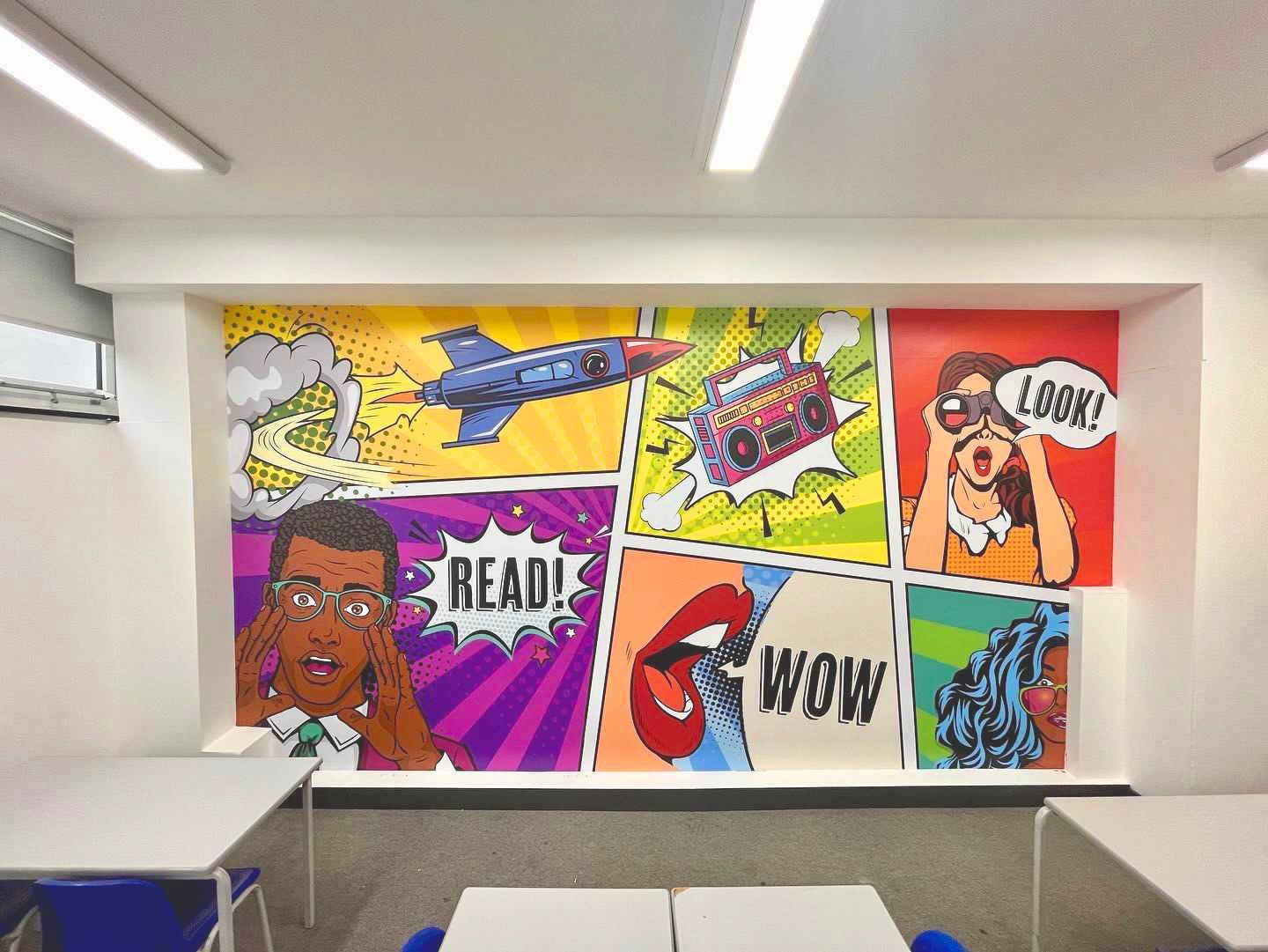
When you look at school wall graphics, you shouldn't just see decoration. You should see a pedagogical tool.


The Psychology of the Learning Environment


Your pupils spend roughly 15,000 hours in school across their academic journey. Most of that time is spent navigating the physical environment.


The ‘Silent Teacher’ concept suggests that students are sponges for their surroundings. If a corridor is drab, grey, and cluttered with peeling posters, the message is one of low expectations and neglect. If that same corridor is vibrant, organized, and filled with bespoke wall art, it signals that the space: and the people in it: are valued.


Reducing Cognitive Load

There is a delicate balance to strike. Research into school behaviour and corridor design shows that while visual stimulation is vital, "visual noise" can be distracting.


The key is intentionality.

  • Purposeful visuals: Anchor charts, timelines, and key vocabulary support memory.
  • Calming palettes: Blues and greens can help regulate energy levels during busy transition periods.
  • Clarity: Clear, professional signage reduces anxiety by helping pupils feel oriented.


Every graphic should "earn its place" on the wall. It must either inspire, inform, or guide.
Turning ‘Transit Zones’ into Learning Hubs


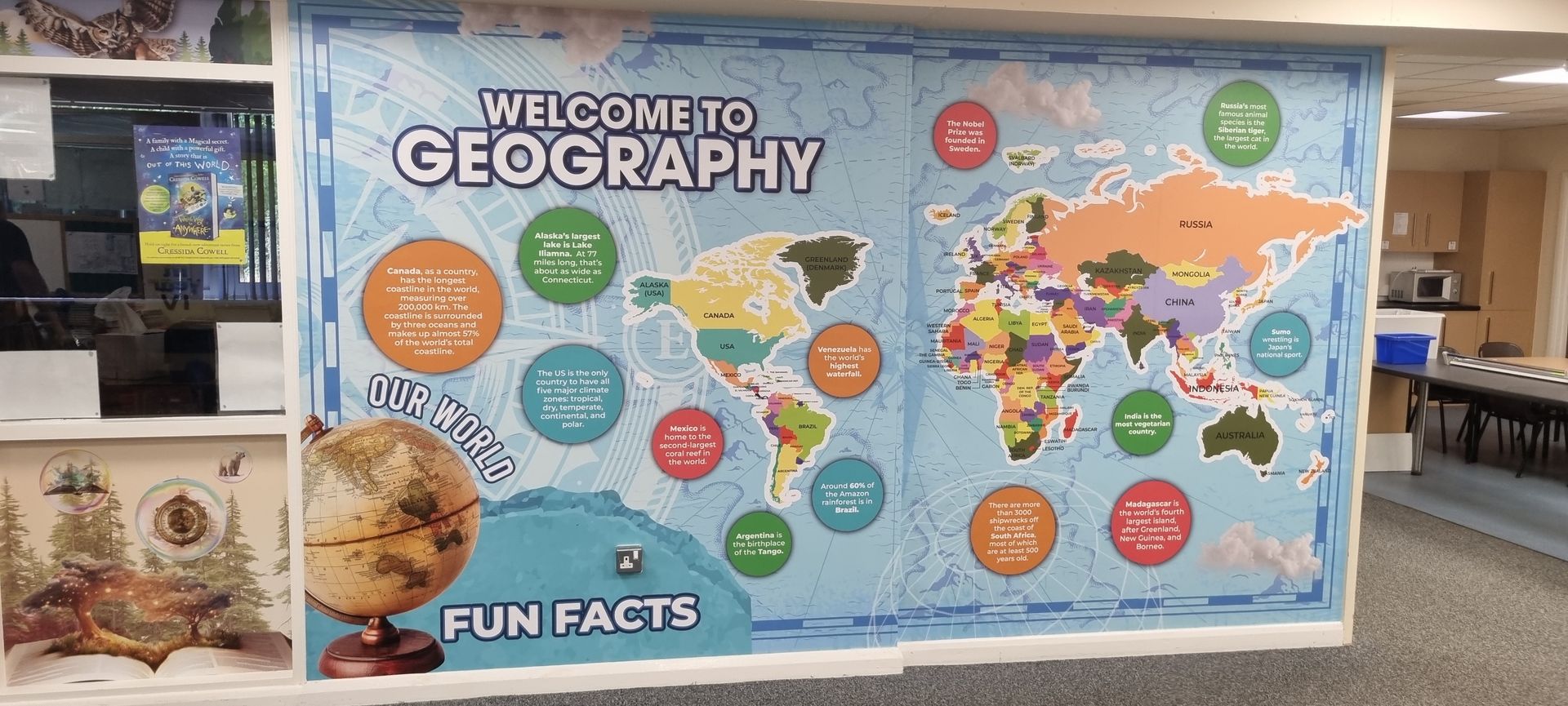
Corridors, stairwells, and dining halls are often dismissed as "transit zones": places students simply pass through to get somewhere else.


But these are the areas where the Silent Teacher does its best work. In a classroom, a student is focused on a specific task. In a corridor, their mind is more receptive to passive learning. This is where wall murals for schools can bridge the gap between subjects.


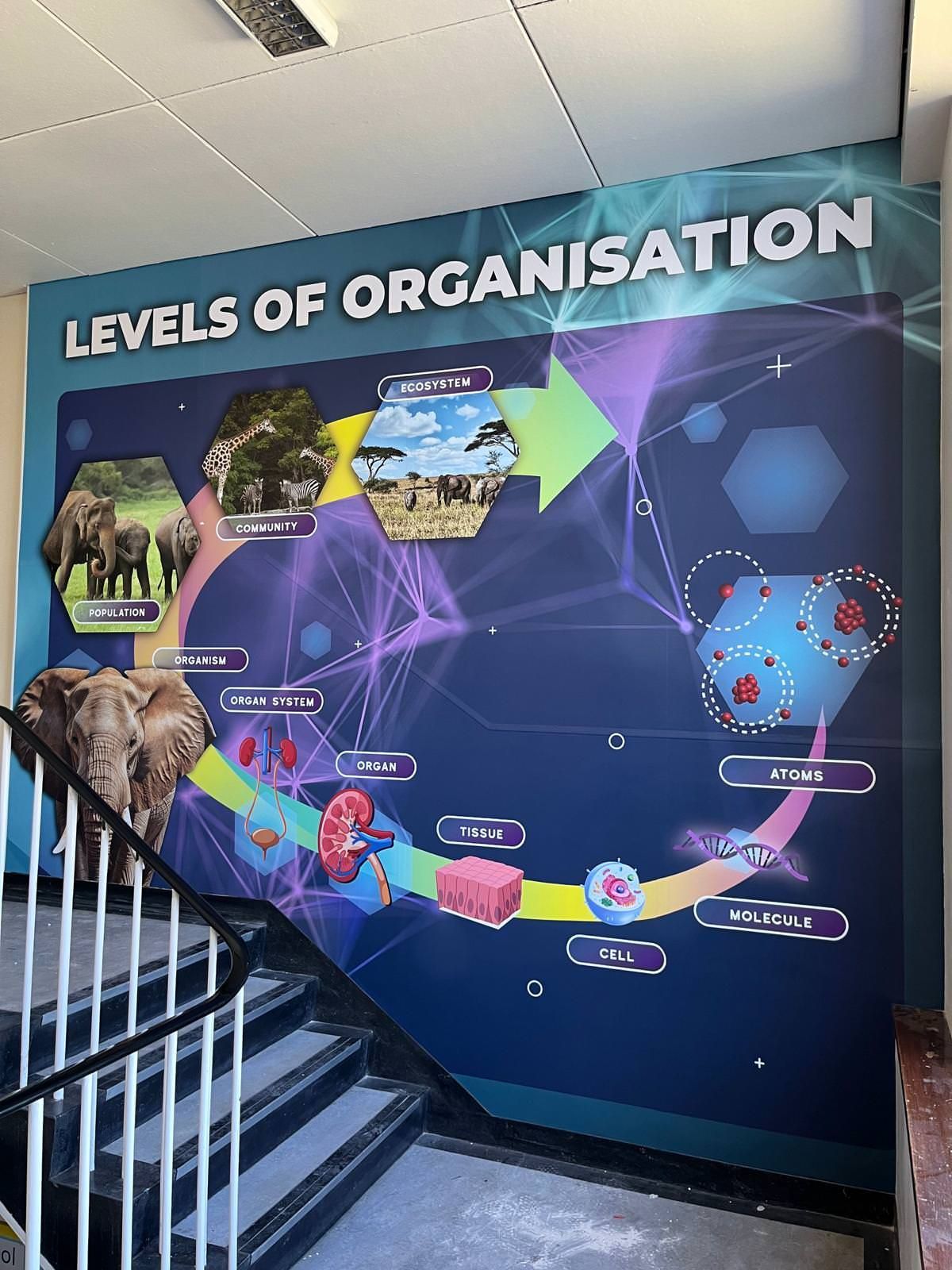
The Power of Stairwell Graphics


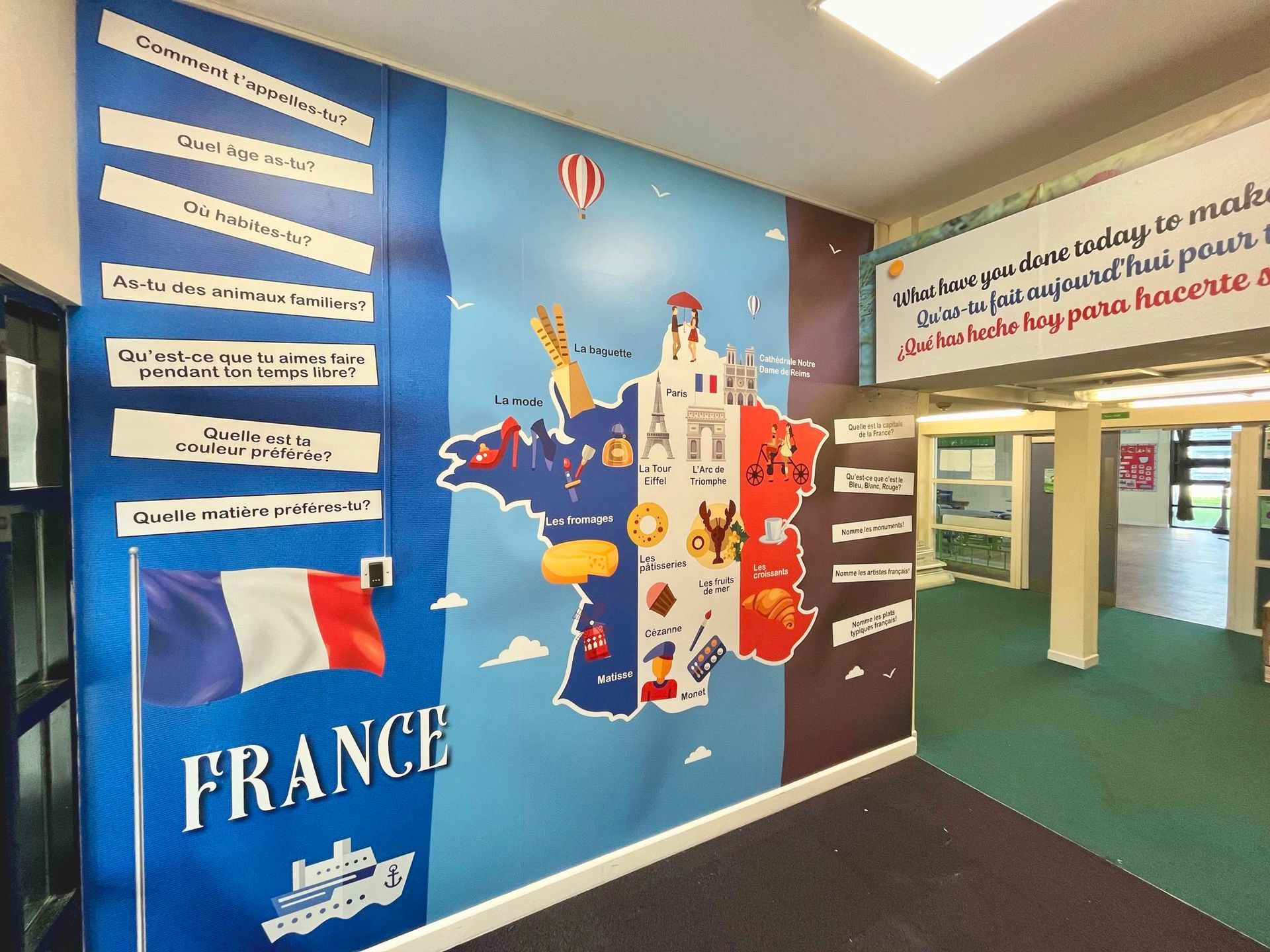
Think about a student walking up three flights of stairs. That’s a captive audience for three minutes a day. By installing stair riser graphics featuring times tables, historical dates, or foreign language verbs, you turn a mundane physical activity into a retrieval practice session.


Corridor Timelines


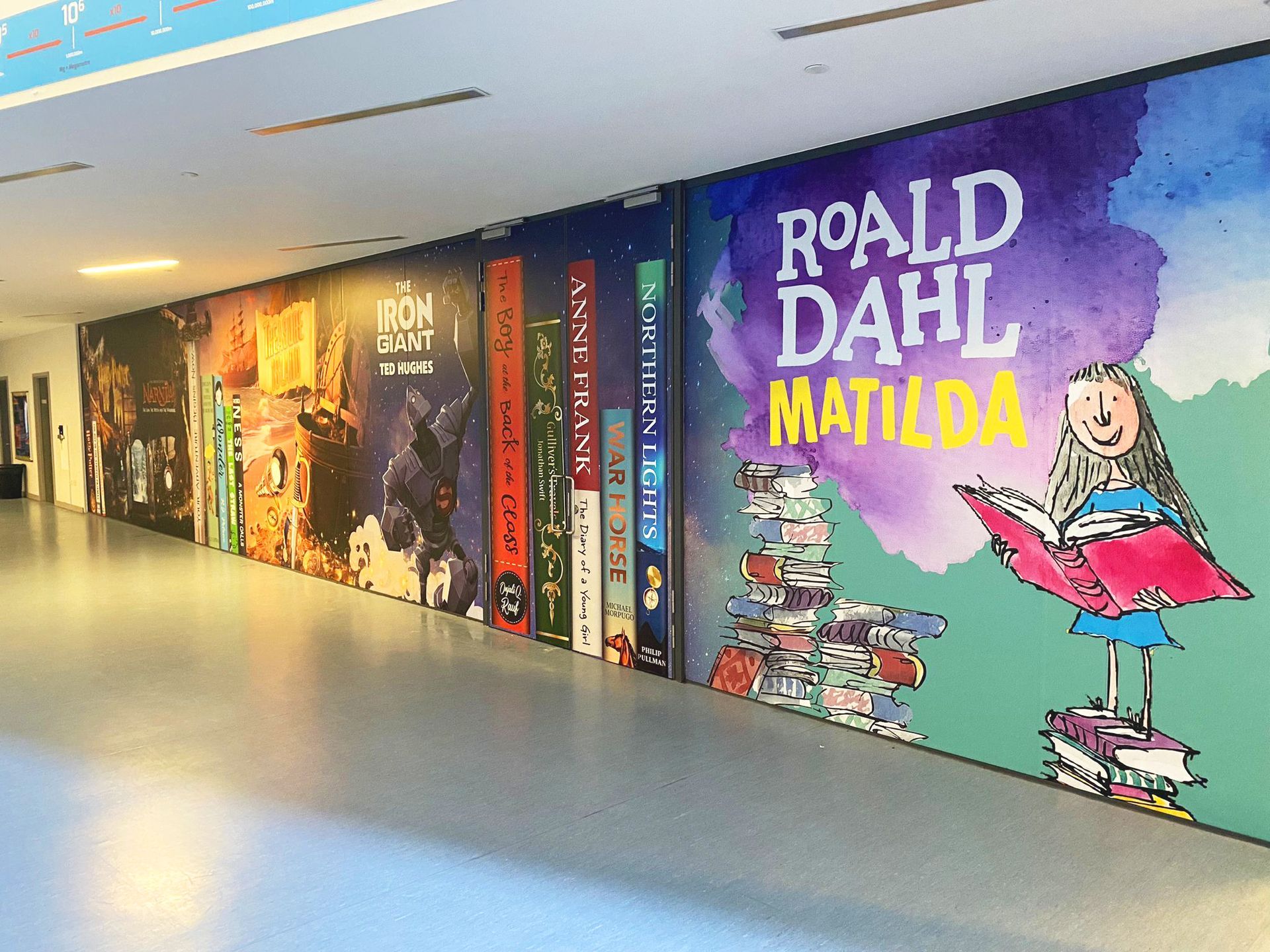
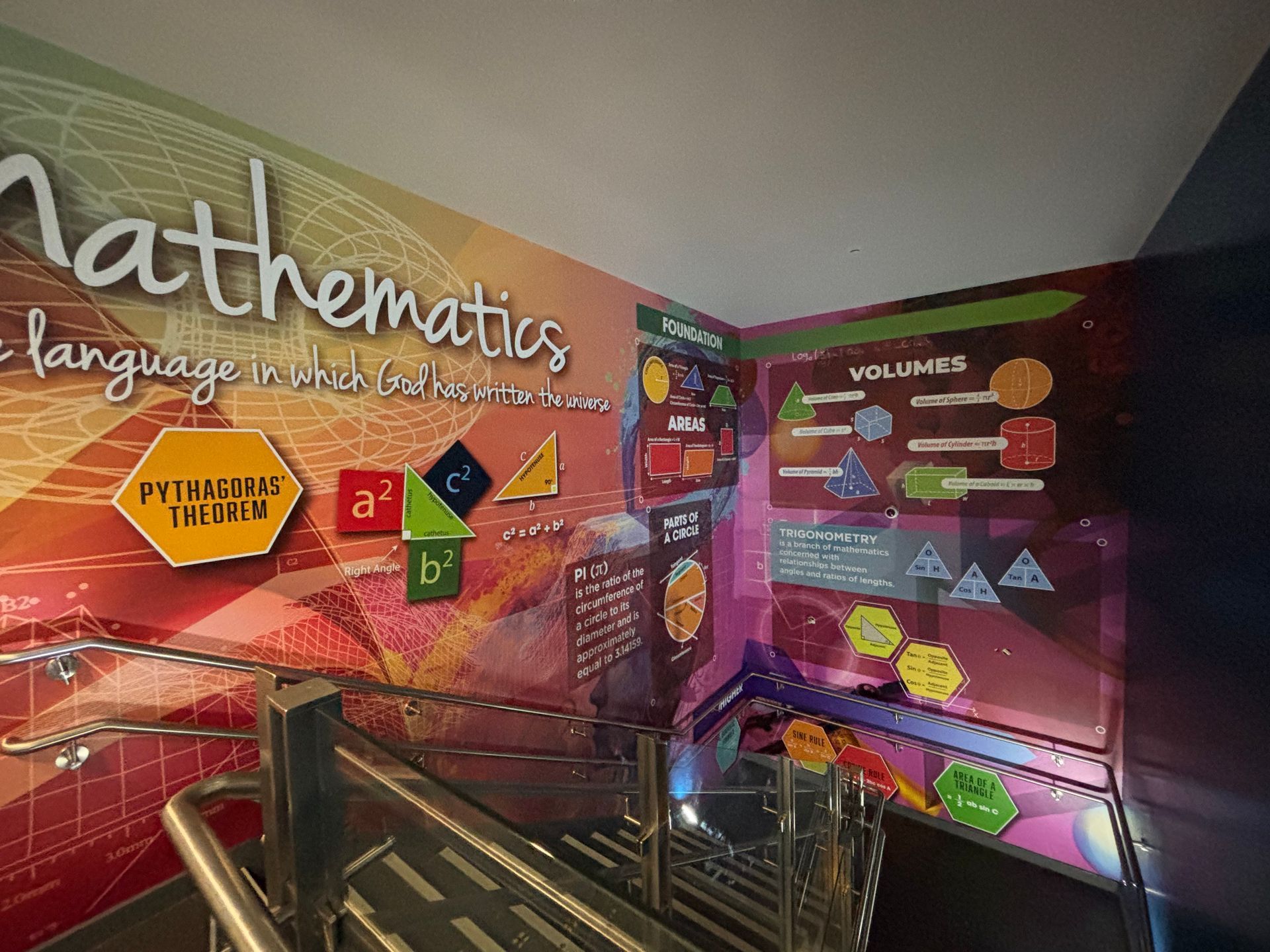
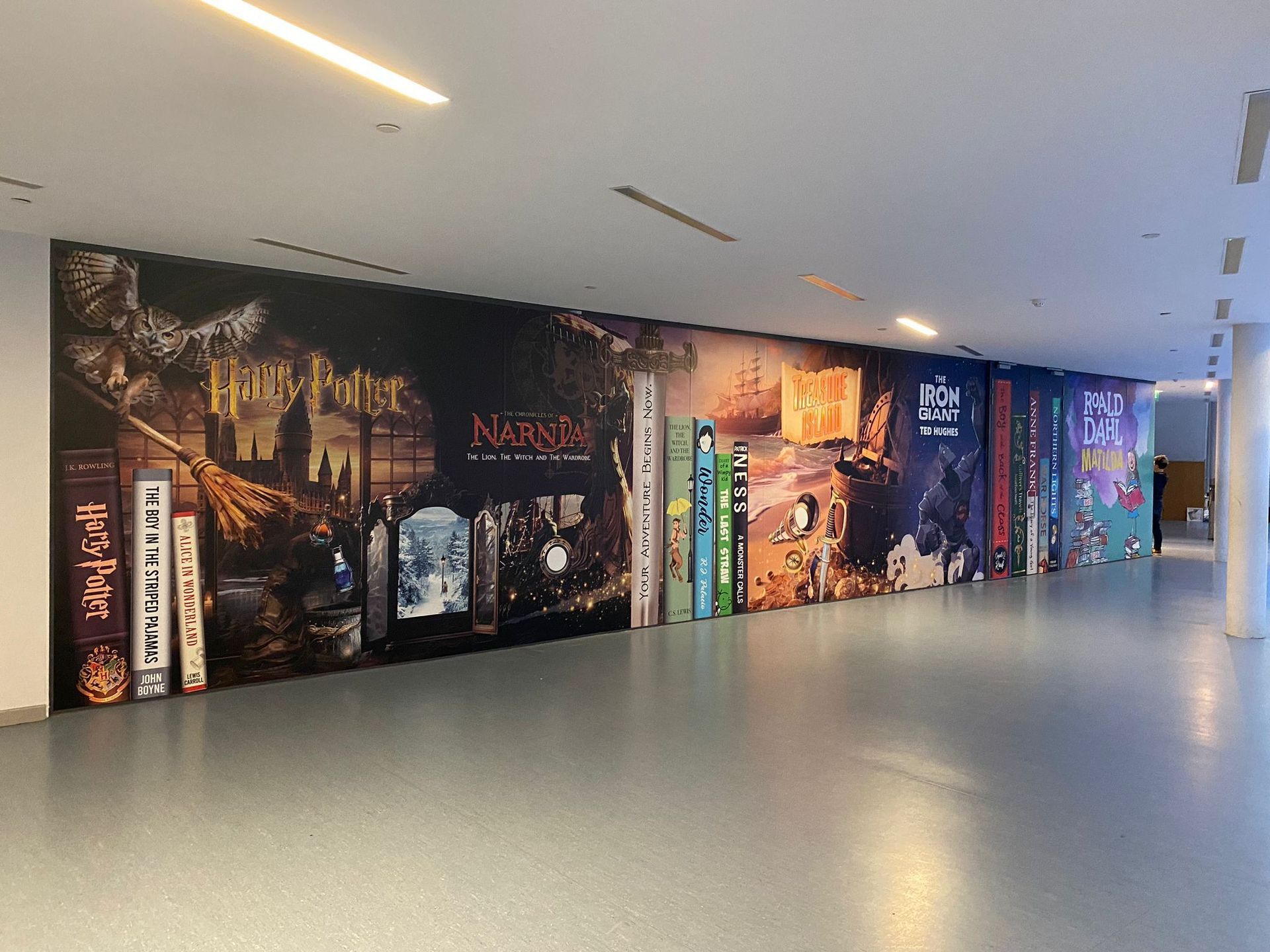
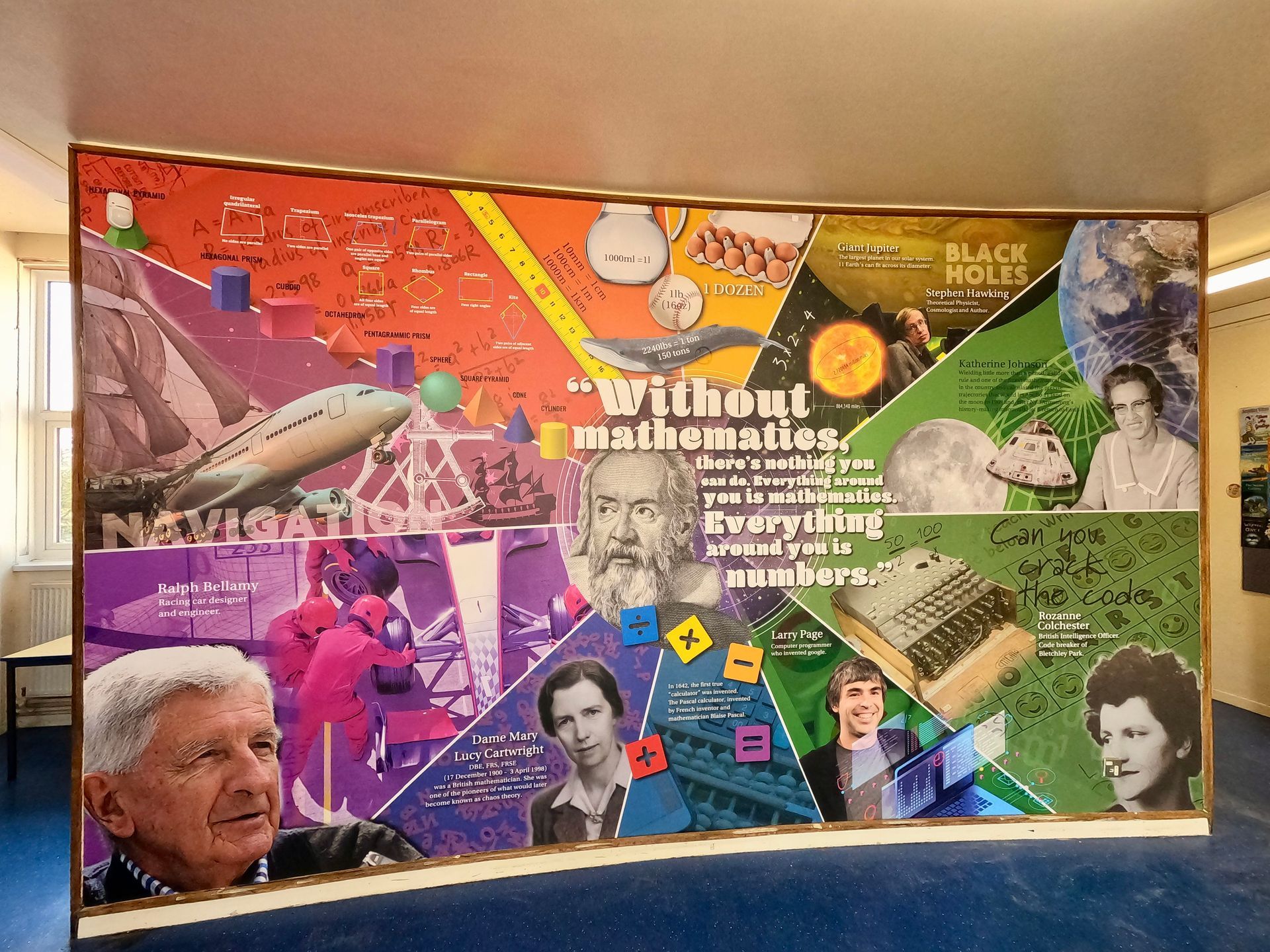
A 20-meter corridor is the perfect canvas for a chronological history of the world or a "journey through literature." These wall decals for schools provide context that a single textbook page cannot. They show the scale of time and the interconnectedness of ideas.


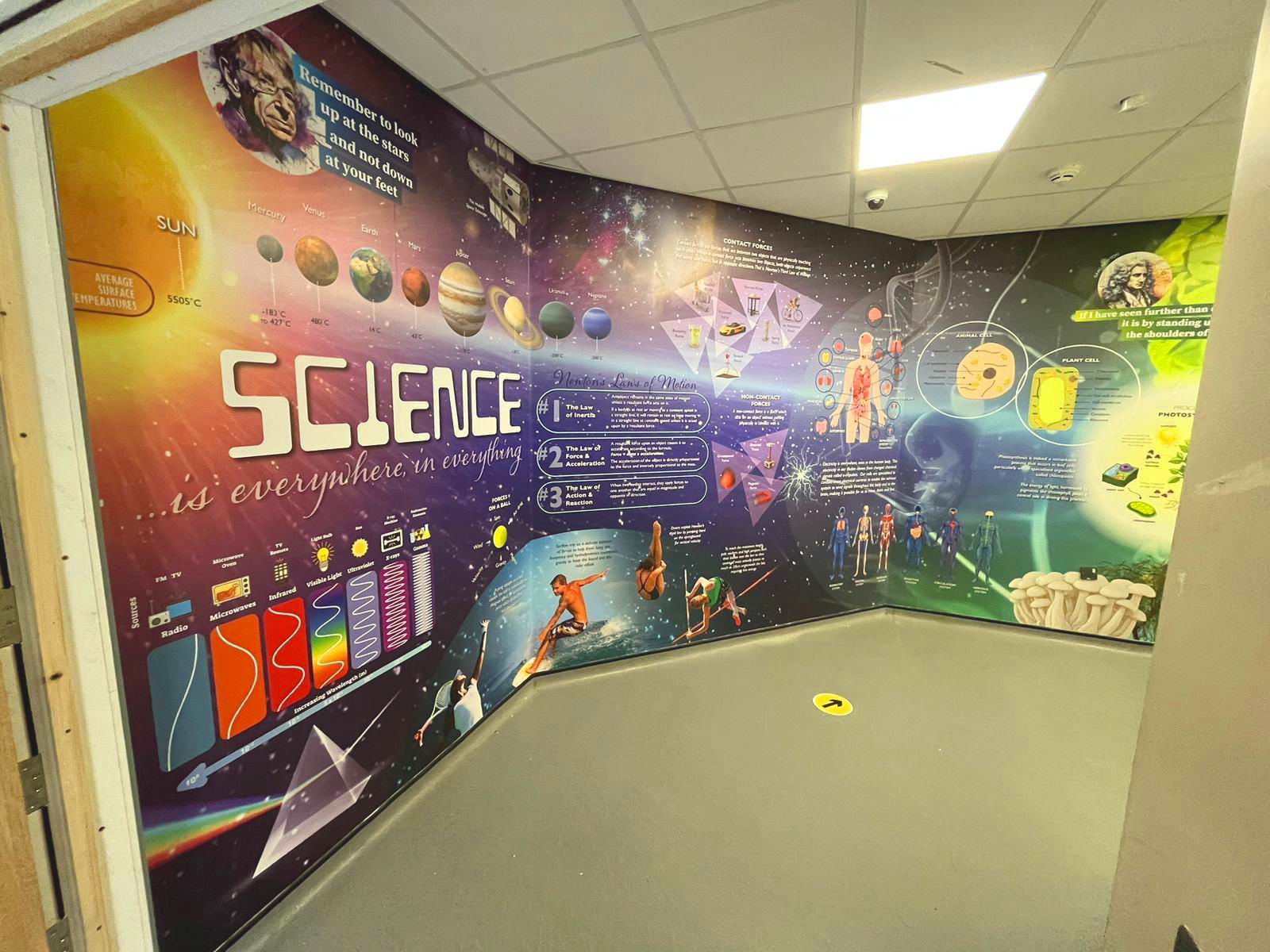
When a student walks past a science wall graphic every day, the terminology becomes part of their vocabulary through osmosis. That is the Silent Teacher in action.
Building Identity and Pride


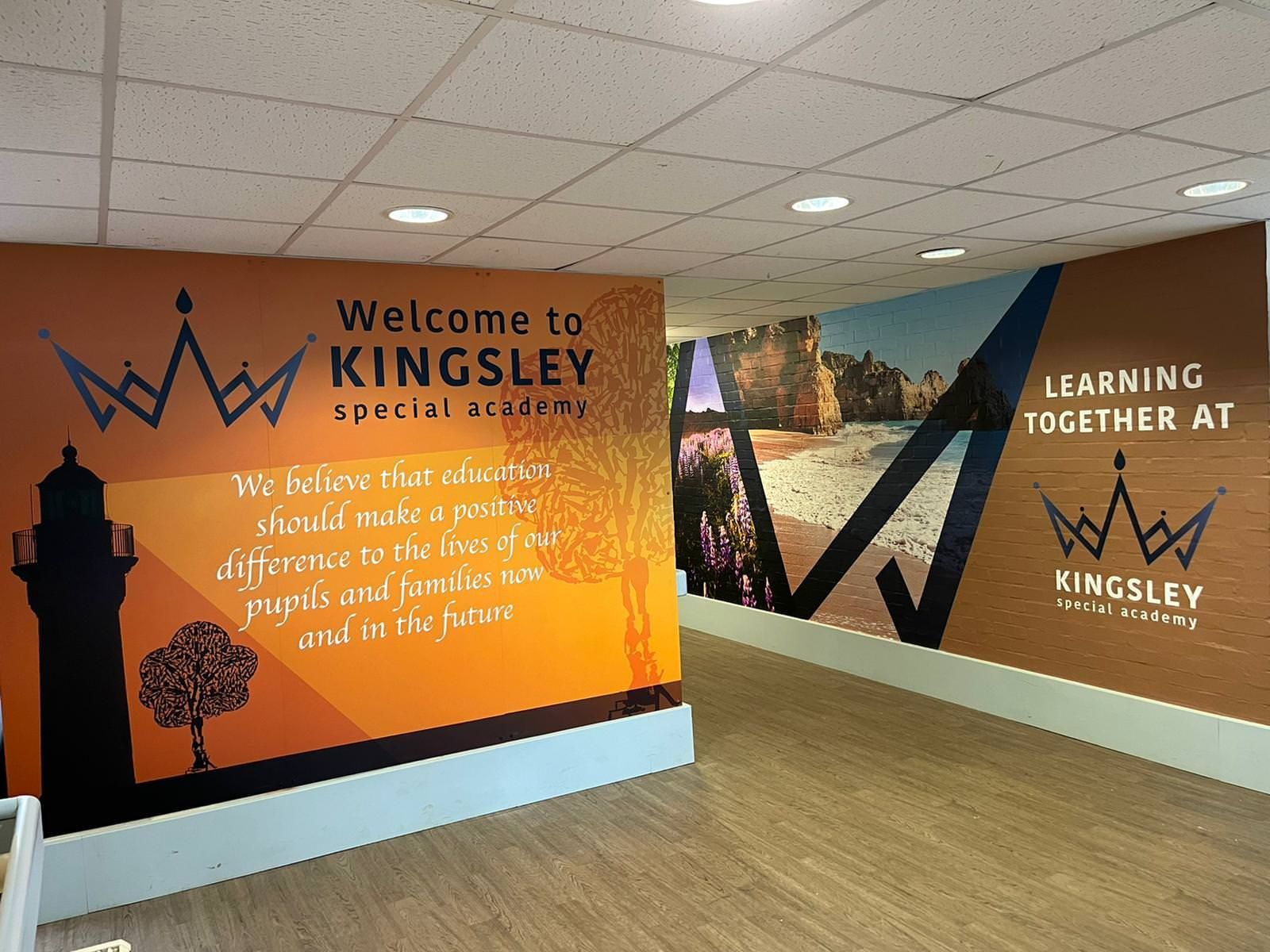
Beyond academic support, wall graphics are the primary vehicle for school branding.


What does your school stand for? If you ask a Year 7 student about your core values, could they name them?


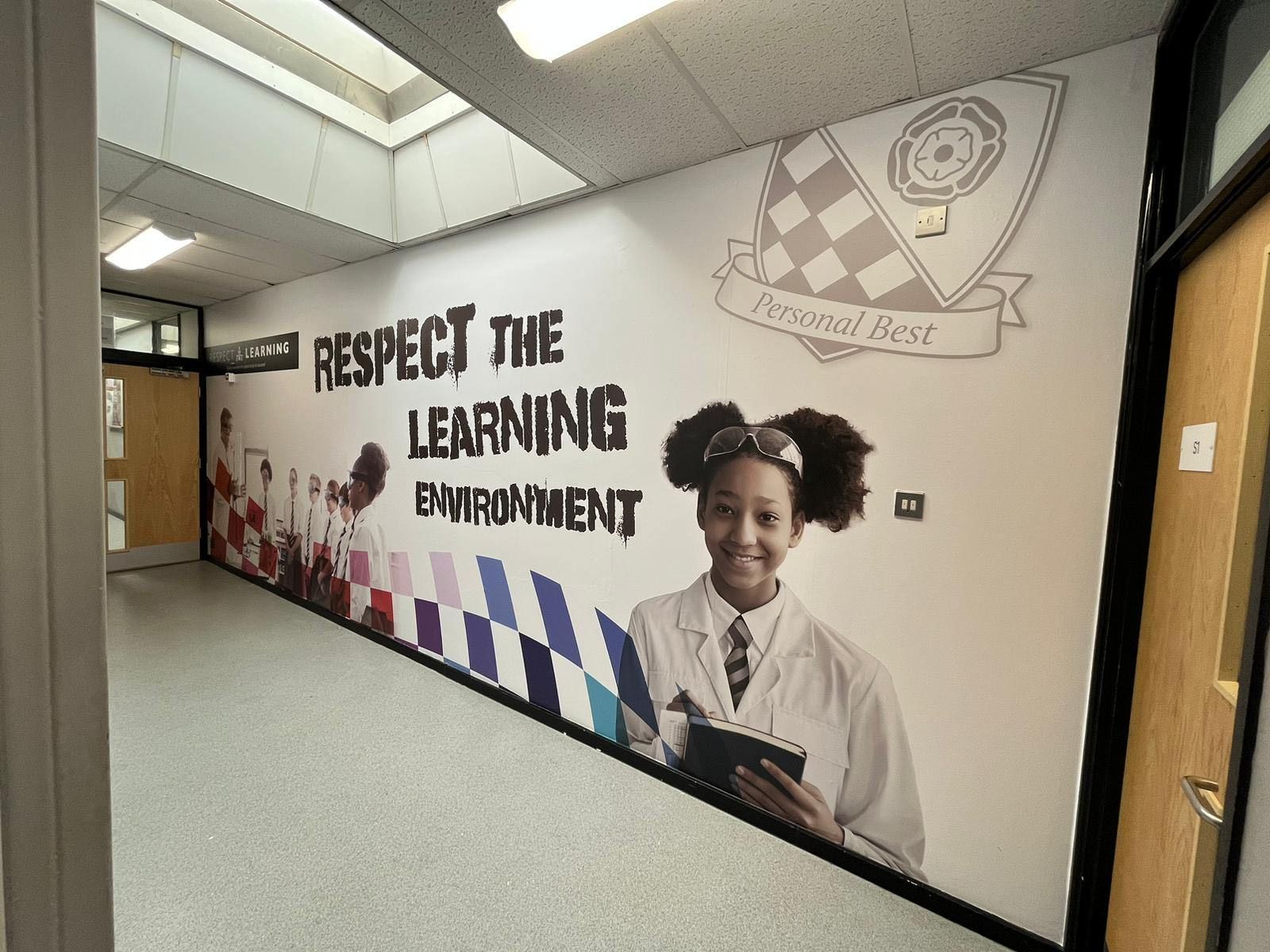
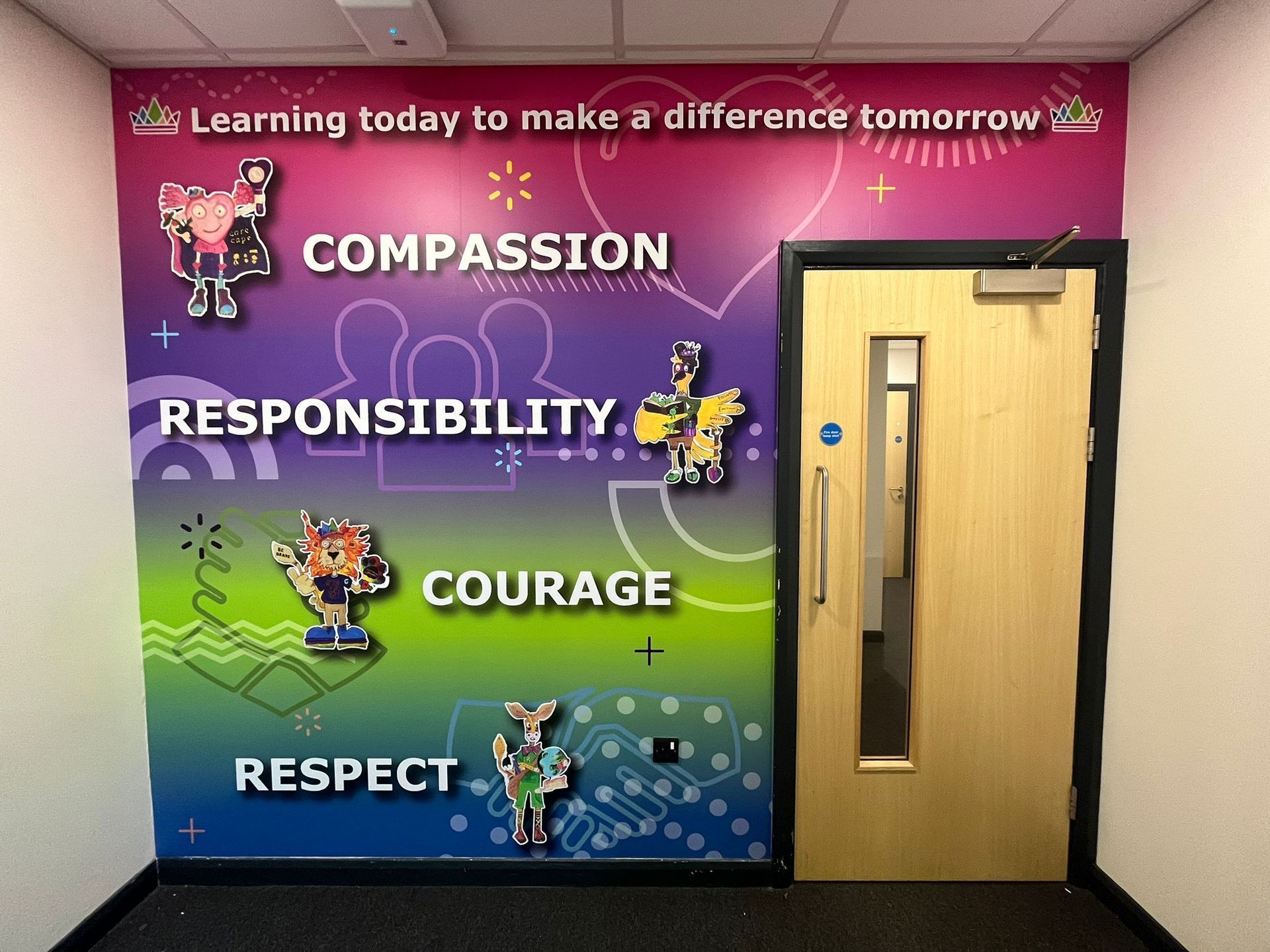
A school’s ethos shouldn't live in a handbook on a shelf. It should live on the walls. When we work with schools on wall art for schools, we often focus on "Value Walls." These are large-scale, high-impact displays that celebrate diversity, resilience, and community.


Creating a Sense of Belonging


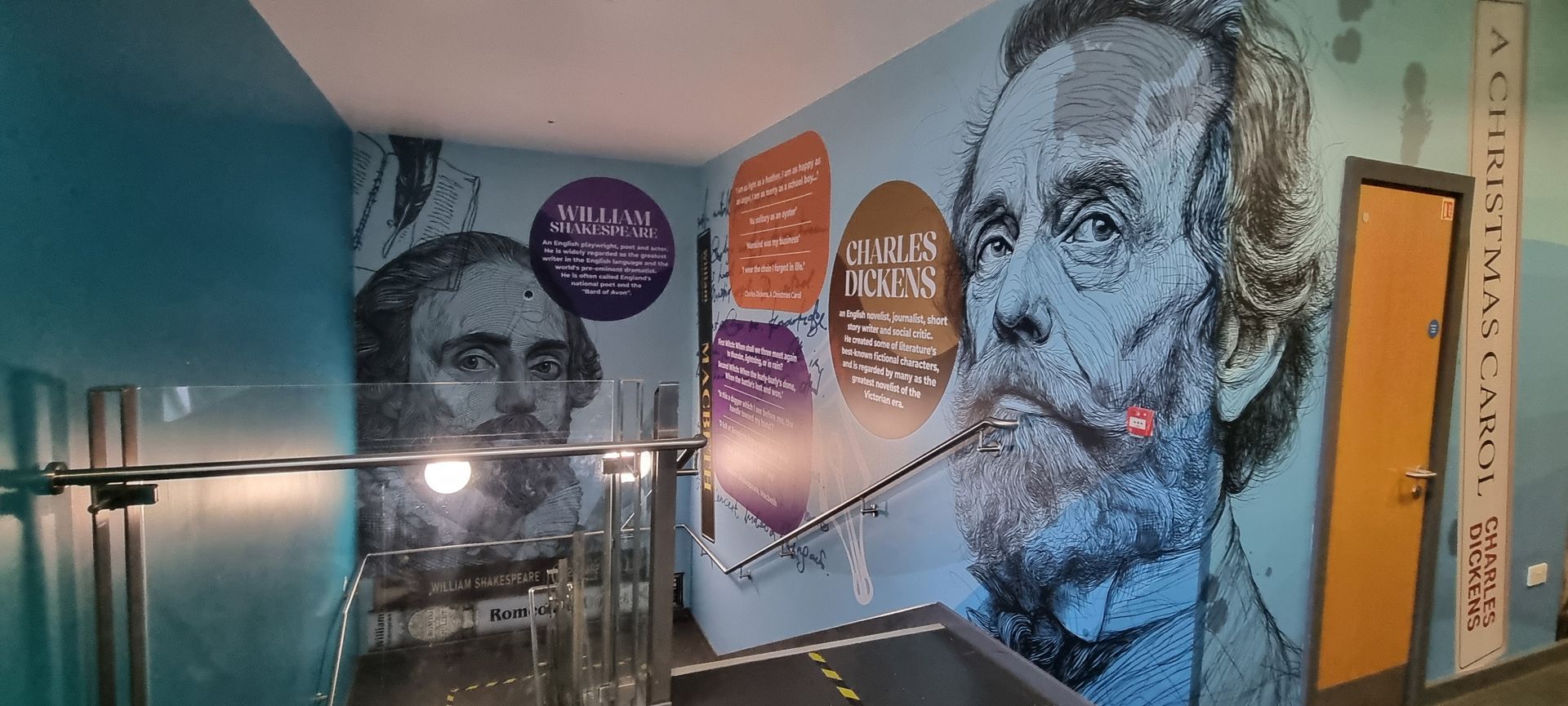
When students see themselves reflected in the graphics, whether through diverse role models in a library display or photos of recent school trips, they feel a sense of ownership.


This impact on pupils is measurable. Schools with high-quality visual environments often report better student behaviour and a stronger sense of community pride. It’s hard to drop litter or act out in a corridor that feels like a professional, respected gallery.
Beyond the Walls: Signage and Outdoors


The Silent Teacher doesn’t stop at the school gates. Outdoor school signage and window graphics play a massive role in how parents and visitors perceive your institution.


First impressions matter. A weathered, peeling sign from the 1990s tells a story. A crisp, branded entrance display tells a different one. It says: “We are professional. We are proud. We care about details.”


The Cubed Creative Difference: More Than Just Print


We know schools. For over two decades, Ellie and the team at Cubed Creative have specialised exclusively in the education sector. We aren't just a "print shop." We are design partners who understand the unique pressures of the school environment: from Ofsted requirements to tight budgets and even tighter installation windows.


A Complete Service


We handle everything. From the initial free site visit to bespoke design, high-quality printing, and expert installation. You don’t have to worry about measuring walls or choosing materials; we do the legwork so you can focus on leading your school.


Sustainability and Growth


We believe in leaving the world better than we found it. That’s why we’ve partnered with One Tree Planted. For every project we complete, we plant trees to help global reforestation efforts. When you invest in your school’s environment, you’re also investing in the planet’s future.
How to Start Your Transformation


If you’re looking at your walls and seeing "white space" instead of "learning space," it might be time for a change.


The process is simpler than you think:

  1. The Vision: We meet you on-site to discuss your goals. Are you focusing on literacy? Mental health? STEM?
  2. The Design: Our specialist designers create bespoke concepts tailored to your school’s specific dimensions and branding.
  3. The Impact: We install your graphics with minimal disruption, usually during school holidays or after hours.


Clear timelines. Regular updates. Fast communication. No hidden costs.

That transformation is why schools return to us again and again. They see the change in their pupils. They feel the shift in the atmosphere. They see the Silent Teacher finally getting the resources it needs to succeed.


Ready to transform your school?


Contact Cubed Creative today to book your free site survey, and let’s start turning your corridors into your most powerful teaching tool.
By angel July 2, 2026
Let’s be honest. When you walk into a top-tier private school, you feel it immediately. It’s in the air. The walls don’t just hold up the ceiling; they tell a story. They breathe excellence. But here is the secret most school leaders don’t realise: You don’t need a private school endowment to get that feeling. At Cubed Creative, we’ve spent 21 years working inside the UK education sector. We’ve seen the "before" and "after" of hundreds of state schools. We know that with a bit of strategy, the right materials, and a focus on high-impact areas, you can make a 1970s brick corridor look like a modern academy of the future. This isn't about spending more. It’s about spending smarter. Here is your insider guide to making your school look expensive on a state-school budget. 1. The "First Five Seconds" Rule  You only get one chance to make a first impression. In the design world, we call this the "threshold experience." When a prospective parent, an Ofsted inspector, or a new pupil walks through your front doors, what do they see? If it’s a cluttered noticeboard with curled-up sugar paper and Blu-Tack marks, the "expensive" vibe is already dead. Focus your budget on the Reception and Entrance. Instead of ten small posters, go for one massive, floor-to-ceiling wall graphic . A single, high-quality focal point creates an immediate sense of scale and professionalism. It suggests that the school is organised, well-funded, and proud of its identity.
By angel June 5, 2026
Summer is approaching. For school business managers and headteachers, this usually means one thing: the maintenance list. At the top of that list is almost always the corridors. They are the arteries of your school. Thousands of footsteps, bags dragging against walls, and the inevitable "scuff marks" that appear within weeks of a fresh coat of paint. You face a choice. Do you book the painters for another round of the "paint cycle," or do you look for a solution that actually lasts? At Cubed Creative, we’ve spent 21 years working inside schools. We’ve seen the difference between a corridor that is simply "clean" and one that is truly "inspiring." When you compare professional school wall graphics to fresh paint, the winner isn't just about aesthetics: it’s about your budget, your pupils, and your peace of mind. The Problem with the "Paint Cycle" We all know the routine. You spend a significant portion of your maintenance budget on a fresh coat of emulsion or eggshell during the summer holidays. By October half-term, the first scuffs appear. By Easter, the walls look tired again. This is the paint cycle . It’s a recurring expense that never actually solves the problem of a dull environment. While paint is the "standard" choice, it lacks the durability needed for high-traffic school environments. It doesn't offer protection against the daily wear and tear of a busy secondary school or the energetic movements in a primary hallway. More importantly, paint is silent. It doesn't teach, it doesn't guide, and it doesn't inspire. Why Wall Graphics Are the Long-Term Winner When we talk about wall art for schools , we aren't just talking about "stickers." We are talking about high-grade, laminated vinyl wraps designed specifically for heavy-duty use. 1. Durability that Defies the Corridor Our school wall graphics are finished with a protective laminate. This makes them incredibly tough. They are scuff-resistant and, perhaps most importantly for school staff, wipe-clean. Sticky fingerprints? Scuff marks from a backpack? They wipe right off. Unlike paint, which absorbs dirt and eventually chips, our graphics maintain their "just installed" look for years. When you look at the lifecycle cost, investing in graphics once every 5–7 years is far more cost-effective than repainting every year. 2. Turning "Dead Space" into Learning Space  A painted wall is a missed opportunity. Corridors are the perfect place for passive learning . Imagine your pupils walking to their next lesson surrounded by a giant timeline of British history, or a literacy-themed corridor featuring the spines of classic novels. You aren't just decorating; you are teaching. By using bespoke wall art , you can reinforce the curriculum outside the classroom. From Science and STEM displays to school values and maps, the educational value is immense.
By angel May 15, 2026
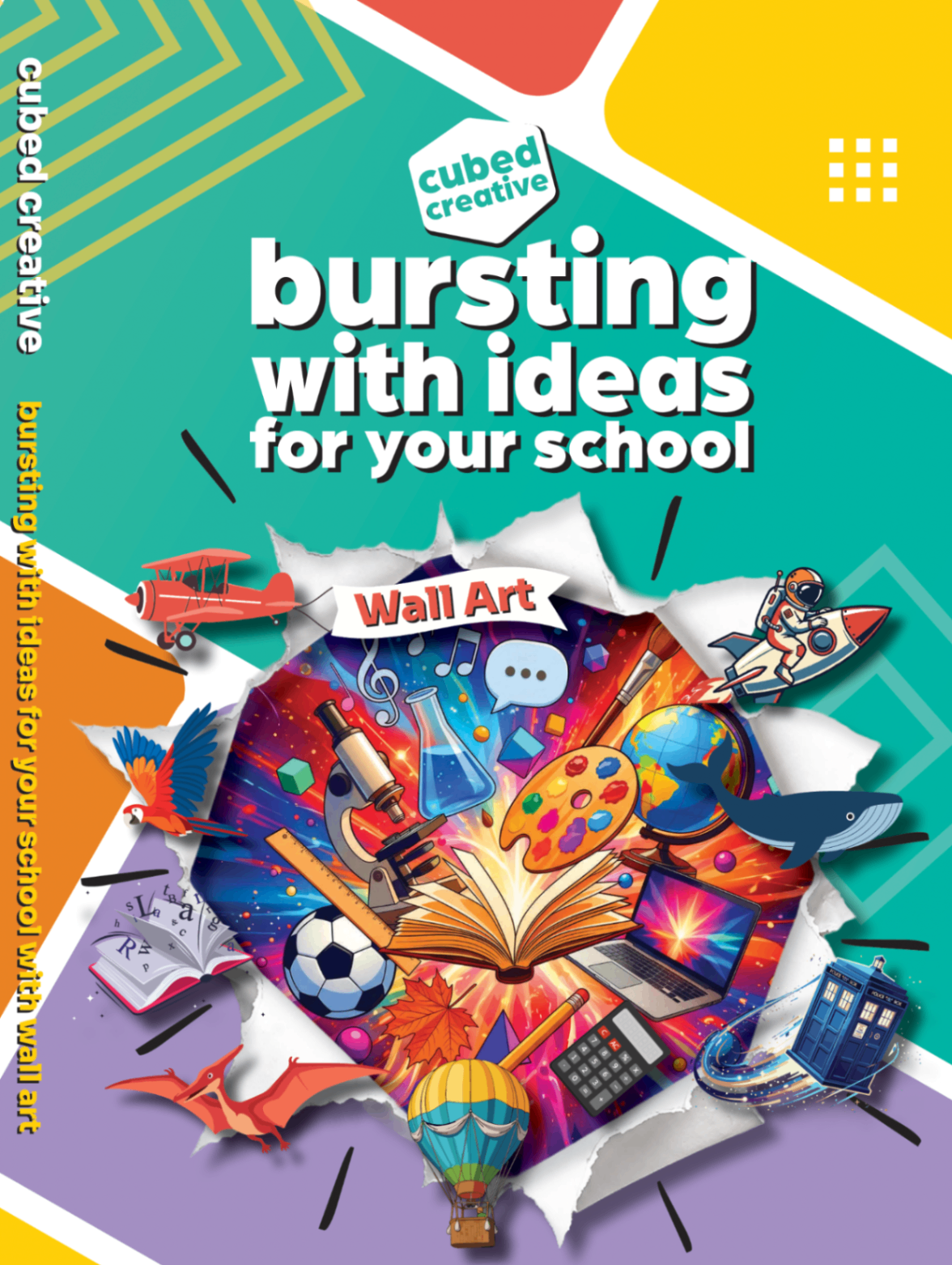
As we move through the middle of the school year, your thoughts are likely already drifting toward the summer holidays. Not just for the much-needed break, but for the opportunity it brings. When the corridors fall silent and the classrooms sit empty, your building finally has the chance to breathe. This is the window for the "September Reset" , that magical moment when students return to find their environment transformed, sparking a renewed sense of pride and curiosity. At Cubed Creative, we’ve spent the last few months working on something special to help you plan that transformation. We are thrilled to announce the launch of our brand new 2026 School Wall Art Brochure . It’s more than just a catalogue of past work; it’s the ultimate guide for a "September Reset" . It’s a toolkit for school leaders who want to move beyond tired noticeboards and plain magnolia walls. It’s packed with fresh inspiration, curriculum-linked designs, and the practical details you need to make a project happen during the summer break. Why Now? The Power of the September Reset The environment your pupils walk into on that first Tuesday in September sets the tone for the entire academic year. It’s a physical manifestation of your school’s expectations, its warmth, and its ambition. A "September Reset" isn’t just about making things look "pretty." It’s a strategic move to: Reinforce school values from the moment a child enters the gates. Reduce anxiety by creating calming, supportive spaces for wellbeing. Boost learning by turning "dead space" into passive learning zones. Improve behaviour through high-quality environments that show students they are valued. By planning your Summer wall art now, you ensure that all the heavy lifting: the design, the printing, and the installation: happens while the school is empty. You get the "wow factor" without any disruption to the school day. 21 Years of Creative Excellence When you’re looking for a partner to transform your school, experience matters. We’ve been working in the education sector for 21 years. Over those two decades, we’ve seen trends come and go, but our core mission has remained the same: to create environments that inspire. We understand the unique pressures of the UK education system. We know that budgets are tight, timelines are non-negotiable, and the materials used need to be "school-proof." Our 21 years of expertise mean we don’t just "put stickers on walls": we understand how to design for impact and install for longevity. What’s Inside the 2026 Brochure? The new brochure is designed to help you navigate the different ways wall art can support your School Improvement Plan. Here’s a sneak peek at the key areas we cover:
By angel April 17, 2026
You’ve seen it before. A beautiful, vibrant wall display that looked incredible on the day it was installed. Fast forward six months, and the edges are starting to curl. A year later, it’s peeling away at the corners, or the vibrant blues and reds have started to look a little tired and faded. In a busy school environment, "good enough" usually isn't. When you are looking to transform your school corridors, reception areas, or classrooms, it is easy to focus entirely on the design. After all, the design is what tells your story. It’s what inspires your pupils and impresses your visitors. But the material those designs are printed on? That is what determines whether your investment lasts for a decade or ends up in the bin before the next OFSTED inspection. At Cubed Creative , we’ve spent 21 years working inside schools. We know that a corridor isn't just a walkway; it’s a high-traffic zone where hundreds of blazers, backpacks, and wandering hands pass by every single hour. Choosing the right school wall graphics materials is the difference between a long-term asset and a short-term headache. The Science of the "Shrink": Monomeric vs. Polymeric Vinyl If you’ve been gathering quotes for school wall graphics , you might have noticed a significant range in pricing. Often, the "cheaper" quotes are using what we call Monomeric vinyl. To keep it simple: vinyl is made of plasticisers. In monomeric vinyl, these molecules are short and "unbound." Over time, especially when subjected to the fluctuating temperatures of a school building, these molecules migrate. The result? The vinyl literally shrinks. When vinyl shrinks on a wall, it pulls away from the edges. It leaves a sticky, unsightly residue that attracts dust and dirt. It looks poor, and more importantly, it becomes a target for inquisitive fingers to pick at. This is why we champion polymeric vinyl school graphics  Polymeric vinyl is engineered with longer molecular chains. It is far more stable. It doesn't shrink, it doesn't curl, and it stays exactly where we put it. It’s the gold standard for long-lasting school wall displays . When we talk about durability, we aren't just talking about the print staying bright; we’re talking about the material staying bonded to the wall.
By Gary Boad April 6, 2026
The morning rush. You know the one. It is a whirlwind of lost shoes, half-eaten toast, and the ticking clock. Then comes the final hurdle: the school gate.
By angel March 20, 2026
We’ve all been there. It’s 4:00 PM on a Tuesday, you’re armed with a staple gun that’s seen better days, and you’re staring at a vast expanse of blue sugar paper that refuses to stay flat. You want your classroom to be an inspiring hub of learning, but by the time the final border is pinned, it looks more like a chaotic explosion in a stationery shop. At Cubed Creative, we’ve spent the last 21 years helping schools transform their environments. We’ve seen the good, the bad, and the "why is that poster from 1994 still there?" The truth is, your walls are more than just partitions between rooms. They are silent teachers. When used correctly, school wall graphics can boost engagement and reinforce key concepts. When used poorly, they become a distracting mess that hinders focus. Here are the seven most common mistakes schools make with classroom wall displays, and, more importantly, how you can fix them. 1. The "Everything but the Kitchen Sink" Approach There is a common misconception that a "good" classroom is a covered classroom. We feel the urge to fill every square inch of brickwork with posters, bunting, and student work.  The Mistake: Visual overload. Research suggests that heavily decorated classrooms can actually decrease student performance. When every wall is screaming for attention, the brain struggles to filter out the noise. This leads to cognitive overload, particularly for pupils with SEND or sensory processing sensitivities. The Fix: Aim for the 20% rule. Keep at least 20% of your wall space clear. This "white space" gives the eyes a place to rest and allows the important displays to actually stand out. Think quality, not quantity.
By angel March 2, 2026
An Open Evening is not just an event on the calendar. It is a defining moment. Before the results are discussed. Before the curriculum is explained. Before questions are asked. Families are already forming an opinion. And your environment is leading that conversation. The Challenge: You Only Get One First Impression When parents walk through your doors, they are looking for reassurance. Is this school calm? Is it ambitious? Does it feel purposeful? Will my child belong here? A blank wall is a mystery. An inconsistent board confuses. A wall that has not changed for months or years is an indicator that communication with the wall is not important. But clear, intentional design builds confidence immediately. Your space either reinforces your message — or distracts from it.
By Gary Boad February 21, 2026
Step into any hallway at school. Something sits there before any text shows up at all. Quiet. A spark of drive. Heat in your steps. Yet at times, everything feels too heavy to carry A flash of colour stirs something deep, almost right away. Inside classrooms, that instinctual reaction holds weight - greater than many allow themselves to see. What keeps people okay isn't only rules or school counsellors. It shows up in each part of the daily world that kids navigate.
More Posts

Back to home