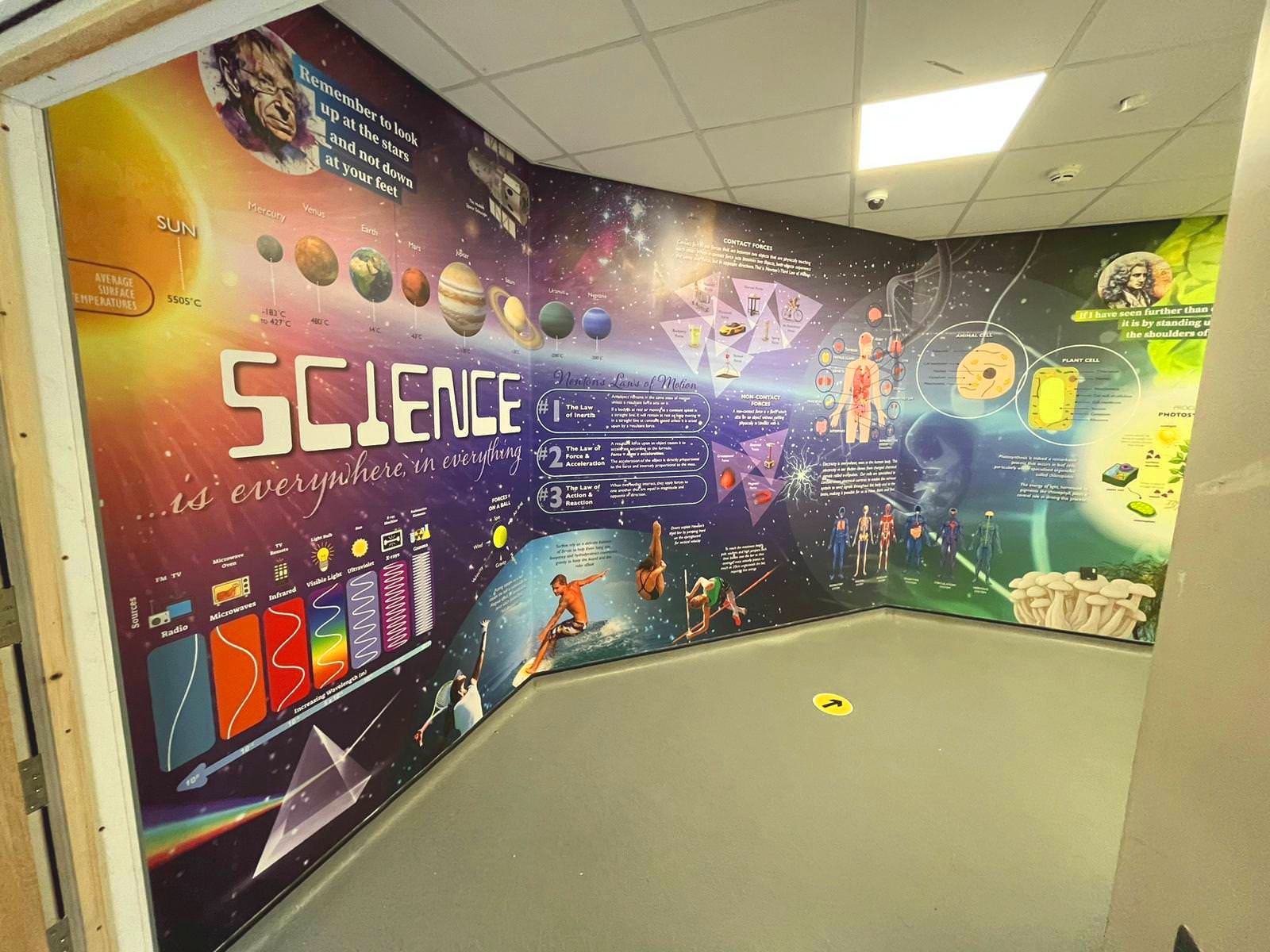
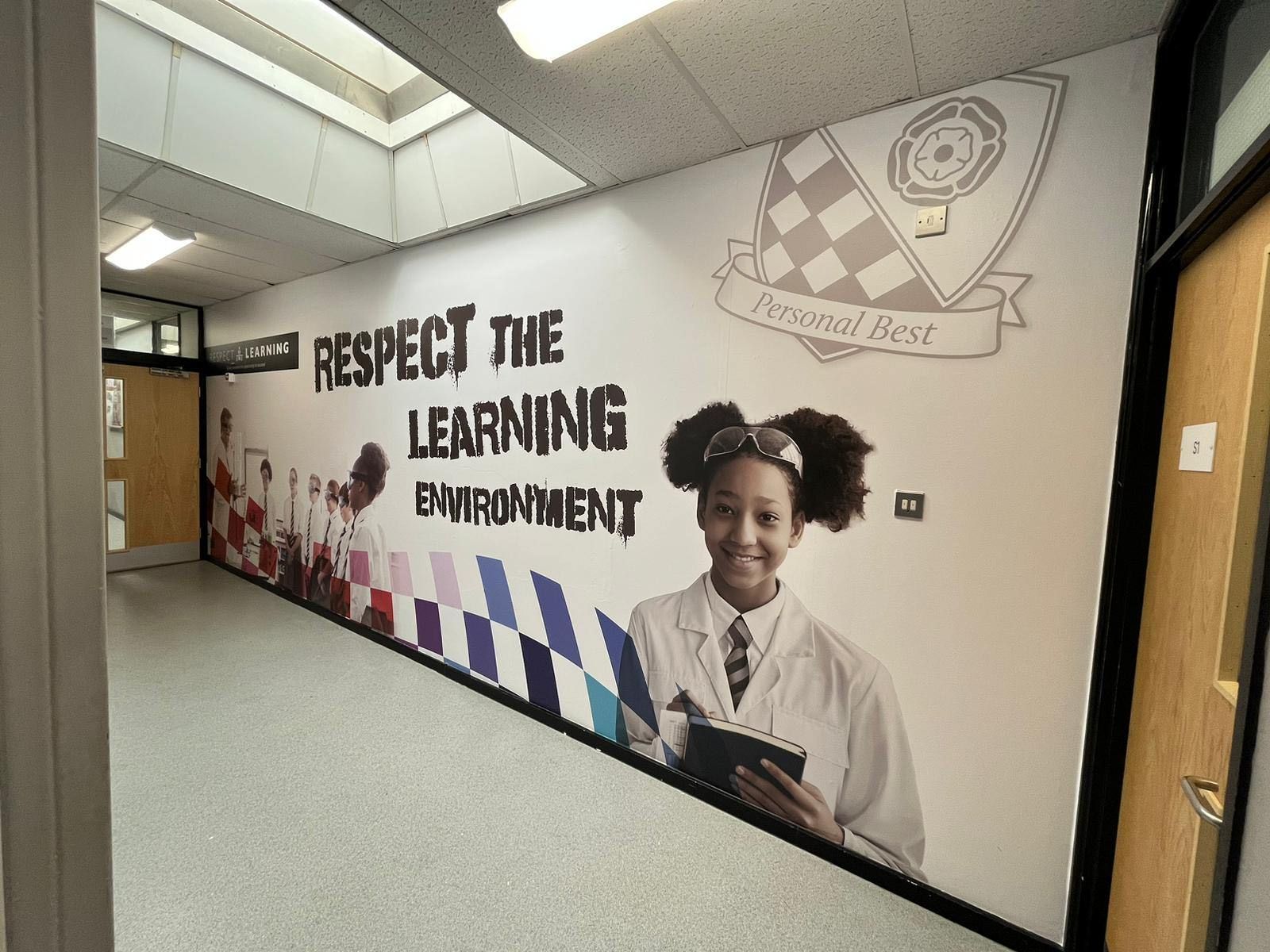
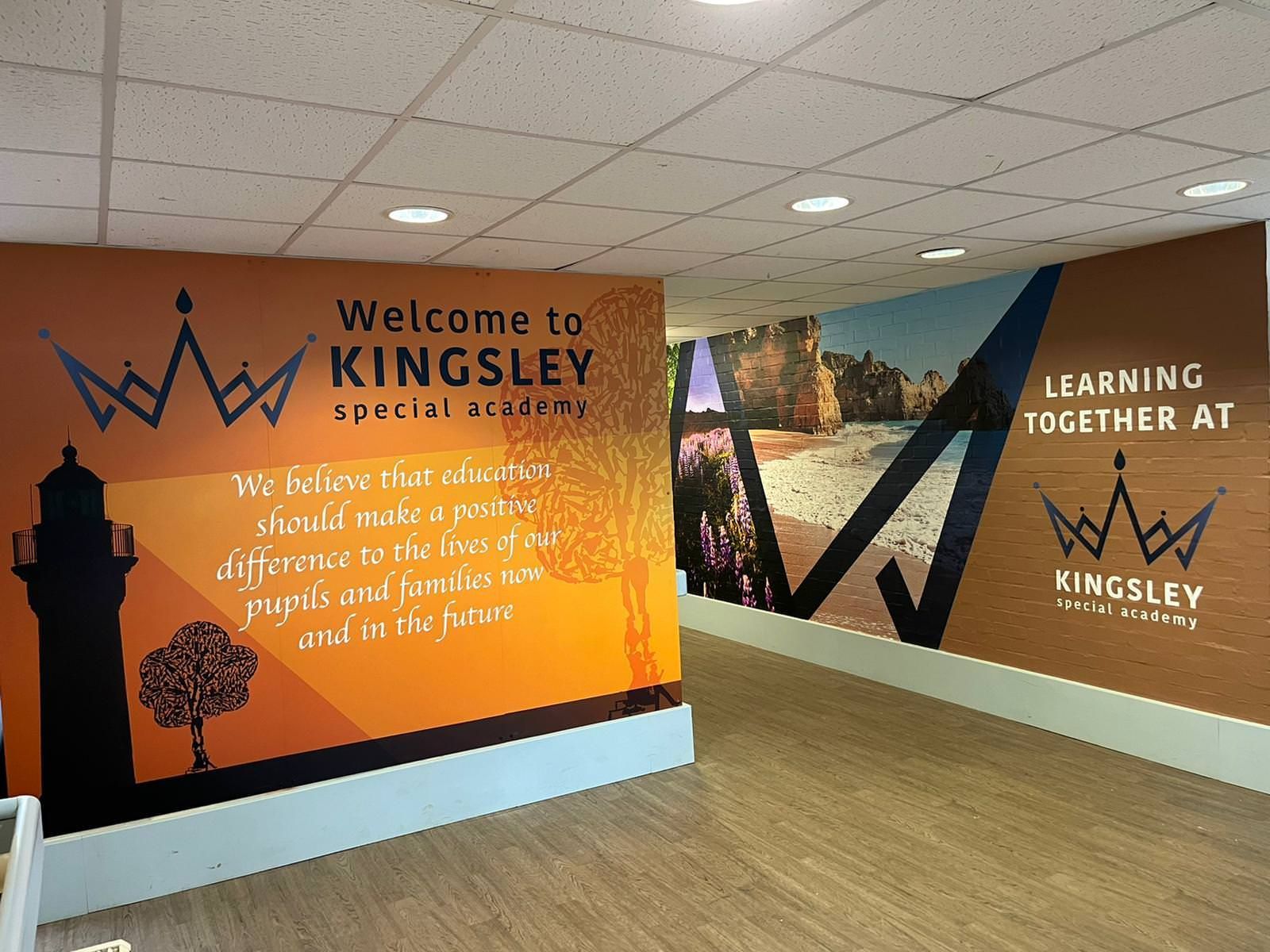
A library’s biggest competitor isn’t another subject. It’s the screen in every pupil’s pocket. A library that looks like a storeroom loses to a phone every time.
That’s why the environment matters. Before programmes and rewards, make the library feel like somewhere pupils want to be: welcoming, easy to explore and full of stories. The right school wall graphics won’t make every child a reader overnight, but they can make choosing a book feel more inviting.
Here are ten ideas, drawn from the kinds of reading spaces Cubed Creative has designed and installed for schools.
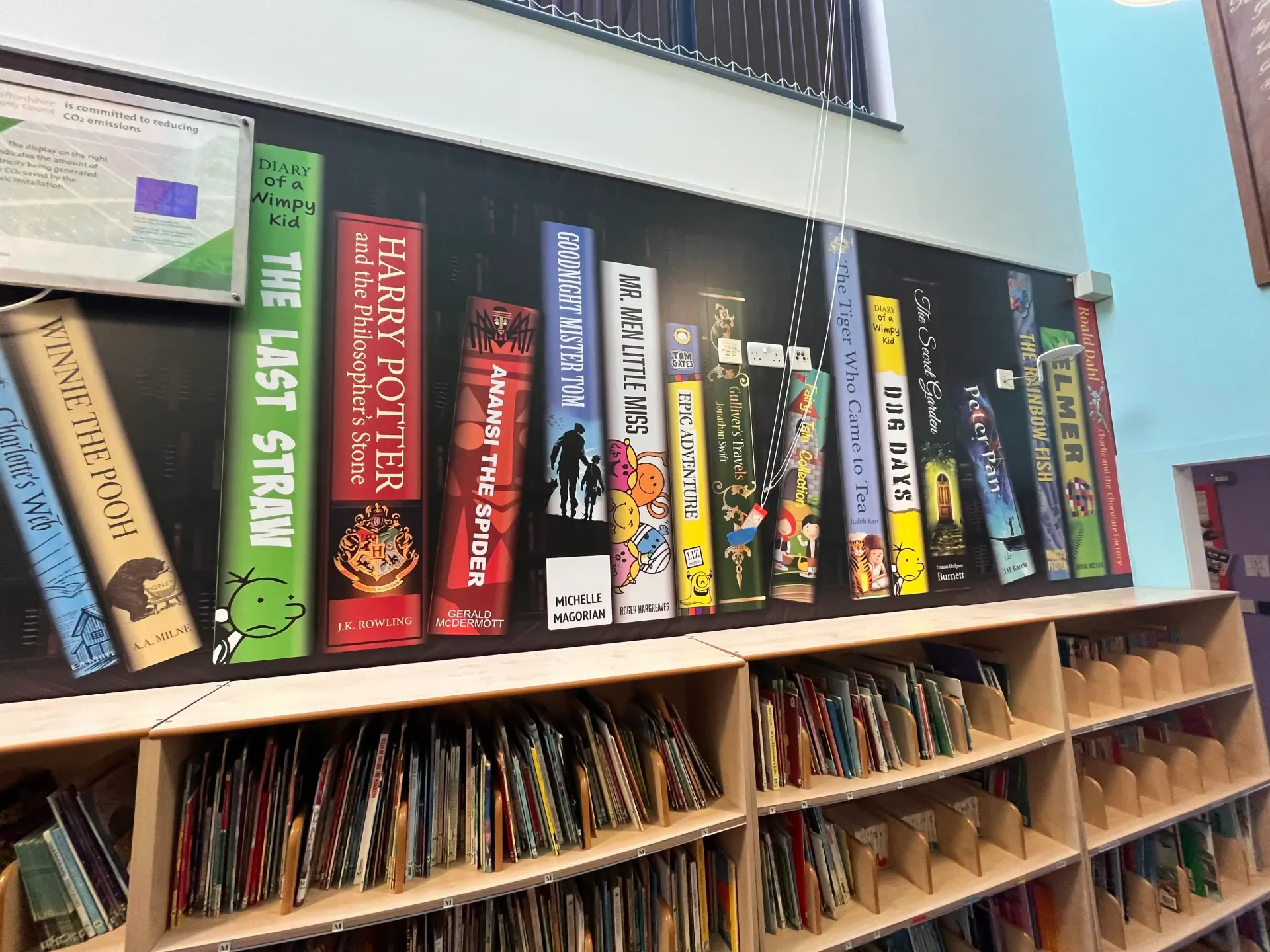
1. Could a book spine wall turn a blank wall into a giant bookshelf?
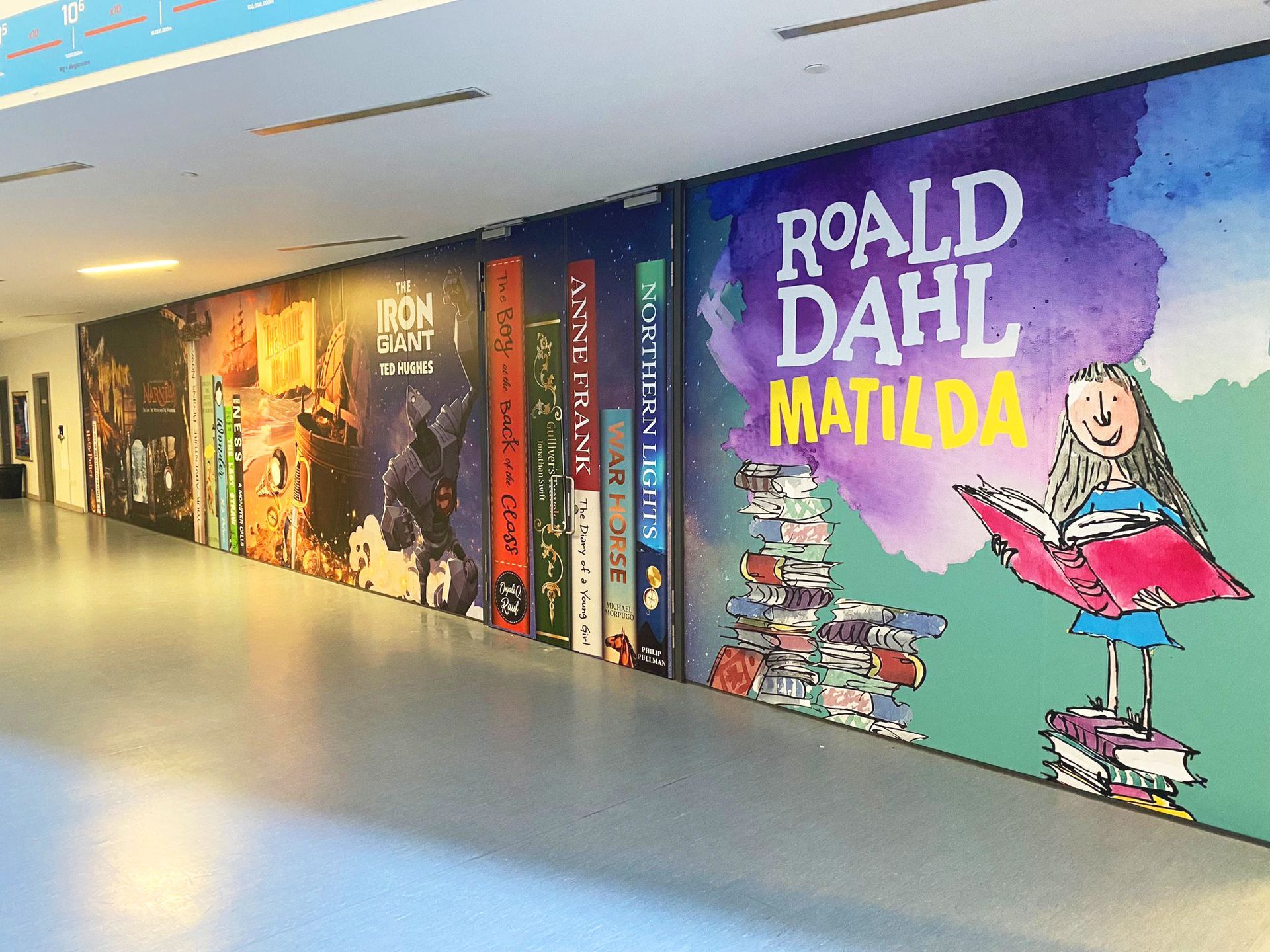
A book spine wall mural makes the whole wall look like a row of enormous books. It creates an instant library landmark and gives pupils something to browse with their eyes before they even reach the shelves.
Choose a mix of recognisable titles, genres and colours that suits your pupils and collection. This is one of the most distinctive forms of wall art for schools: it makes a strong visual statement while keeping the room unmistakably about reading.
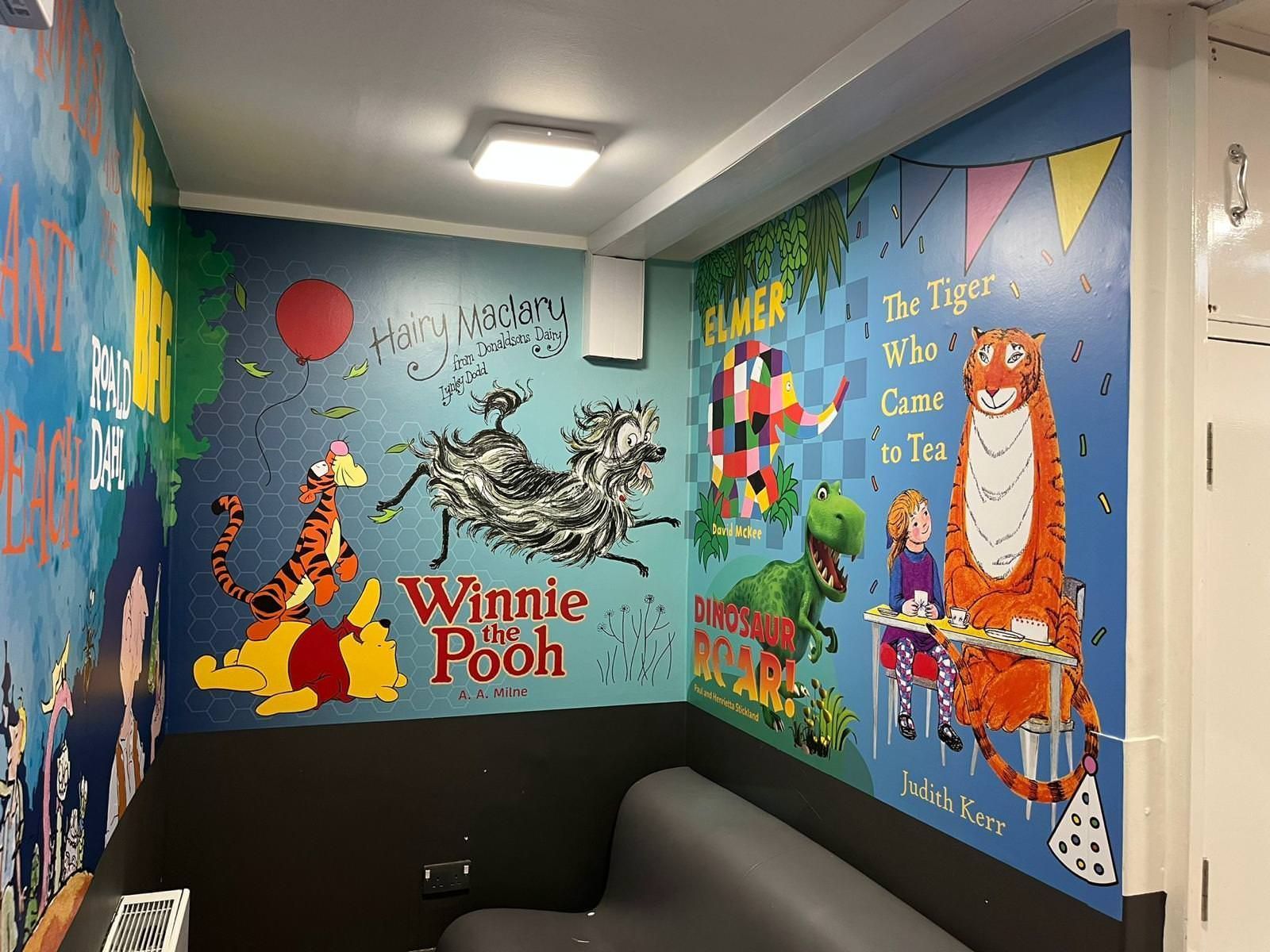
2. Would a storybook character wall help younger pupils feel at home?
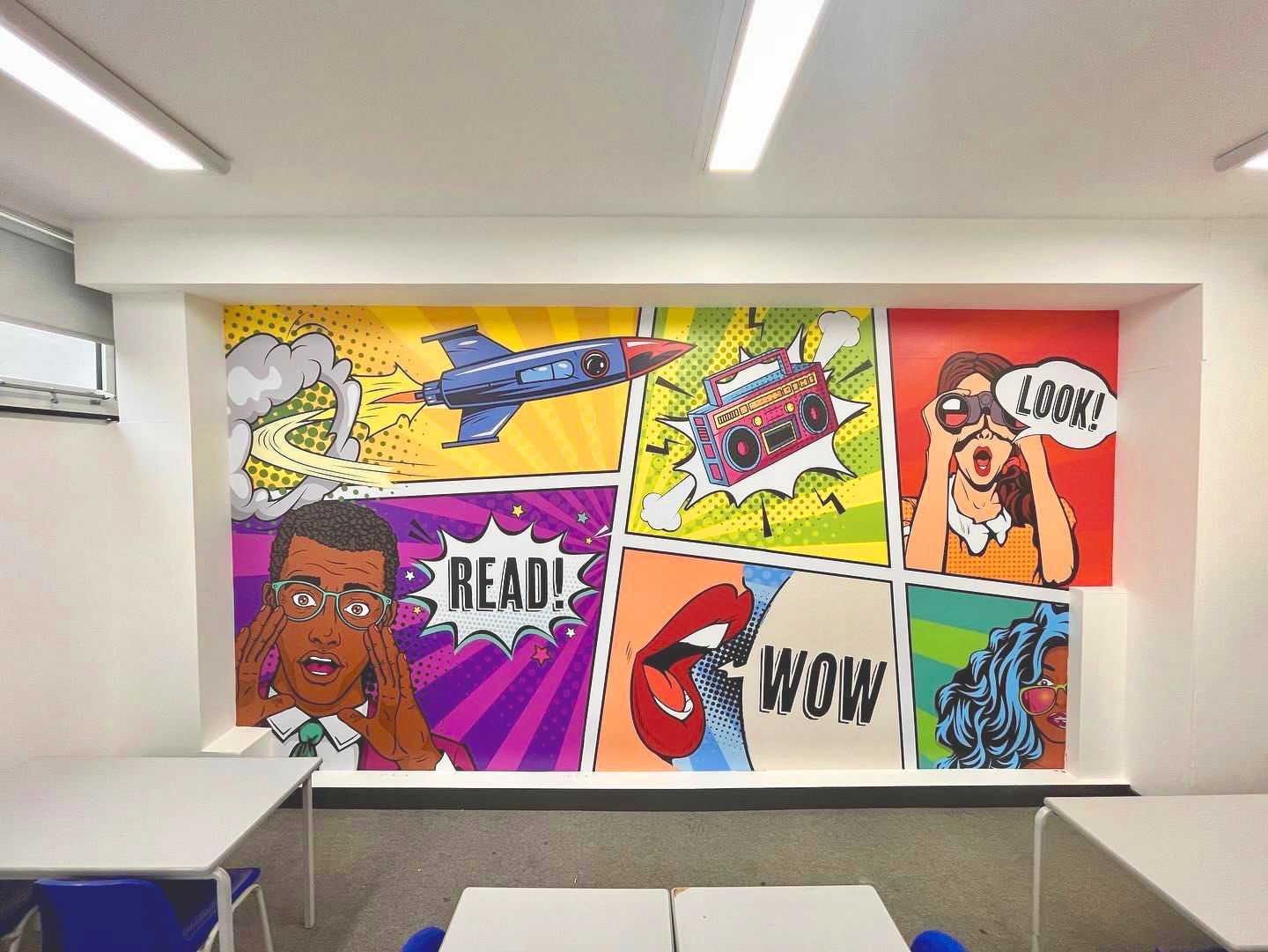
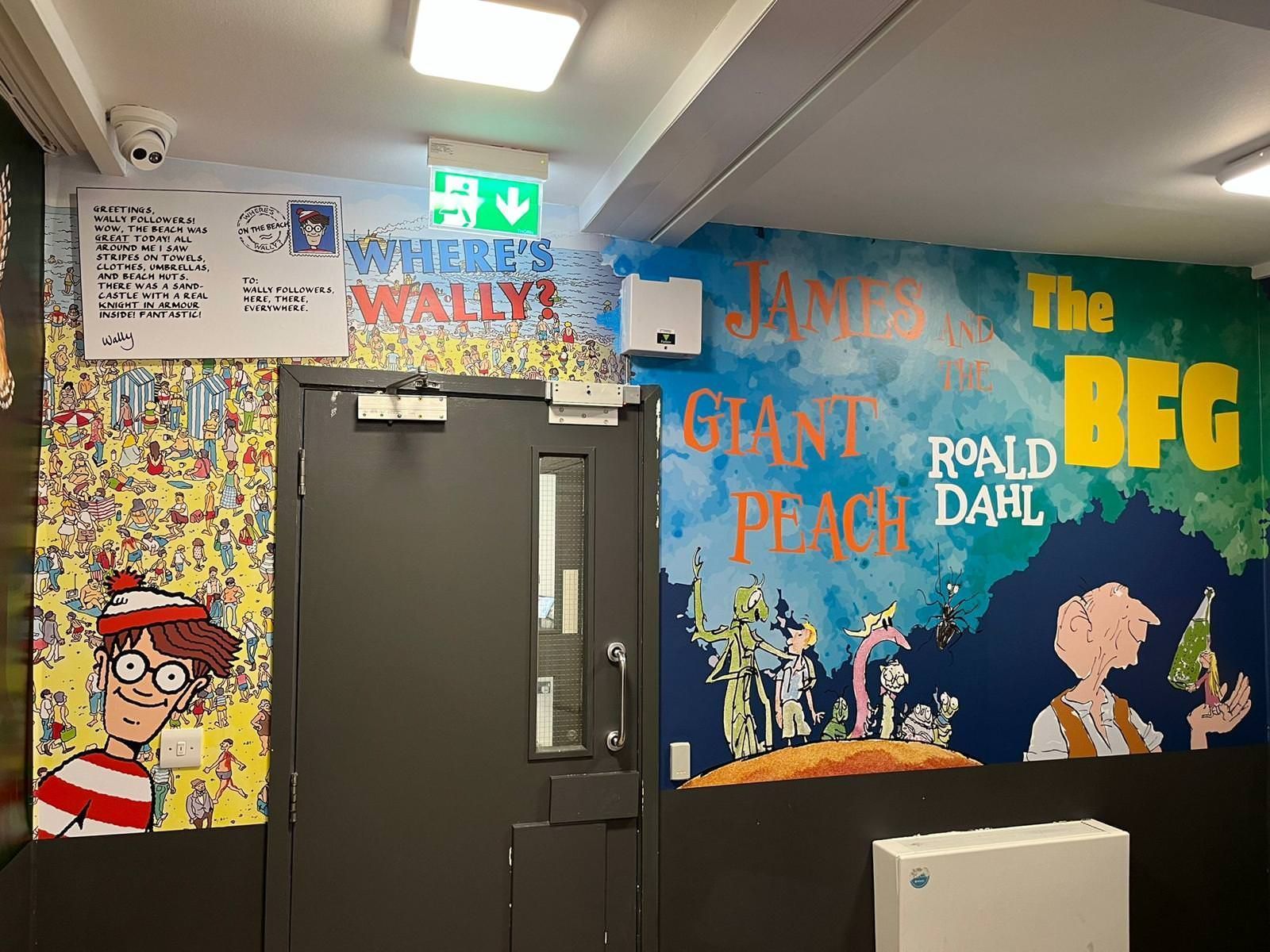
A storybook character wall gives younger readers a friendly welcome into the library. Use colourful, familiar-style characters and book-inspired details to create a display that feels playful without overwhelming the space.
Think about how pupils will use the room, too. Keep the graphics at a scale children can enjoy up close, and leave room for books, seating and pupil work. These classroom wall displays can help a library feel less formal and more inviting.
3. How can a themed reading corner make a small space feel immersive?
A themed mural can help a reading corner feel like a destination, even when it occupies just one end of a room. Woodland, space and under-the-sea themes all offer a clear visual world for pupils to step into.
Choose a theme that supports the feeling you want: calm and cosy, curious and adventurous, or bright and playful. Pair the mural with comfortable seating and a small, carefully chosen selection of books. The visual setting invites pupils in; the books give them somewhere to go next.
4. Can stair riser graphics lead pupils towards the library?
Stair riser vinyls can turn a route into a reading trail. Add book titles, short prompts or reading-themed words to the risers, so each step builds anticipation as pupils climb towards the library.
Keep the wording brief and legible, and plan the design around the stairs’ dimensions and use. Stair graphics work best when they add character as well as direction, helping the library feel connected to the wider school.
5. What makes an author spotlight wall worth returning to?
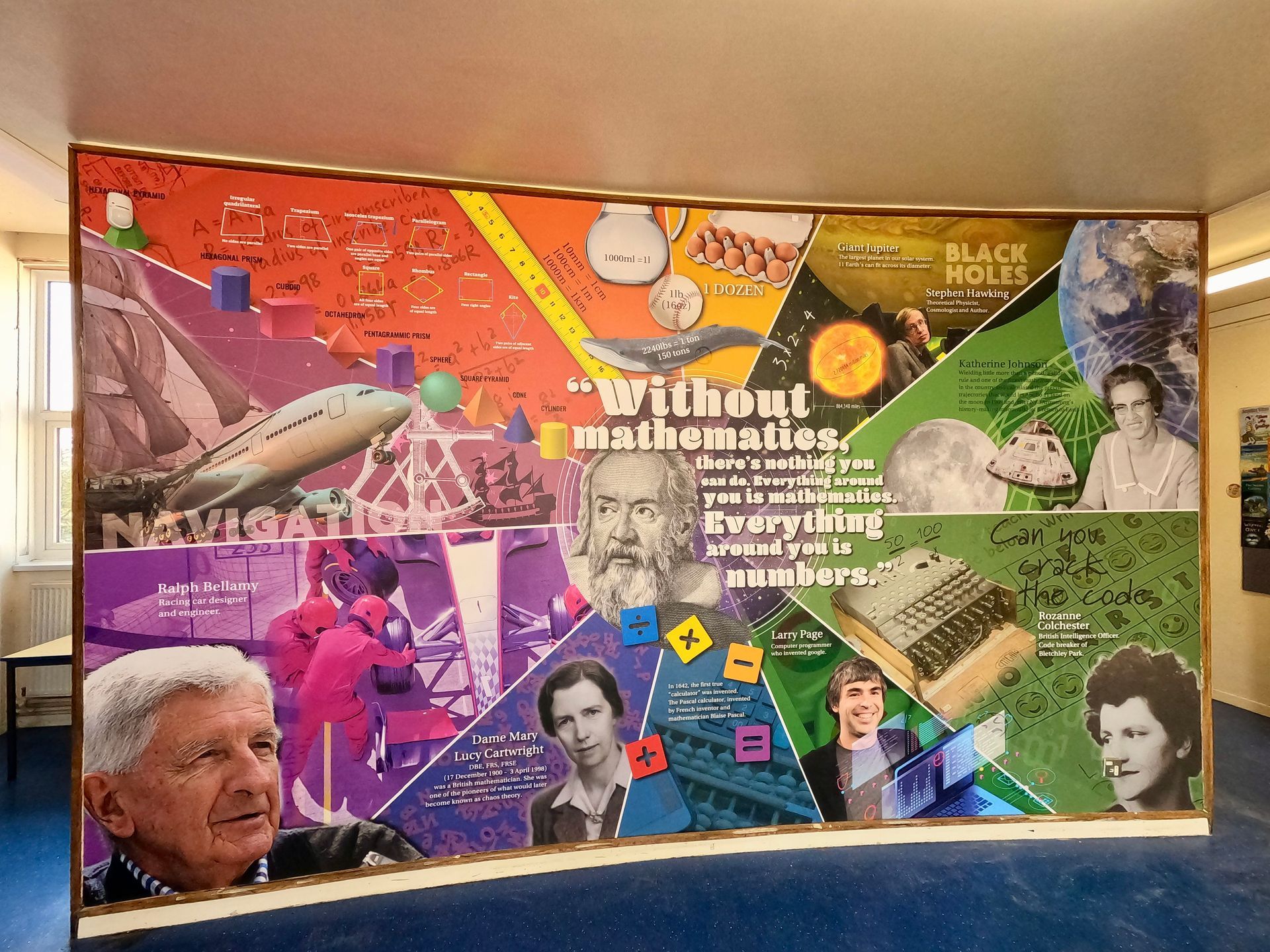
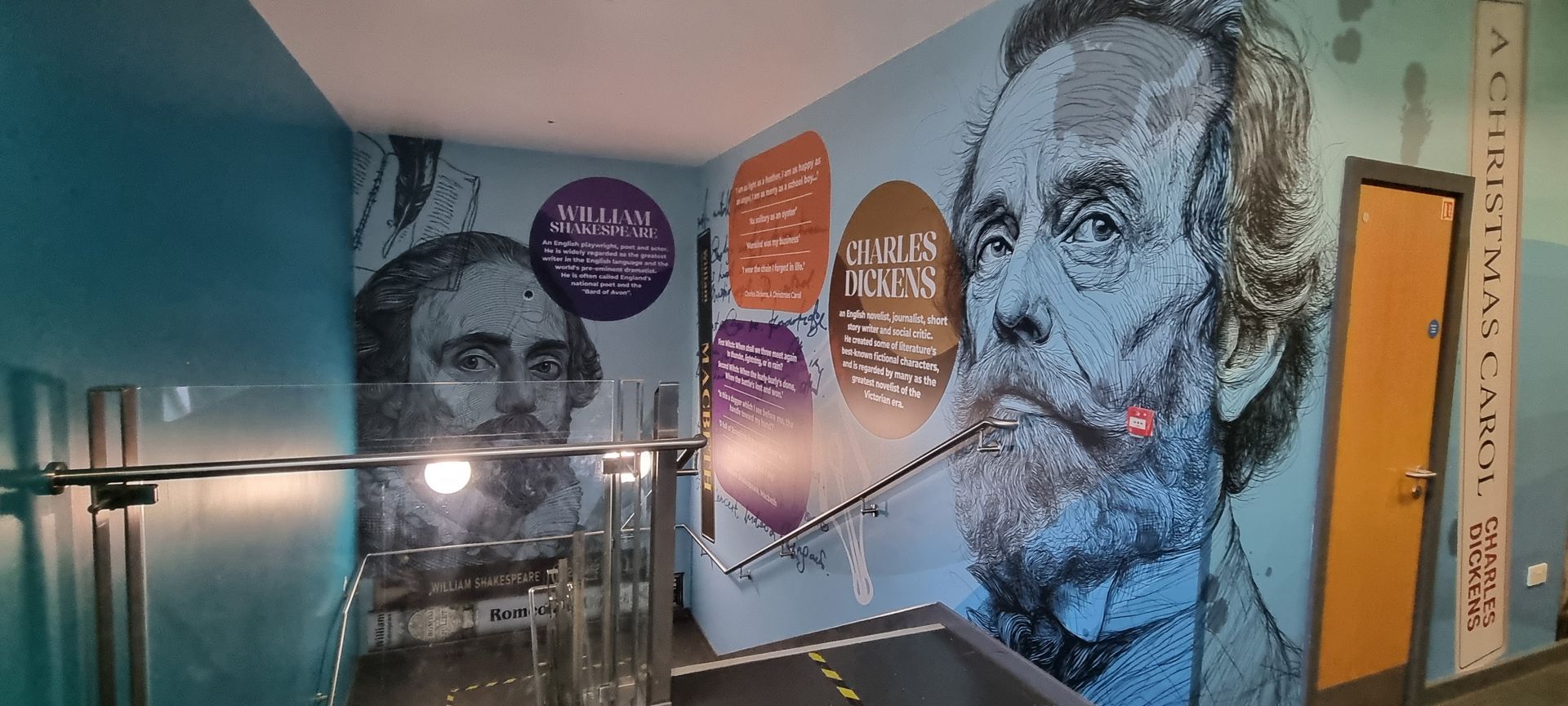
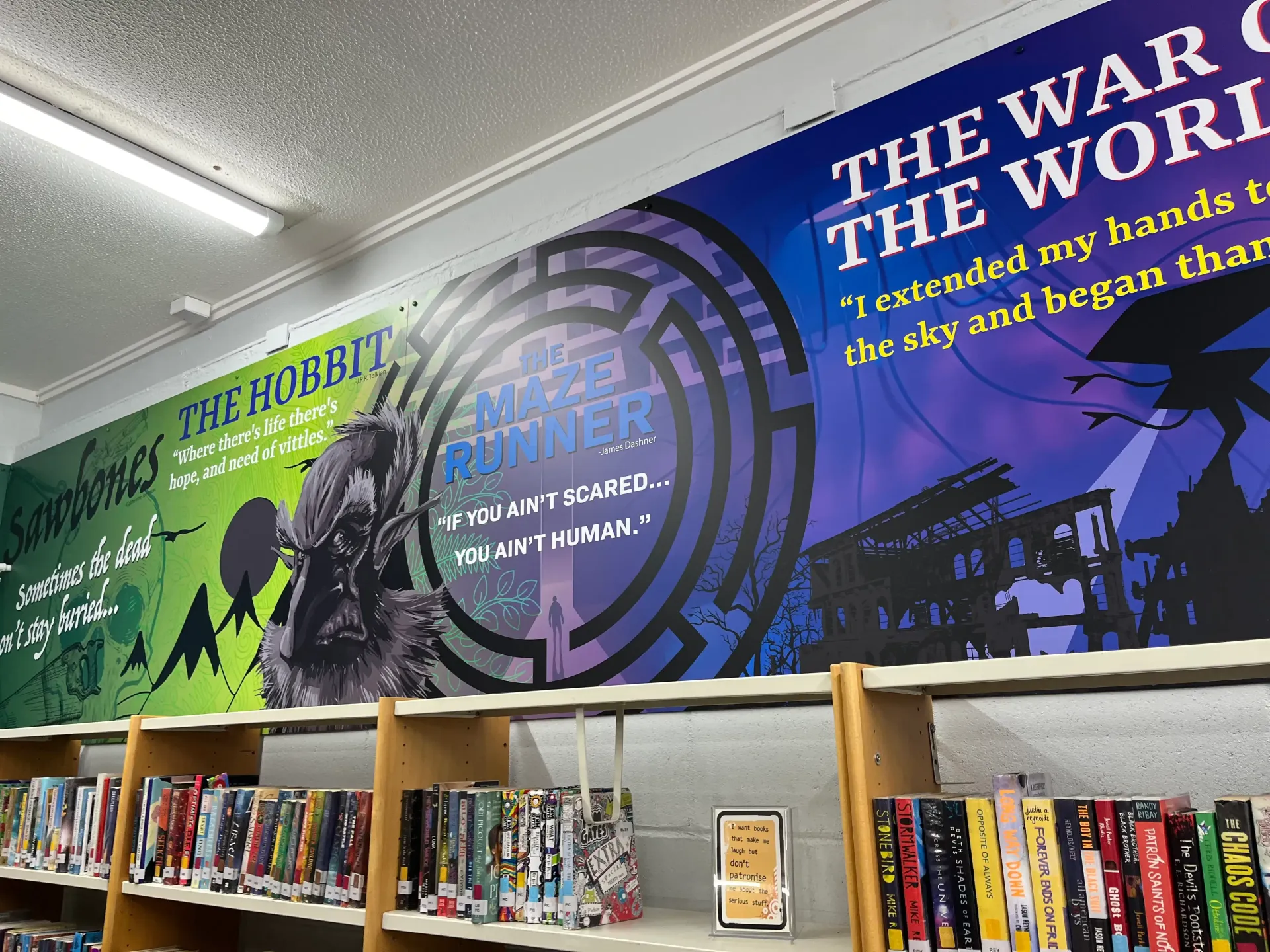
An author spotlight wall gives pupils a reason to pause, discover a writer and look for a book. Feature a small selection of authors, a short quote and a simple introduction to their work.
Make it easy to refresh. A rotating spotlight can reflect what pupils are reading, support a class text or introduce a new voice. These school wall graphics are more useful when they spark a conversation than when they simply fill a wall.
6. How can colour and icons make library sections easier to find?
A genre zoning system uses consistent colours and simple icons to help pupils find their way around. Mark fiction, fantasy, mystery, non-fiction or other sections with a clear visual cue that works alongside your existing labels.
Keep the system simple. Too many colours or symbols can make browsing harder, not easier. Use the same cues on shelves, signs and related wall decals for schools, and pupils can start to recognise the layout as they explore.
7. Could a “Where will reading take you?” wall broaden pupils’ horizons?
A destinations wall connects reading with places, real or imagined. Show a map, a route through different settings or a collection of destinations with a simple prompt: “Where will reading take you?”
It can feature faraway countries, the deep sea, outer space or worlds imagined by writers. Pair the graphic with books that let pupils explore those settings. The idea works particularly well when it opens up choices rather than pointing every pupil towards one kind of story.
8. How can a timeline of stories help pupils discover what to read next?
A timeline of stories can show how books, authors or story traditions connect across time. It might trace a selection of classic and contemporary writing, or follow the development of a genre
.
The key is to make it browsable. Use short labels, clear dates and a few carefully chosen examples instead of trying to fit everything onto one wall. A well-planned timeline can become an eye-catching part of your school branding, while giving pupils useful starting points for further reading.
9. Can a reading rewards wall celebrate progress without creating pressure?
A reading progress wall can recognise milestones such as finishing a book, trying a new genre or sharing a recommendation. Celebrate curiosity and effort, not just speed or the number of books completed.
That distinction matters. Public displays should encourage pupils without making reluctant readers feel compared or left behind. Use inclusive language and let staff update the display in a straightforward way, so it stays encouraging rather than becoming another competition.
10. How can window graphics and door vinyls make the library easier to spot?
Window graphics and door vinyls help pupils see the library from the corridor and recognise its entrance. A clear name, a welcoming reading prompt or a small story-inspired detail can make an ordinary doorway feel like an invitation.
Consider sightlines from the corridor and how much of the room you want to reveal. These details can work alongside larger wall murals for schools to create a joined-up route into the library. For more ideas, explore
Cubed Creative’s school wall graphics.
How should you choose ideas that suit your space and budget?
Start with the pupils who use the library, the room’s purpose and the wall space available. A compact reading corner may benefit most from one immersive mural, while a larger library could combine zoning, an author feature and a book spine wall.
A few practical questions can help you narrow it down:
- Which wall or entrance do pupils notice first?
- Do younger and older pupils share the space?
- Would clearer wayfinding help pupils browse independently?
- Which display can staff keep current without adding a lot of work?
- What needs to be included in the project budget: design, print and installation?
Ask your site manager, caretaker or premises team to check the condition of the proposed walls. Surfaces should be clean, dry and in suitable condition; flaking paint, holes or uneven areas may need attention before installation. A free site visit is a practical way to review the space, discuss priorities and understand what preparation may be needed.
Why work with a design and print supplier under one roof?
When one supplier manages design, print and installation, the artwork can be planned around the actual walls, doors and other features in the room. It also gives your school one team to coordinate through the project, rather than separate handovers between suppliers.
Cubed Creative has 21 years of experience in education and provides a complete design and print service under one roof. Its school wall graphics use durable polymeric vinyl with a two-year guarantee, and the team offers competitive pricing and reliable on-time delivery. You can also read the polymeric vinyl guide and learn more about end-to-end school wall graphics.
If you’re weighing up options for your library, book a free site visit to talk through the space and see which ideas make sense for your school.
We plant a tree for every project we complete.
What do schools often ask about library wall graphics?
Can wall graphics encourage children to read?
They can help make the library more visible, welcoming and engaging, but graphics alone cannot guarantee that pupils will read more. Pair a thoughtful environment with appealing books, pupil choice and time to browse.
What wall graphics work best in a small school library?
Choose one clear focal point, such as a themed reading corner or a book spine mural. A single strong idea can make a compact room feel purposeful without crowding it.
Are wall graphics suitable for secondary school libraries?
Yes. Choose content and colours that respect the age of your pupils. Author spotlights, genre zones, literary quotes and destination themes can all work well for older readers.
Can wall graphics help pupils find books?
Yes. A consistent colour-and-icon system can make sections easier to recognise. Keep signs simple and use the same visual cues on the walls and shelves.
What should our premises team check before installation?
Ask your site manager, caretaker or premises team to check that the wall is clean, dry and in suitable condition. Flag any flaking paint, holes or uneven areas so the supplier can advise on preparation.
Can a supplier handle design, print and installation?
Yes. An end-to-end supplier can manage the design, print and installation as one project. That makes it easier to plan graphics around the real space and gives your school a clear point of responsibility.
For help choosing the right approach, book a free site visit with Cubed Creative.