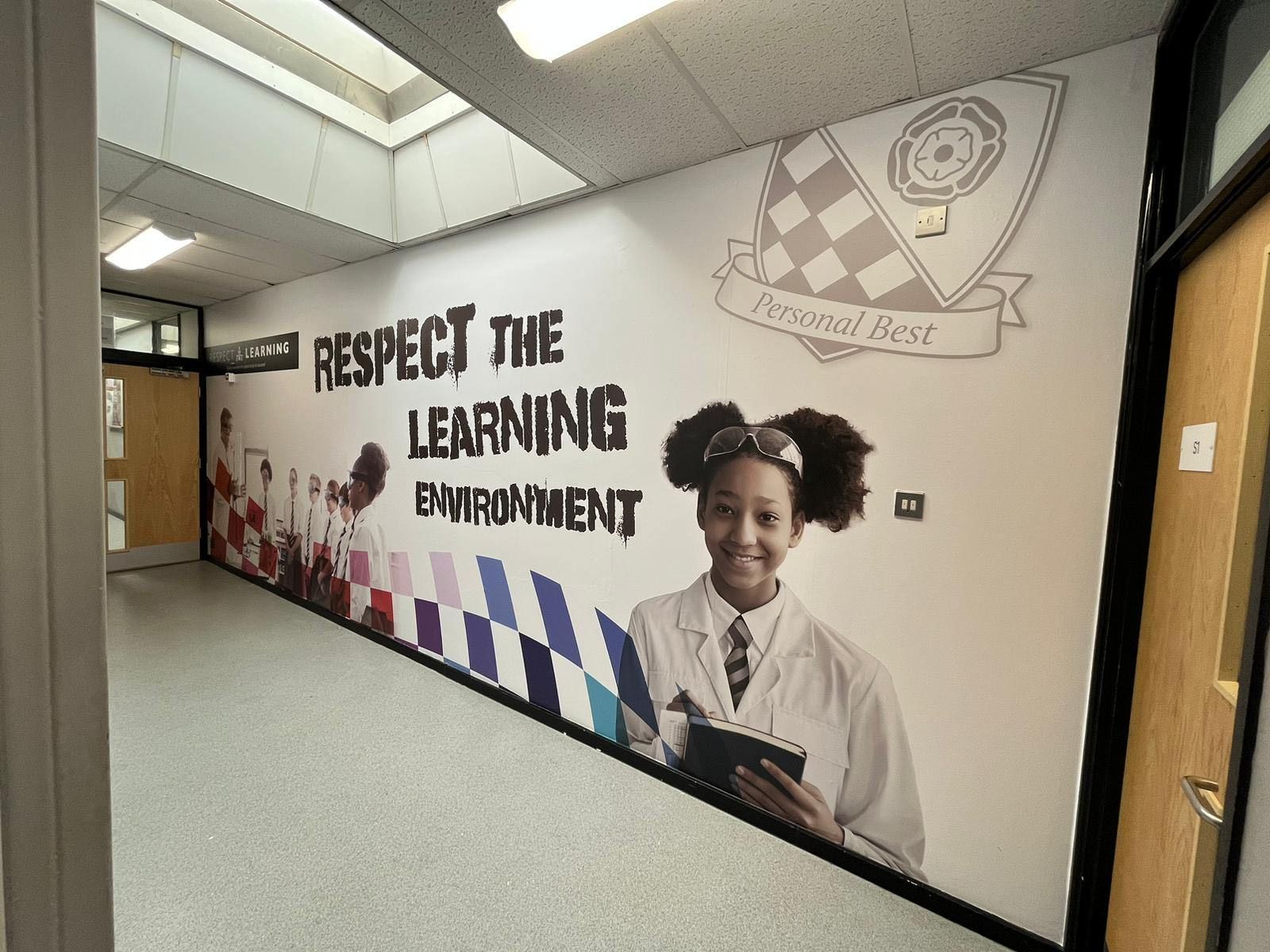
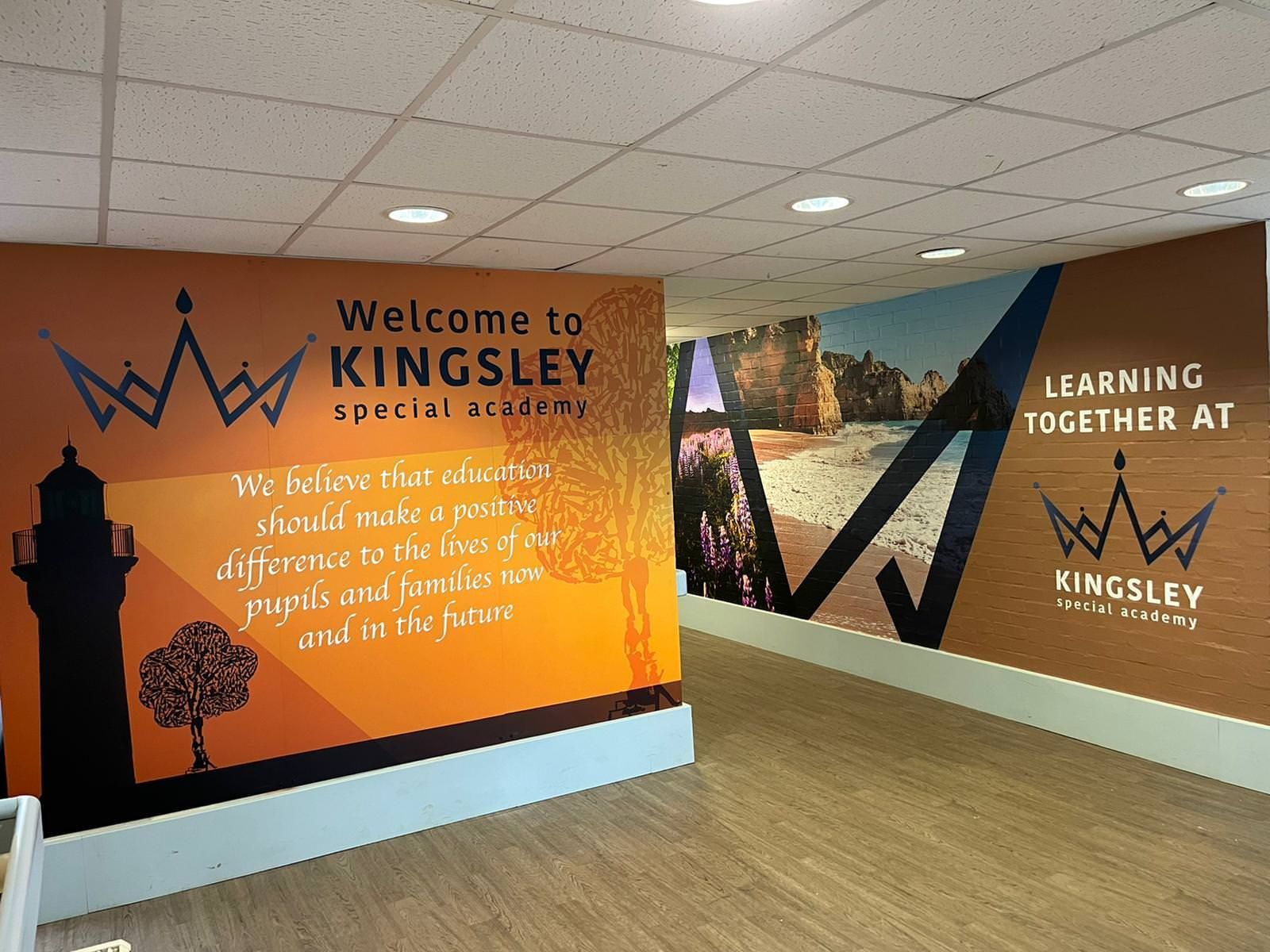
Schools with visually appealing environments demonstrate their dedication to creating an atmosphere that can attract both families and students.
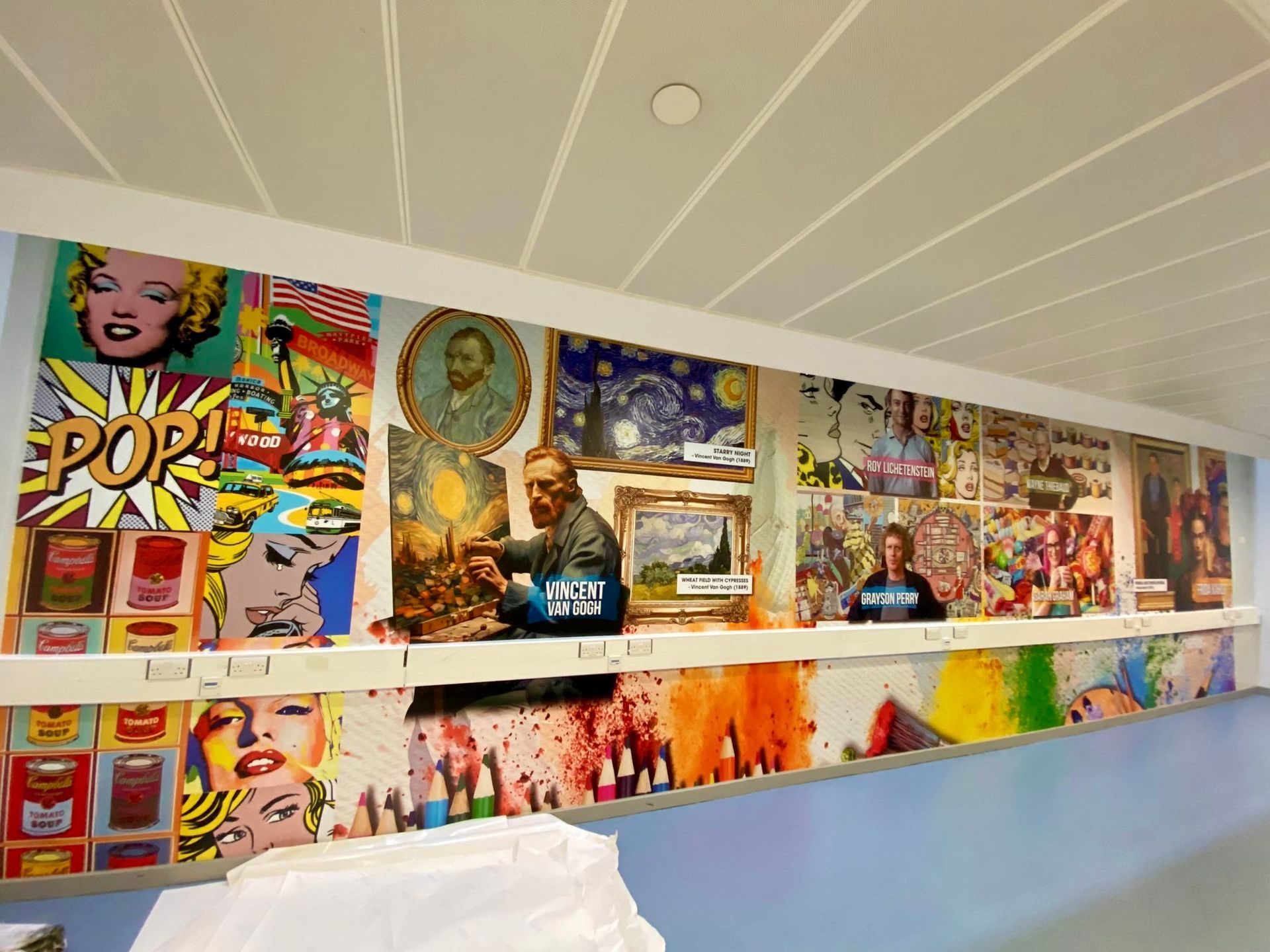
Enhancing Engagement and Excitement with Wall Graphics
Surroundings can significantly boost student engagement and excitement, highlighting a school's commitment to providing a lively and interactive learning space. This aspect can also play a role in drawing in families and students. Here are some tips on how to plan and introduce wall graphics that promote engagement and enthusiasm;
Critical Principles for Designing Engaging Wall Graphics
1. Dynamic Use of Colors;
- Colour Psychology: Opt for colours that inspire emotions and vitality, like calming blues and greens or vibrant yellows and oranges for creativity and excitement.
- Consistent Colour Scheme: Maintain a colour scheme that resonates with the school's branding and image.
2. Interactive Features;
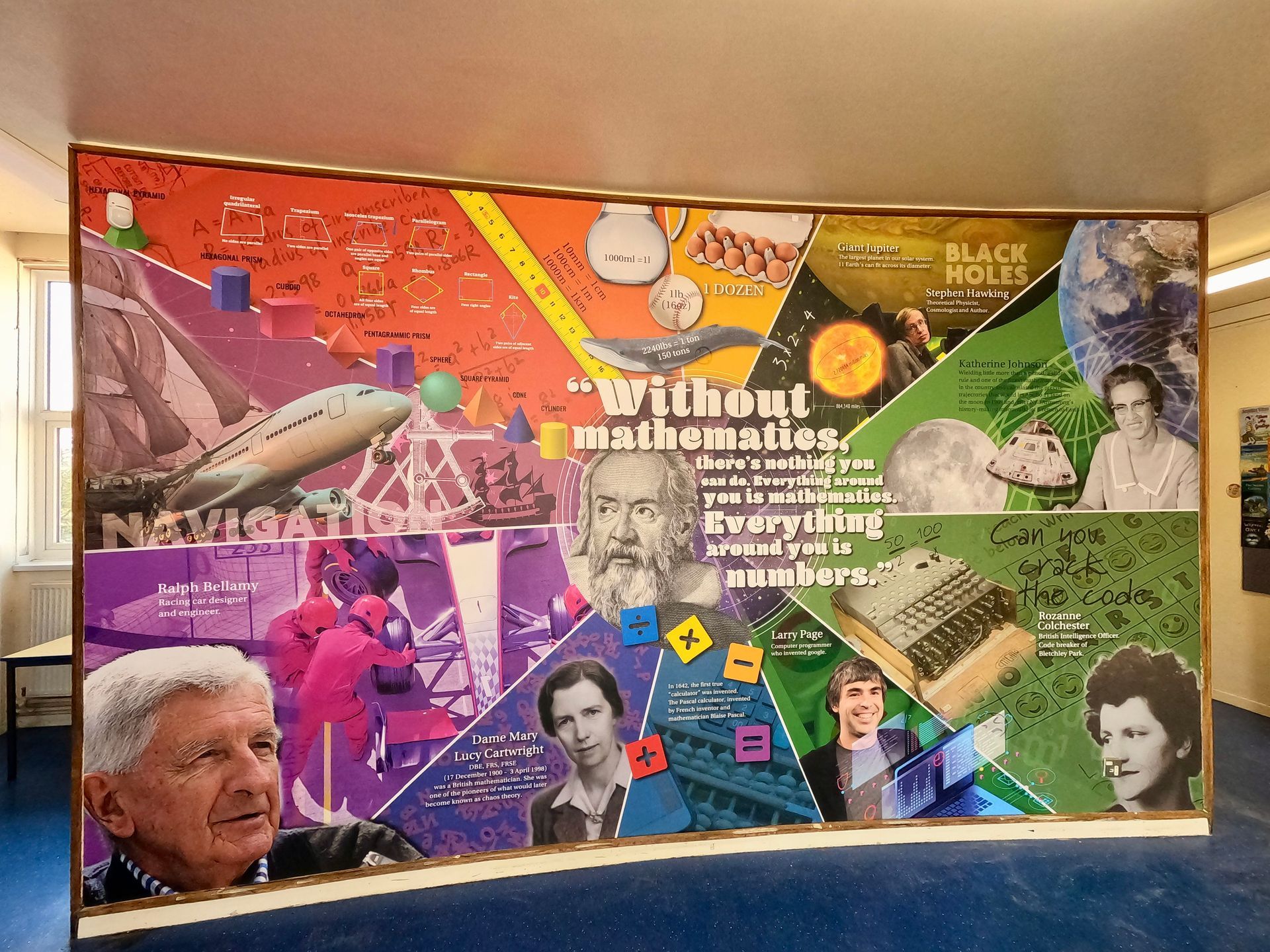
- Writable Surfaces: Integrate areas with erase or chalkboard surfaces where students can sketch, write, or share their thoughts.
- Augmented Reality (AR): Utilize AR markers that students can scan using devices to access materials such as videos or 3D models.
3. Thematic and Contextual Designs;
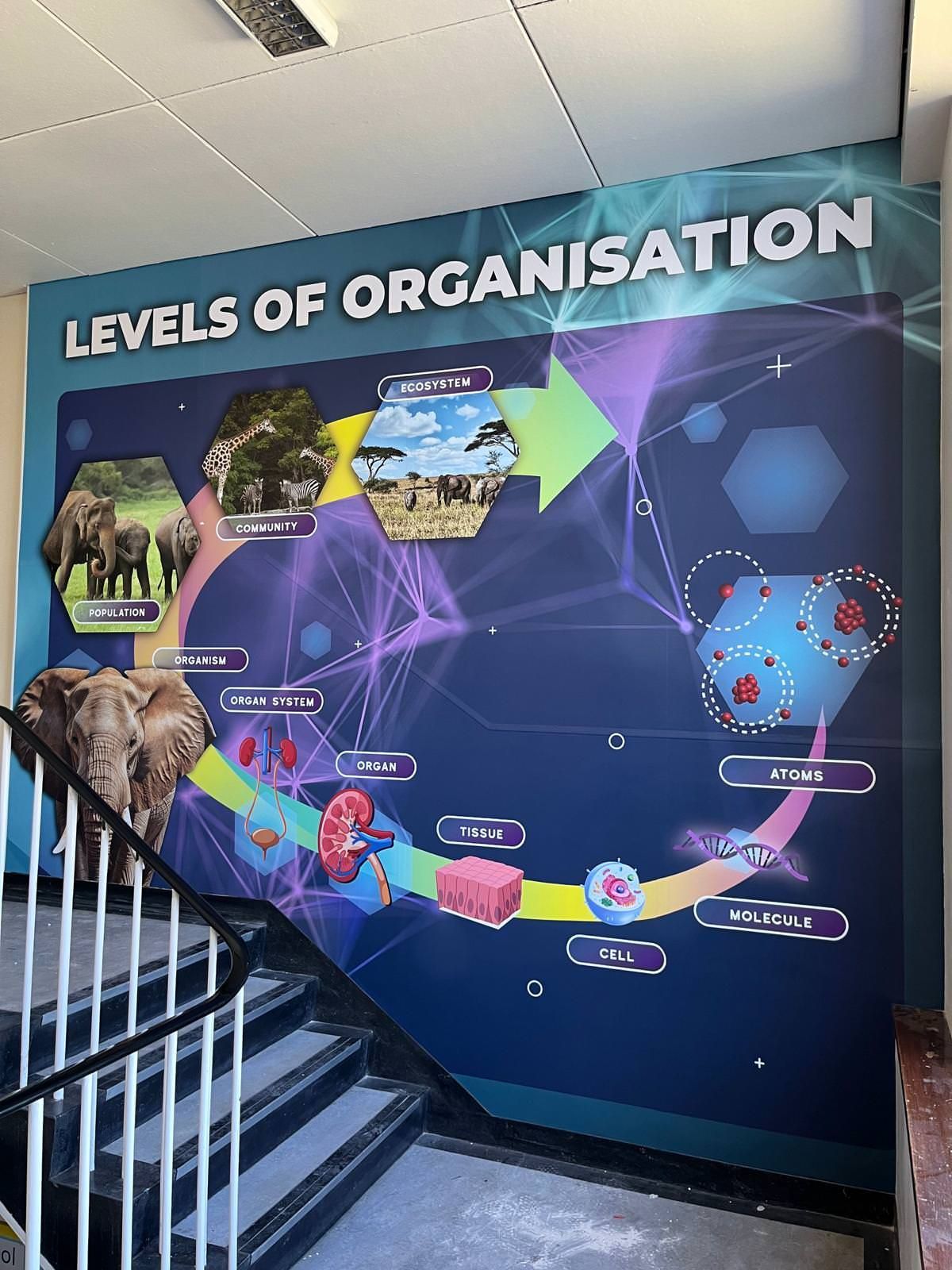
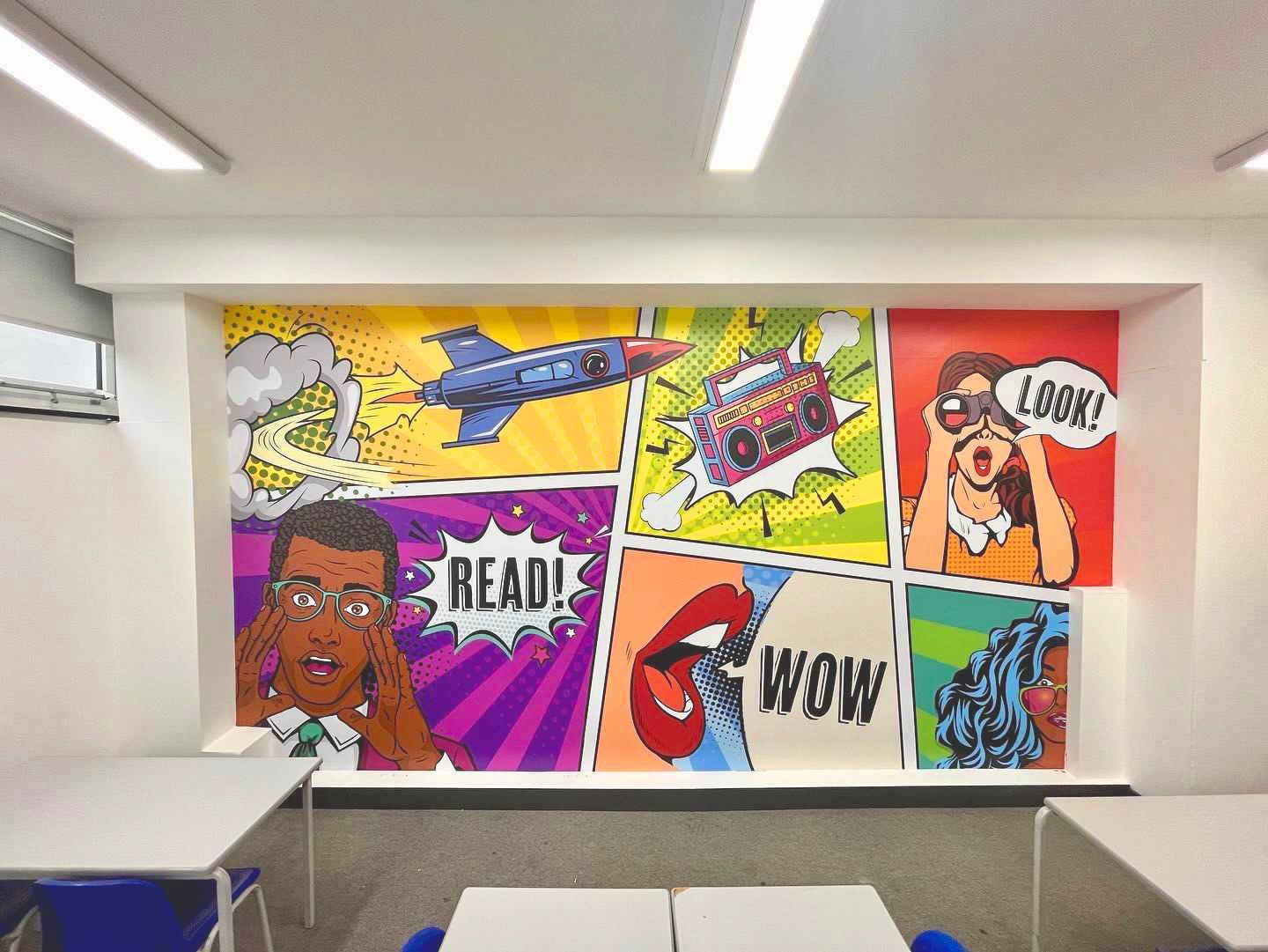
- Theme-Based Graphics: Create designs that correspond to the subjects taught in each area.
- For instance, illustrations can be utilised in science labs, excerpts can be used in language arts classrooms, and historical timelines can be used in history rooms.
- Cultural and Community Aspects: Integrate elements that mirror the culture and community to foster a sense of belonging.

Strategic Areas for Implementation
1. Entrance and Lobby Areas:
- Welcome Murals: Create large, eye-catching murals that include the school’s name, mascot, and welcoming messages in vibrant colours.
- Interactive Displays: Install digital screens that showcase student achievements, upcoming events, and dynamic content related to the school’s activities.
2. Hallways and Corridors:
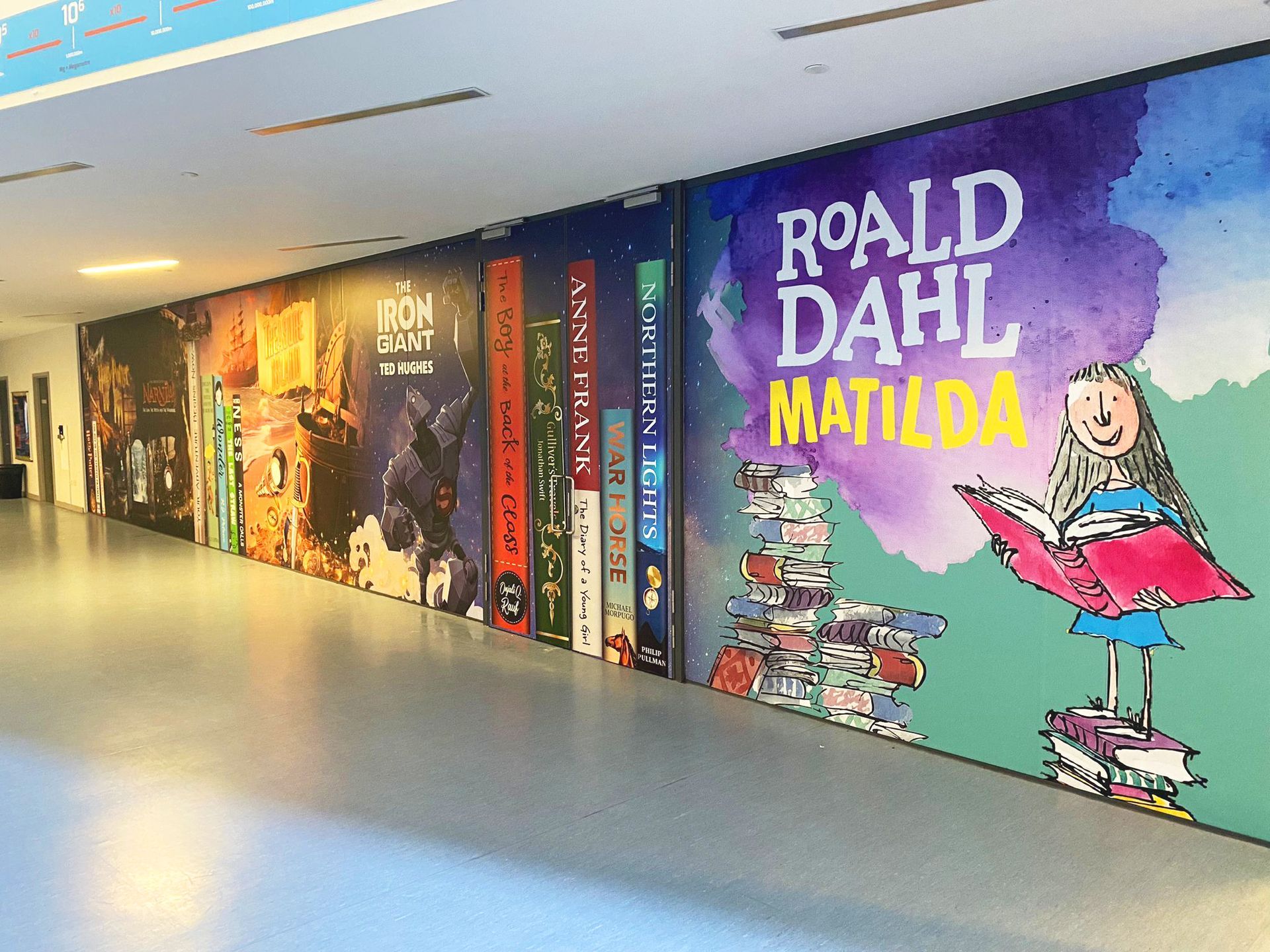
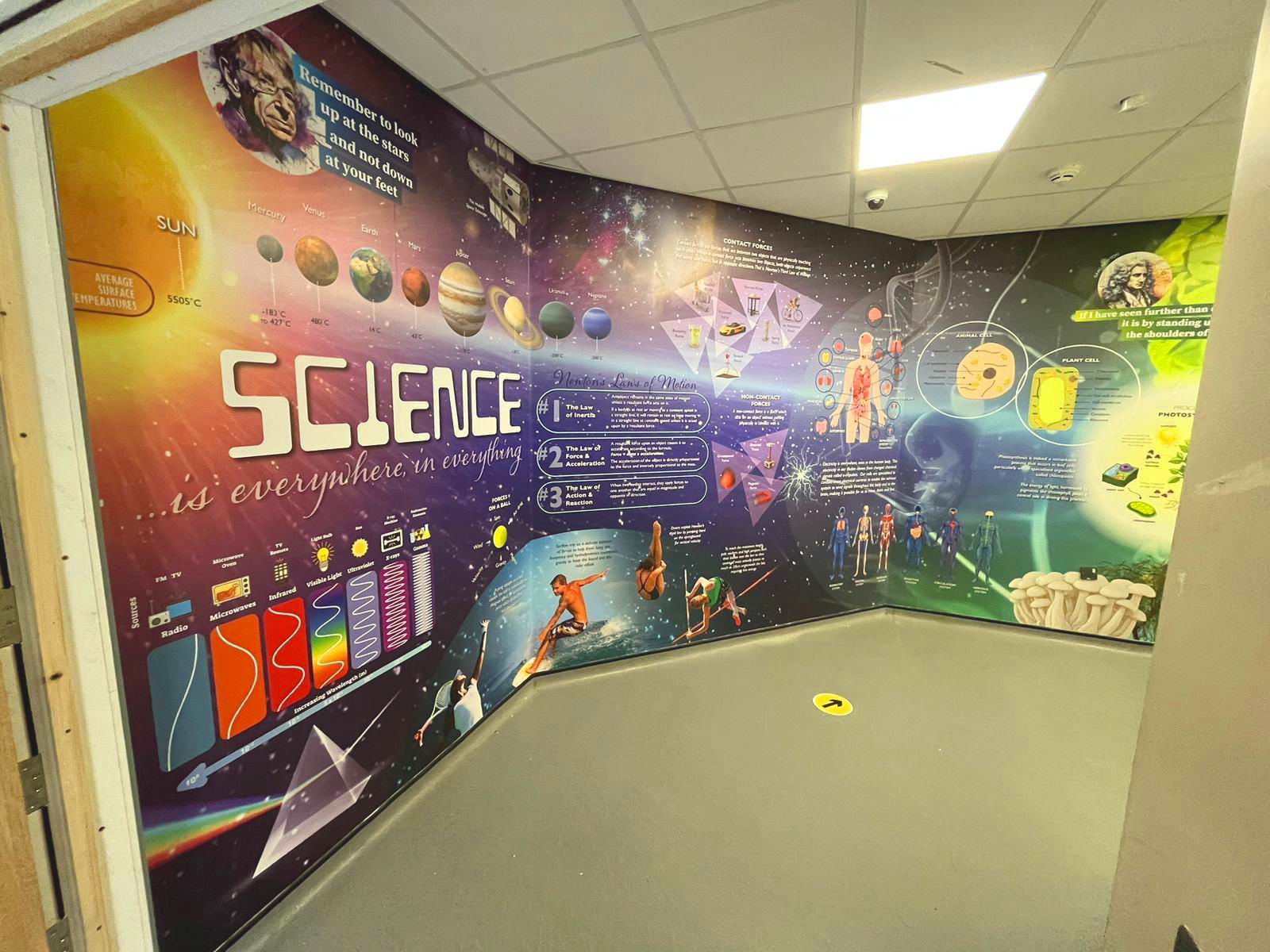
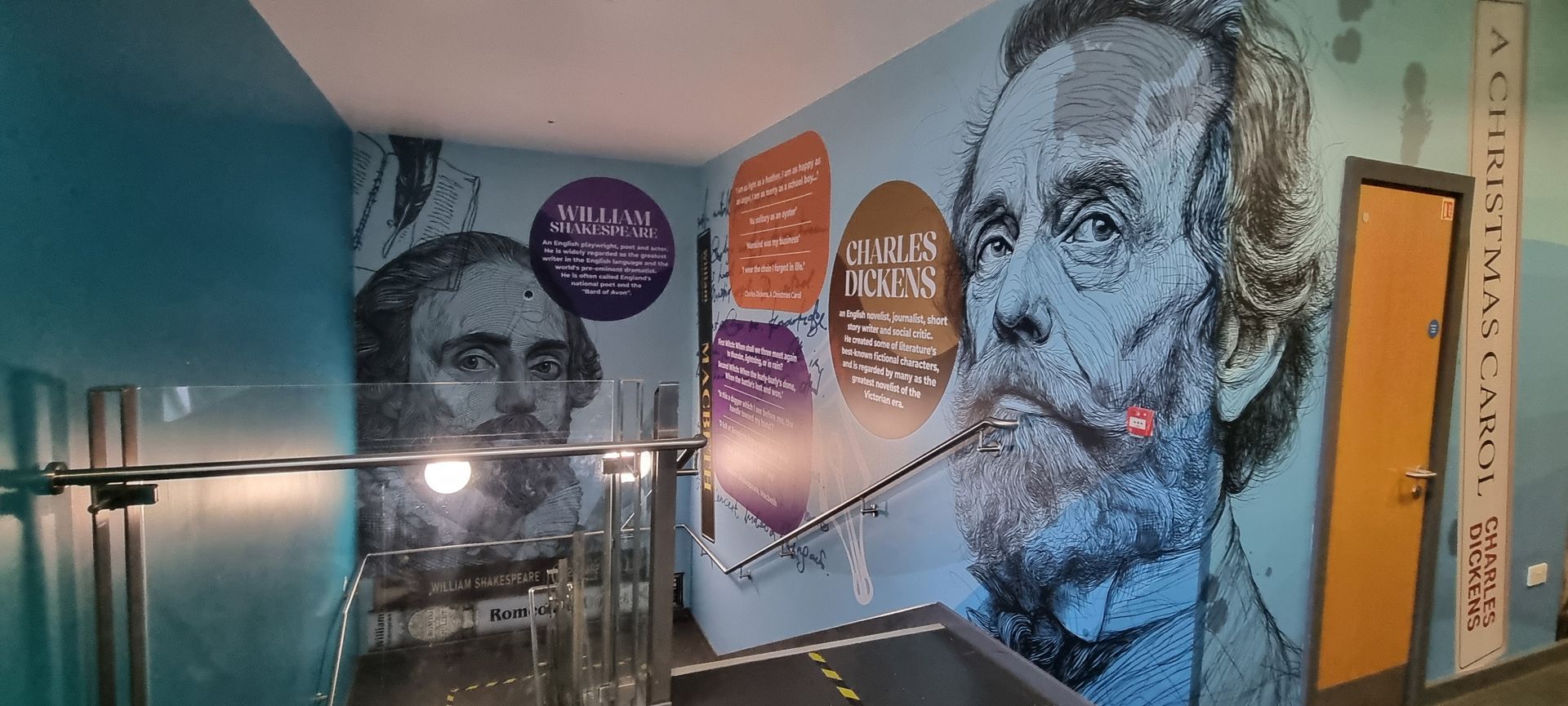
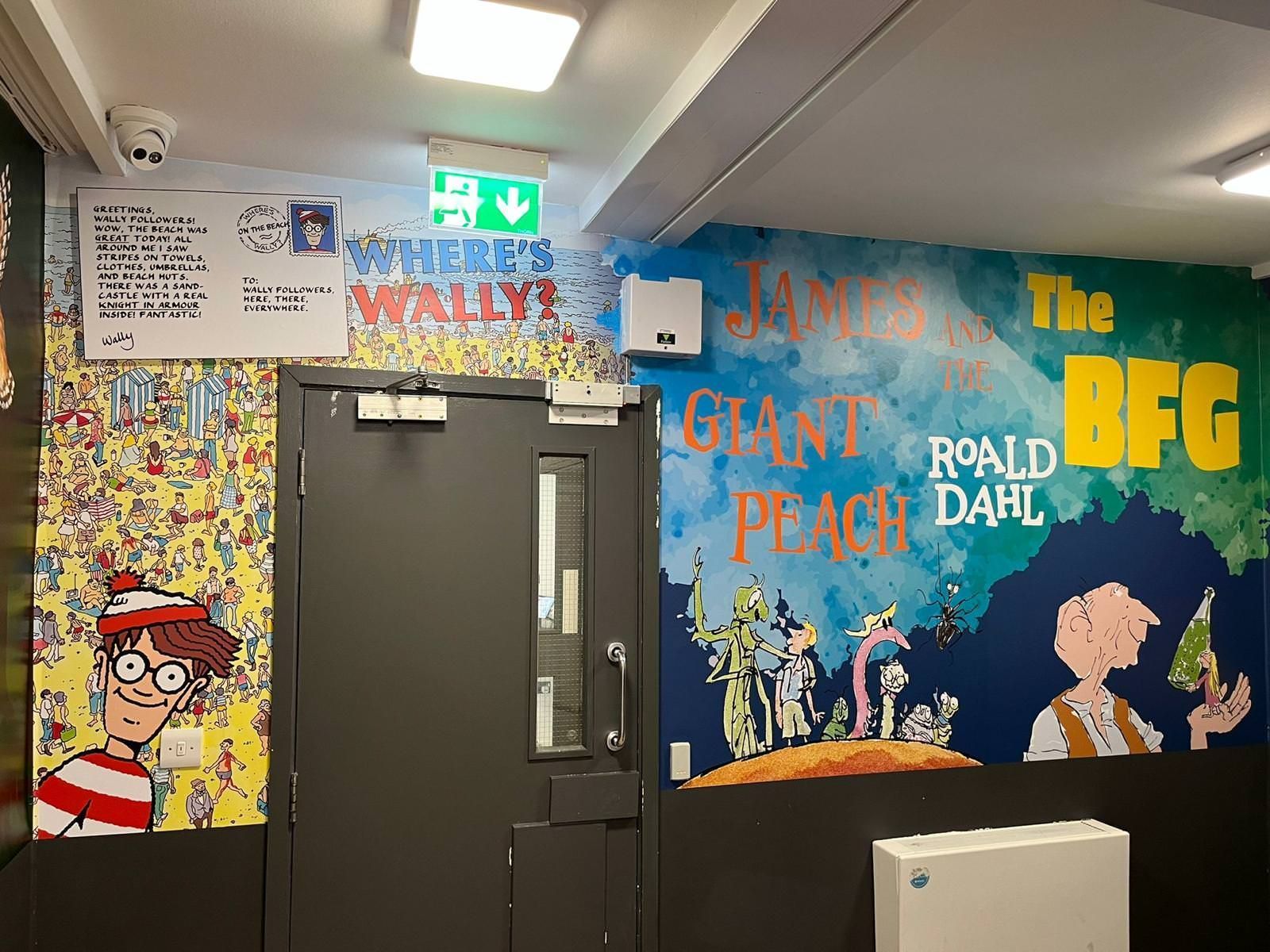
- Thematic Hallways: Design hallways with different themes, such as a “Hall of Science” with images of space, nature, and inventions or a “Literature Lane” with book covers and famous literary quotes.
- Inspirational Quotes: Include motivational quotes and affirmations in bold, colourful fonts to inspire students as they move between classes.
3. Classrooms and Learning Areas:
- Subject-Specific Graphics: Tailor graphics in each classroom to reflect the subject matter while incorporating interactive elements like writable walls and AR content.
- Flexible Learning Spaces: Design graphics that can be easily updated or changed to adapt to different teaching needs and learning activities.
4. Common Areas and Cafeterias:
- Vibrant Cafeteria Designs: Use bright, cheerful colours and playful graphics to create a positive and enjoyable dining experience.
- Student Work Displays: Dedicate walls to showcasing student artwork, projects, and achievements designed to align with the school’s branding.
Implementation Strategy
1. Collaborative Design Process:
- Involve Stakeholders: Engage students, teachers, staff, and parents in the design process to gather ideas and ensure the graphics meet the school community's needs and preferences.
- Professional Designers: Work with experienced graphic designers specialising in educational environments to create high-quality, impactful designs.
2. Material Selection:
- Durable and Sustainable: Choose high-quality, durable materials that can withstand the school environment. Opt for eco-friendly options to align with sustainable values.
- Safety Compliance: Ensure all materials used comply with safety standards and are non-toxic.
3. Professional Installation:
- Expert Installation: Use professional installers to ensure the graphics are applied smoothly and correctly, avoiding any issues with alignment or damage.
- Seamless Integration: Ensure the graphics seamlessly integrate with the school's architecture and decor.
4. Maintenance and Updates:
- Regular Maintenance: Schedule regular maintenance to keep the graphics fresh and vibrant.
- Periodic Updates: Plan for periodic updates to keep the content current and reflect new achievements and changes in the school’s identity.
Examples of Engaging Wall Graphics
1. Entrance Mural:
- Design: A large mural featuring the school’s logo, name, and motto is set against a backdrop representing the school’s community and values.
- Impact: Creates a solid first impression, welcoming visitors and reinforcing the school’s identity.
2. Interactive Science Wall:
- Design: A modern graphic featuring stylised images of space, molecules, and scientific instruments, combined with AR elements that students can interact with for more detailed information.
- Impact: Creating an engaging and immersive learning environment encourages curiosity and exploration.
3. Hallway Timeline:
- Design: A detailed timeline highlighting key events in the school’s history, including founding dates, significant achievements, and notable alums.
- Impact: Educates visitors and students about the school’s heritage and fosters a sense of pride and continuity.
4. Cafeteria Murals:
- Design: Vibrant, modern murals that promote healthy eating habits and showcase colourful, abstract representations of fruits, vegetables, and balanced meals.
- Impact: Creates a lively and enjoyable atmosphere that encourages positive behaviours and social interaction.
Final Thoughts
Schools can effectively communicate and reinforce their brand identity by strategically using custom wall graphics. These graphics not only enhance the school's visual appeal but also serve as a constant reminder of the school’s values, spirit, and educational philosophy. This approach fosters a strong sense of community, pride, and motivation among students, staff, and visitors.
Incorporating visually stimulating and interactive wall graphics in strategic locations throughout the school can create an engaging environment that showcases the school’s commitment to dynamic learning spaces. This improves current students' day-to-day experience and makes a strong impression on prospective families, highlighting the school’s dedication to providing a modern and progressive educational environment.