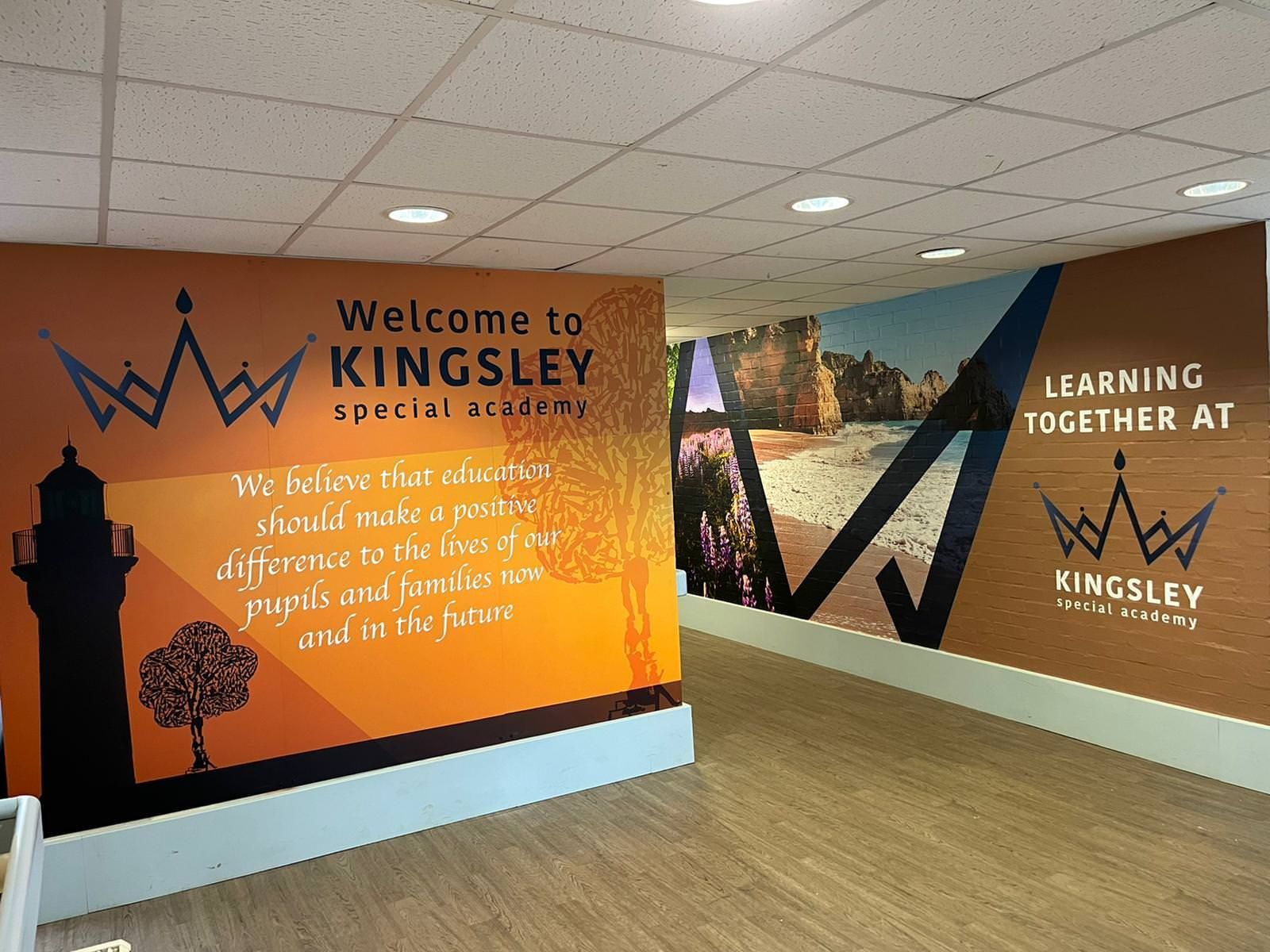
Why First Impressions Matter at Open Evening

An Open Evening is not just an event on the calendar.

It is a defining moment.

Before the results are discussed. Before the curriculum is explained. Before questions are asked.

Families are already forming an opinion.

And your environment is leading that conversation.

The Challenge: You Only Get One First Impression

When parents walk through your doors, they are looking for reassurance.

Is this school calm? Is it ambitious? Does it feel purposeful? Will my child belong here?

A blank wall is a mystery. An inconsistent board confuses. A wall that has not changed for months or years is an indicator that communication with the wall is not important.

But clear, intentional design builds confidence immediately.

Your space either reinforces your message — or distracts from it.
The Opportunity: Make Your Values Visible

  • Every school has a vision.
  • Respect. Kindness. Resilience. Excellence.
  • The question is not whether you have values.
  • It is whether visitors can see them.
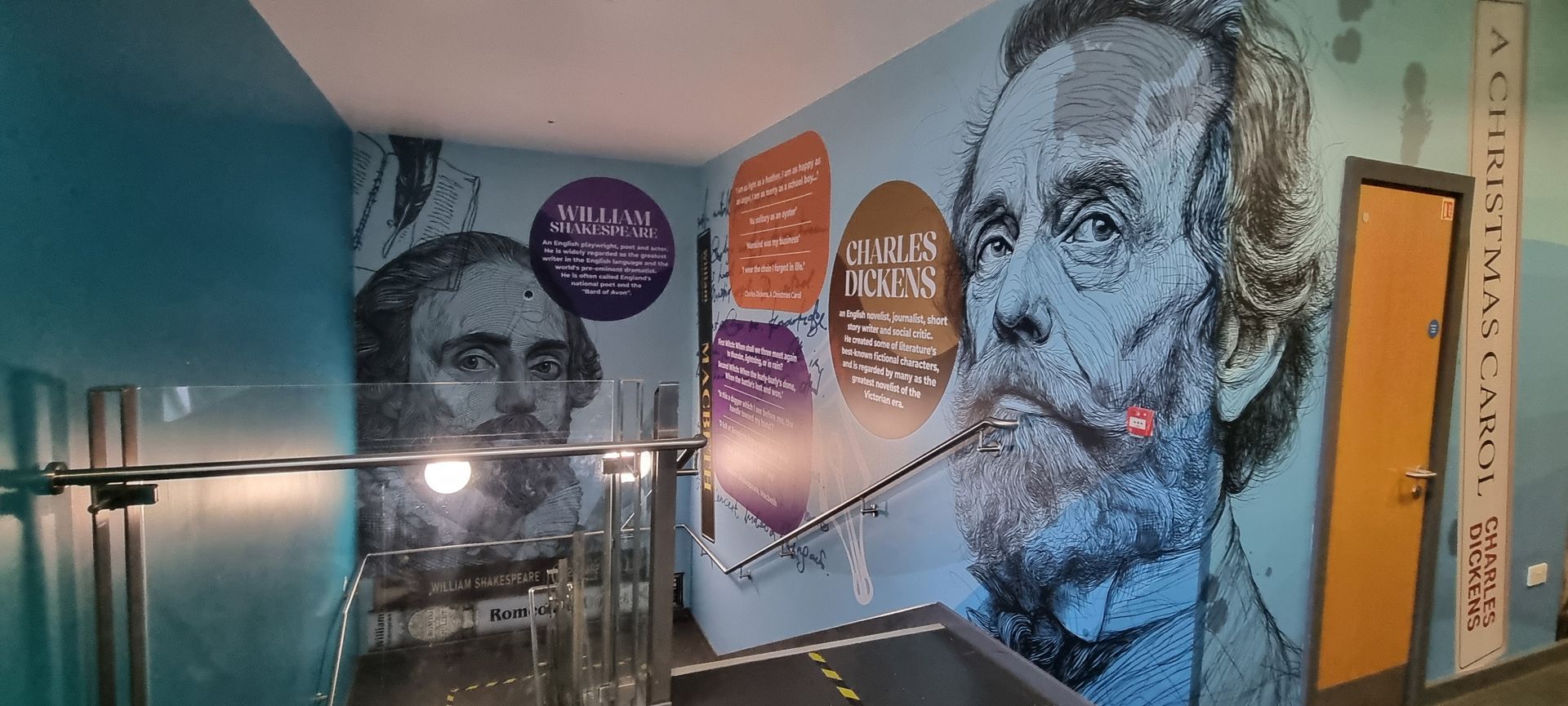
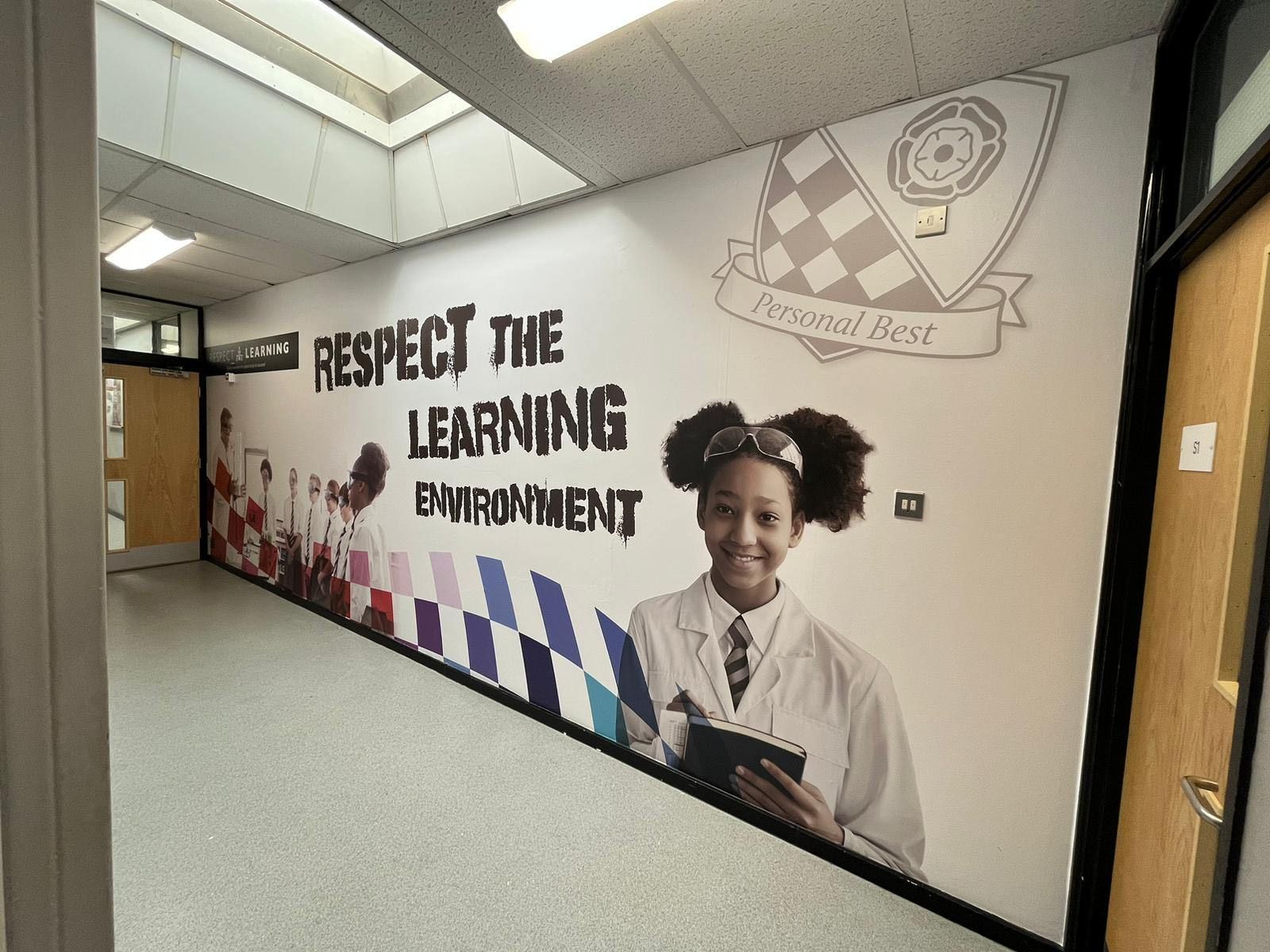
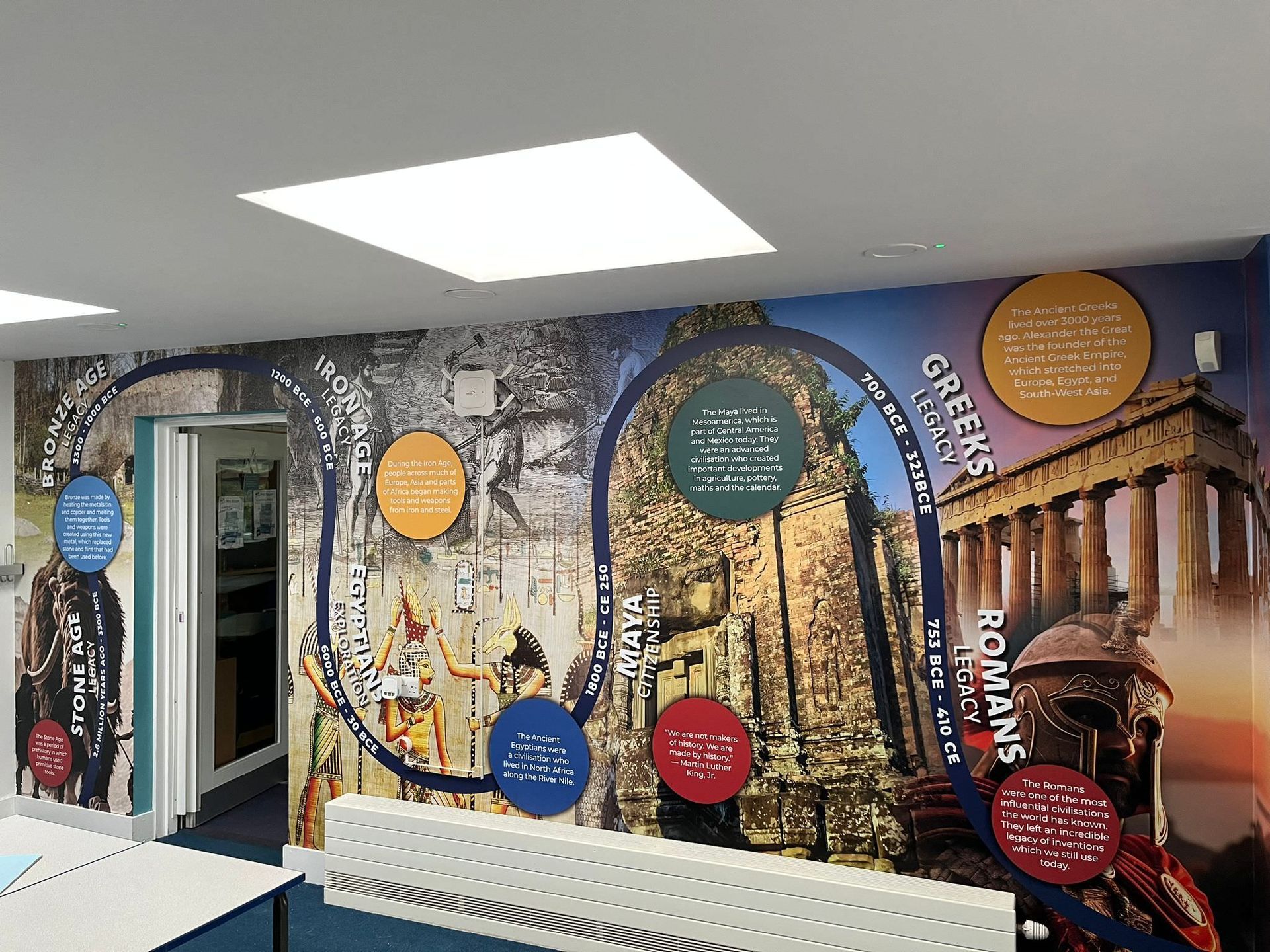
  • Values embedded in corridors, entrances, and common spaces make them tangible and meaningful rather than contained within a prospectus.
  • This alignment builds trust quickly.
  • For Headteachers, it is clear for Governors, there is direction for families, and there is care.


Corridors Are Not Empty Space

  • During Open Evening, tours move quickly.
  • Parents step into classrooms. They glance at books. They listen carefully.
  • But corridors are often where the strongest impressions are formed.
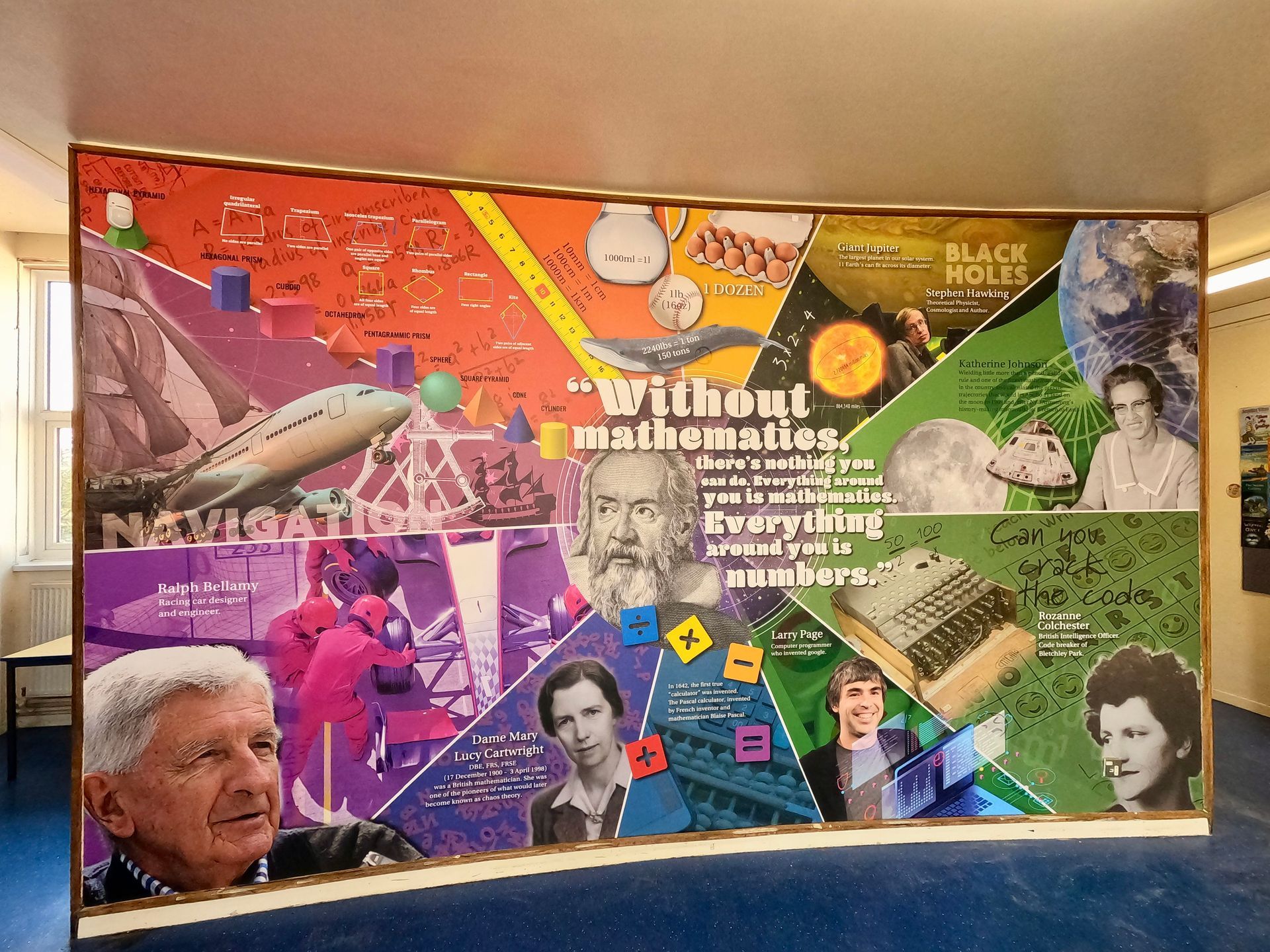
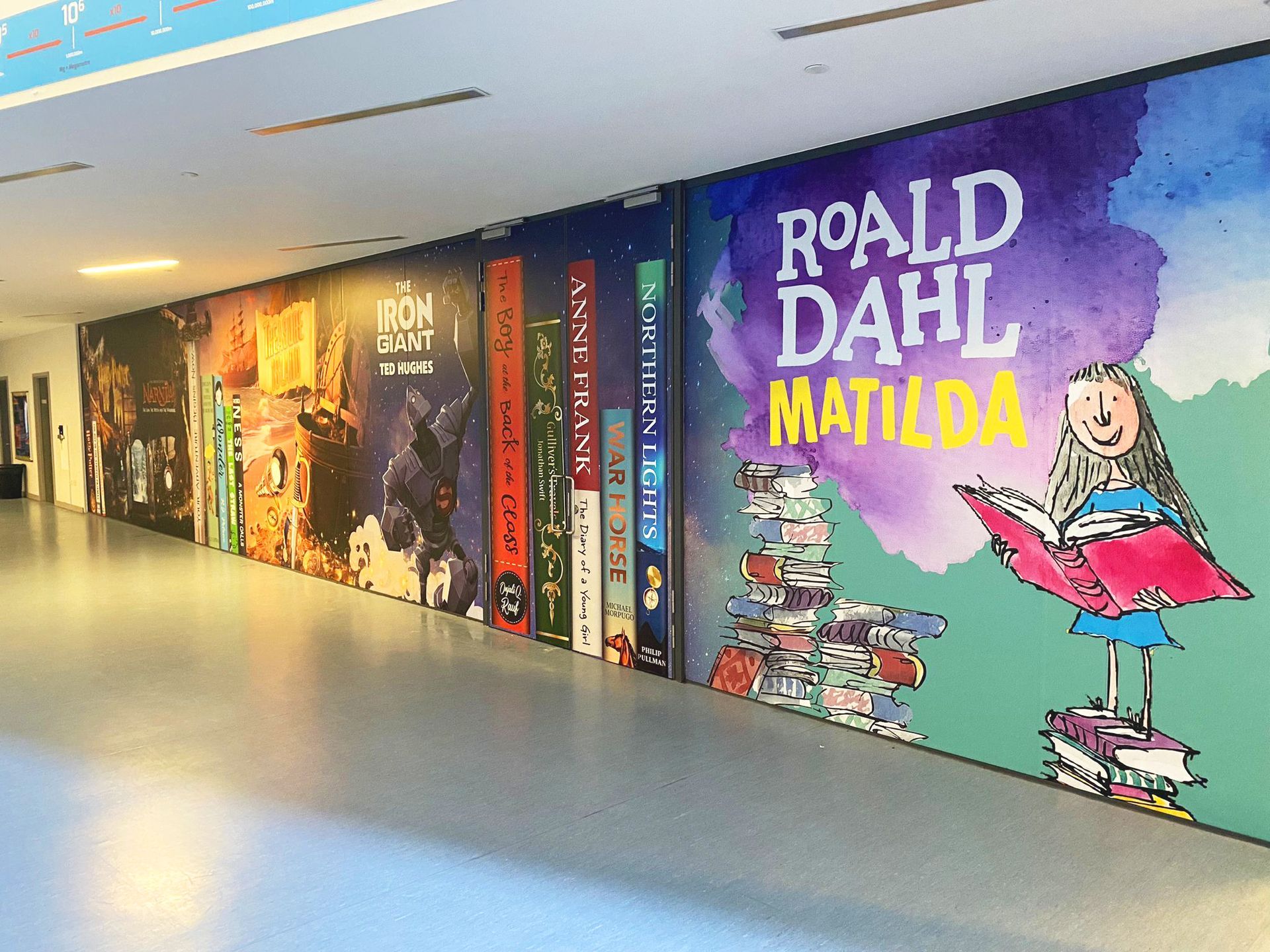
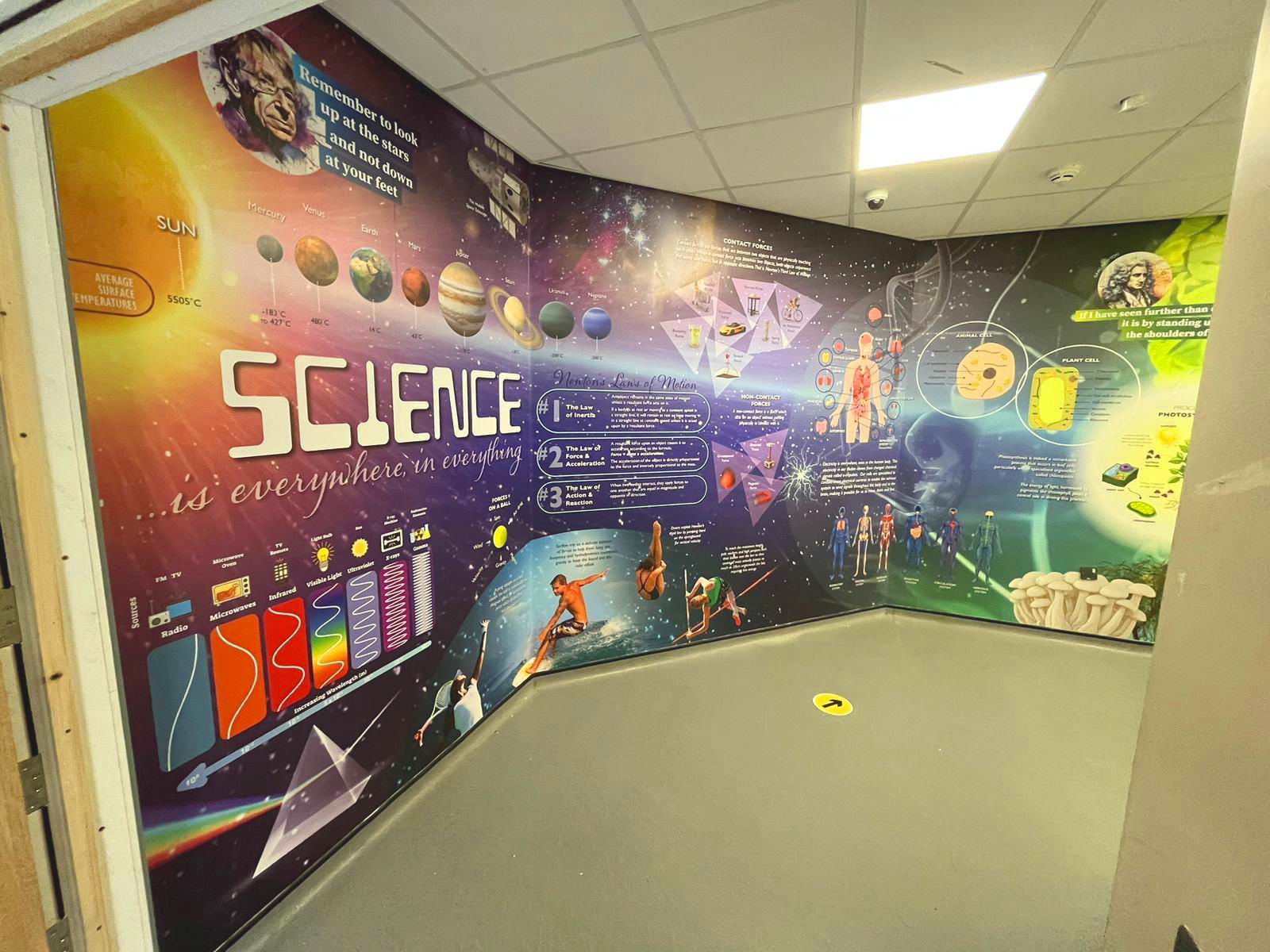
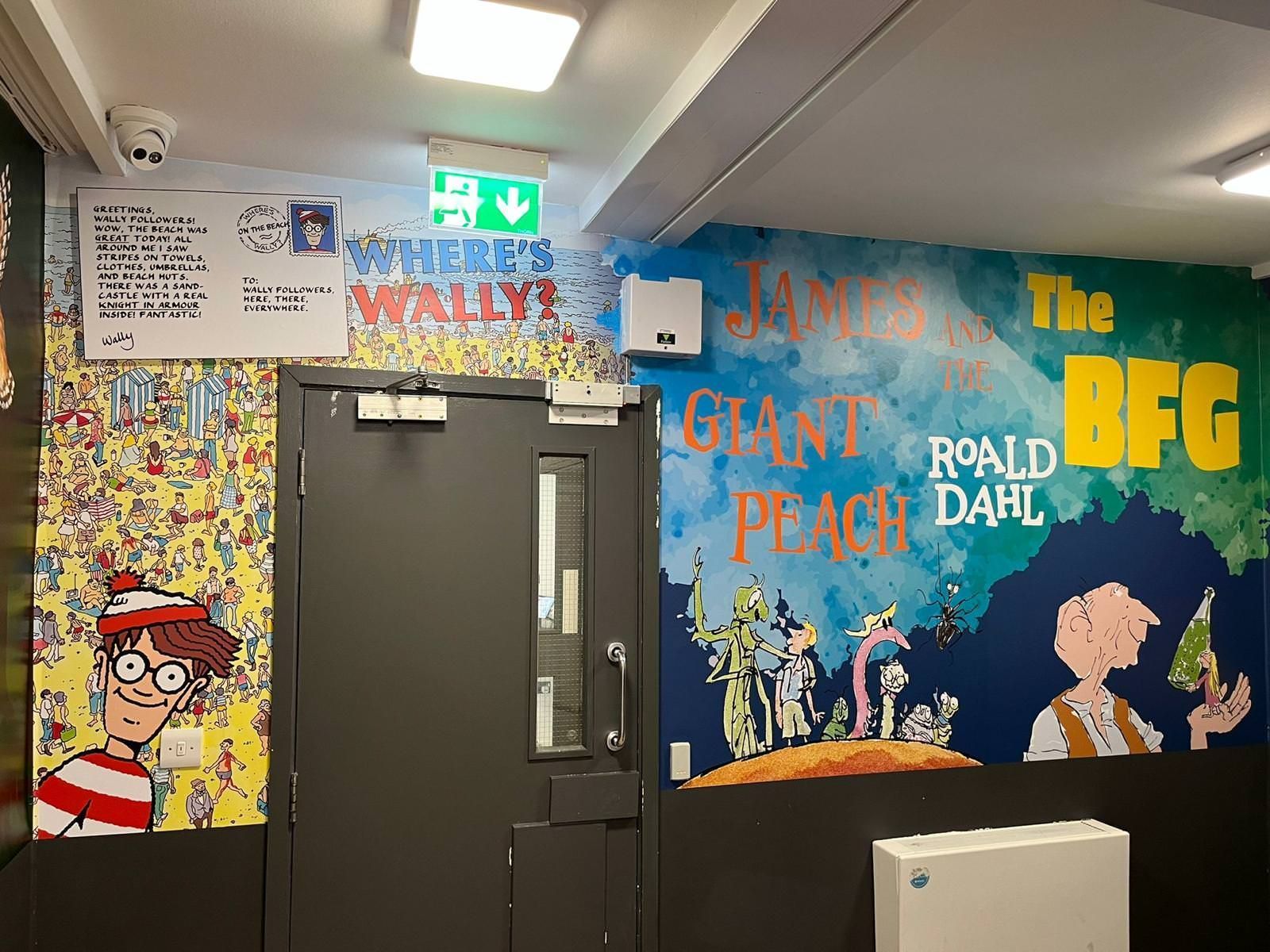
  • A curriculum timeline represents the depth of our curriculum, our reading wall shows our commitment to literacy, and our wellbeing zone highlights our strong pastoral programme.
  • These visual cues communicate leadership priorities without saying a word.
  • They demonstrate that learning happens everywhere.
For MAT Leaders: Consistency Builds Recognition

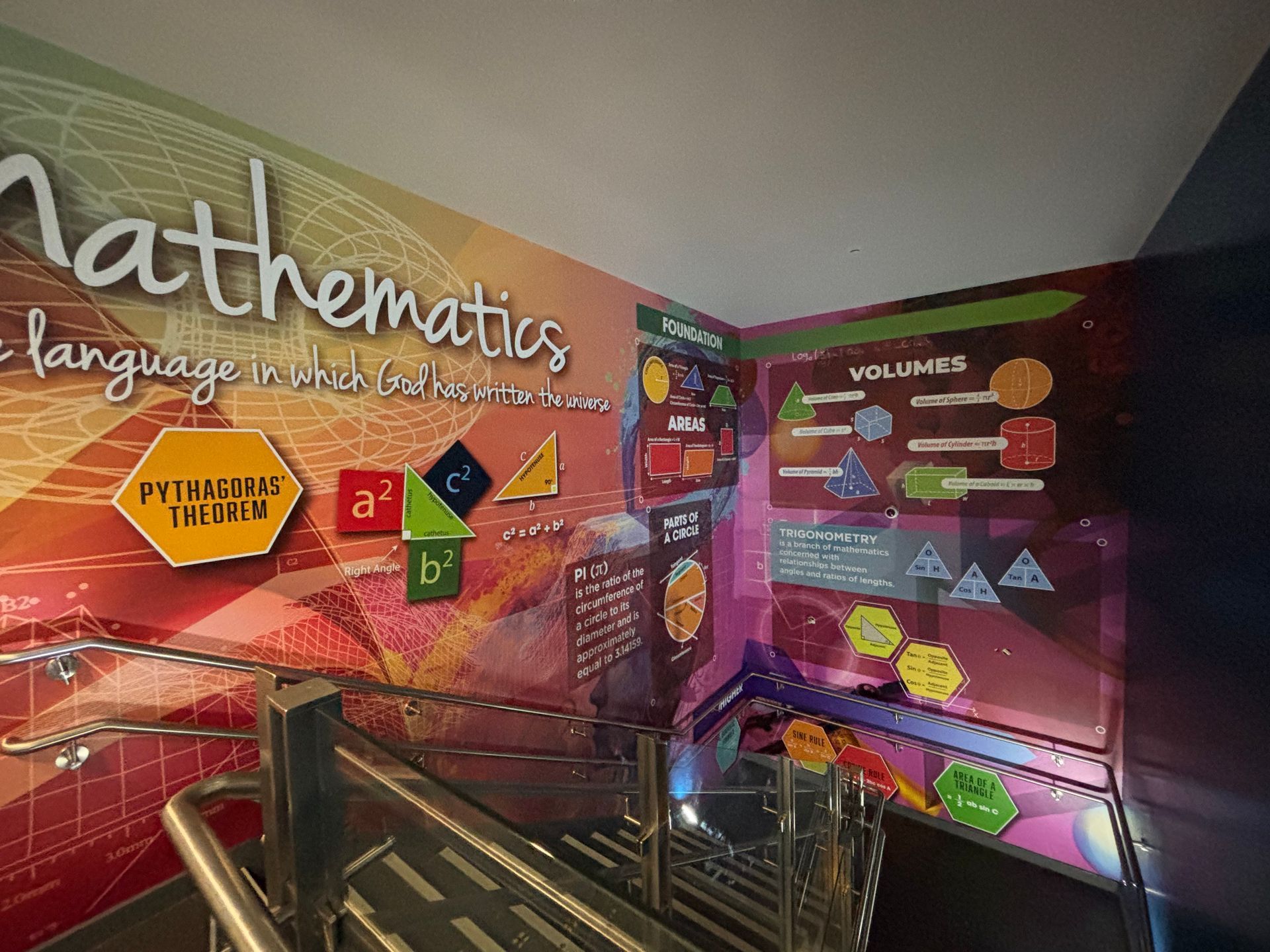
  • For Multi-Academy Trusts, the Open Evening is also a brand presentation.
  • When design is consistent across sites, families recognise structure and strength.
  • Shared colours. Aligned vision statements—consistent visual standards.
  • This does not remove individuality. It reinforces unity.
  • Strong visual identity supports trust-wide credibility and long-term growth.
  • It Is Not About Decoration
  • This is not about filling walls.
  • It is about clarity and purpose.


High-quality wall graphics can:

  • Recognising Achievement, Developing Independence and Increasing Cultural Capital through a positive rewards system: • Supporting Personal Development • Reinforcing Cultural Capital • Encouraging positive Behaviour and Attitudes • Increasing school pride
  • When your environment reflects your standards, expectations feel natural.
  • That confidence carries into every conversation on the night.
  • Long-Term Impact Beyond Open Evening
  • Open Evening may last two hours.
  • Your environment works every day.


  • The wallpaper, murals and display art are all created to the highest standard and are permanent. They can make a strong statement about your school's unique identity. They can support children in their learning and help staff members remember the school's aims and values. They will provide ongoing reassurance to parents, visitors, and the wider community throughout the years.
  • And with sustainable production and a tree planted for every project you do with us, the impact doesn't stop at your doorstep.
  • Your Open Evening Starts Months Before the Event


The strongest first impressions are intentional.

  • If you have an Open Evening coming up, we encourage you to take a step back and consider what your environment is communicating.
  • Are your walls telling the story you want families to hear?
  • Our work with schools and trusts is built upon the foundation of supporting the creation of lasting, visible tools that bring values to life.
  • We Create. You Educate. Together, We Inspire.


Conclusion: Your Environment Sets the Standard

Open Evening is not just about what you say.

It is about what your school shows.

The walls of your school must embody your commitment, care, and attention to detail as a teacher, an education leader, and a school community. Parents and families should sense it from the moment they step inside your doors. Your school environment should be a physical representation of the values, priorities and learning goals you hold for all students. Your walls should express your intent to position your school as a place where all learners will thrive and be proud of their experience.

First impressions are powerful.

Make yours intentional.


Call to Action

If you are planning your next Open Evening, this is a great opportunity to take a walk around and see what your environment is communicating to parents and students.

Are your values visible? Is your identity consistent? Does your space reflect the standard you set each day?

We would love to help you explore what is possible.

Get in Touch We'd love to hear from you! Start a conversation about your project and how we can help! First impressions last, and the right design can have a lasting impact on your customers and staff.

We Create. You Educate. Together, We Inspire. 🌳
By angel May 29, 2026
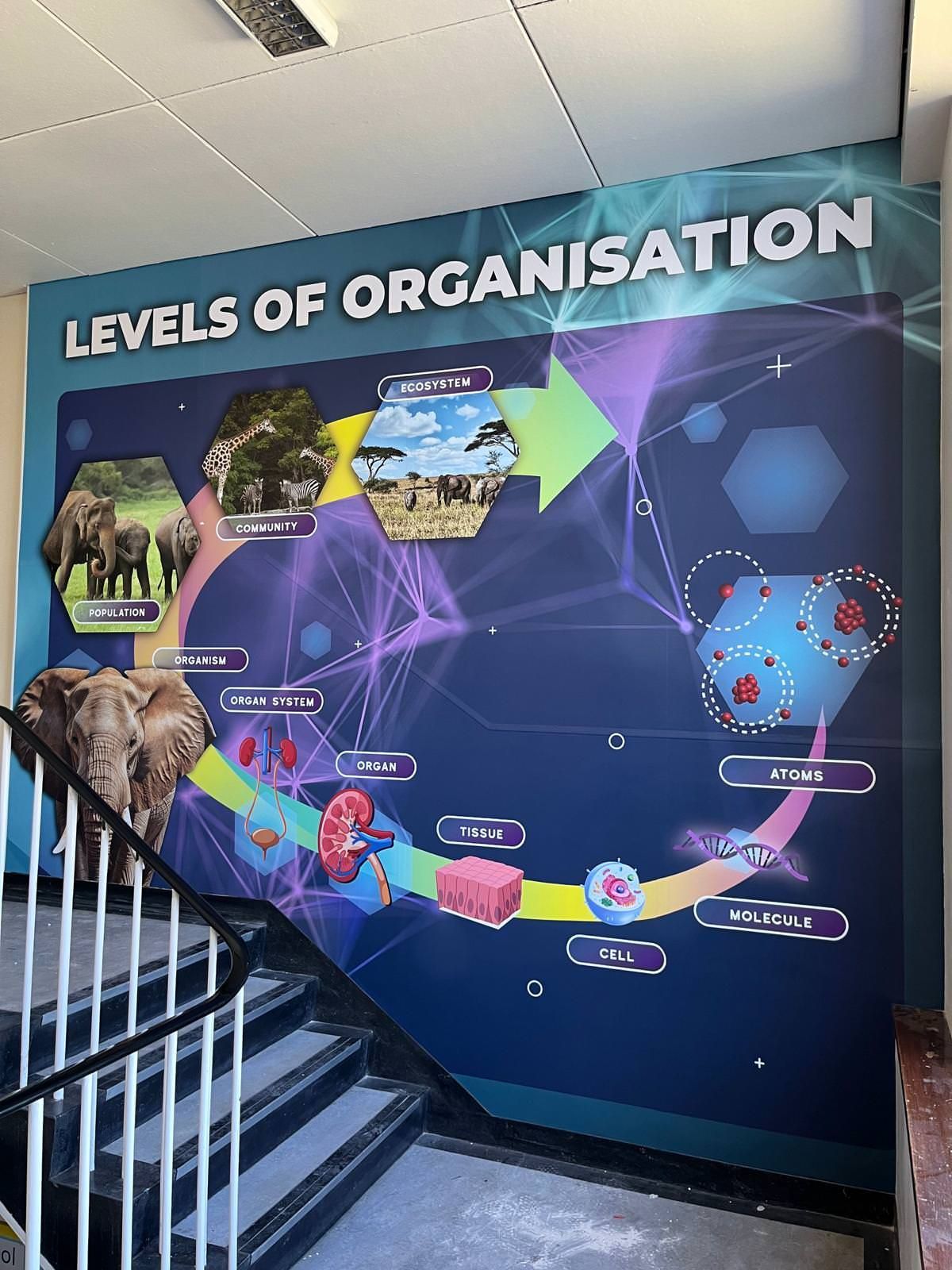
Walk through your school corridors during lesson time. It’s quiet. The doors are closed, and the heavy lifting of teaching is happening inside the classrooms. Or so it seems. But what about the walls around you? Those vast, often empty expanses of brick and plaster aren't just structural. They are constantly communicating. They are teaching, even when no one is speaking. In educational psychology, this is known as the ‘Silent Teacher.’ It is the idea that the physical environment: the colours, the displays, the signage, and the layout: shapes student behaviour and learning outcomes without a single word being uttered. At Cubed Creative , we’ve spent 21 years helping schools understand that their walls are their most underutilised educational asset. When you look at school wall graphics , you shouldn't just see decoration. You should see a pedagogical tool. The Psychology of the Learning Environment Your pupils spend roughly 15,000 hours in school across their academic journey. Most of that time is spent navigating the physical environment. The ‘Silent Teacher’ concept suggests that students are sponges for their surroundings. If a corridor is drab, grey, and cluttered with peeling posters, the message is one of low expectations and neglect. If that same corridor is vibrant, organized, and filled with bespoke wall art , it signals that the space: and the people in it: are valued. Reducing Cognitive Load There is a delicate balance to strike. Research into school behaviour and corridor design shows that while visual stimulation is vital, "visual noise" can be distracting. The key is intentionality. Purposeful visuals: Anchor charts, timelines, and key vocabulary support memory. Calming palettes: Blues and greens can help regulate energy levels during busy transition periods. Clarity: Clear, professional signage reduces anxiety by helping pupils feel oriented. Every graphic should "earn its place" on the wall. It must either inspire, inform, or guide. 
By angel May 15, 2026
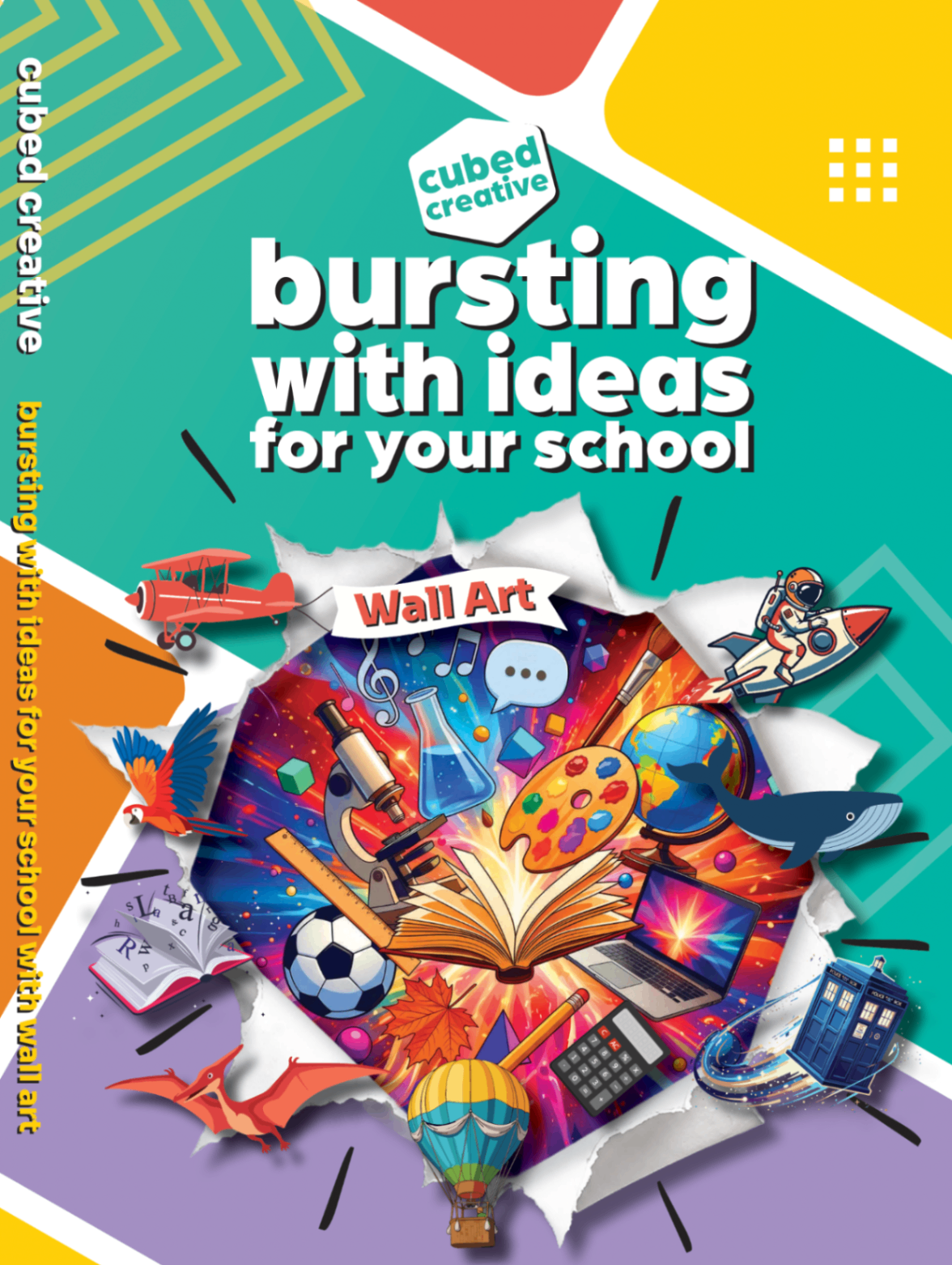
As we move through the middle of the school year, your thoughts are likely already drifting toward the summer holidays. Not just for the much-needed break, but for the opportunity it brings. When the corridors fall silent and the classrooms sit empty, your building finally has the chance to breathe. This is the window for the "September Reset" , that magical moment when students return to find their environment transformed, sparking a renewed sense of pride and curiosity. At Cubed Creative, we’ve spent the last few months working on something special to help you plan that transformation. We are thrilled to announce the launch of our brand new 2026 School Wall Art Brochure . It’s more than just a catalogue of past work; it’s the ultimate guide for a "September Reset" . It’s a toolkit for school leaders who want to move beyond tired noticeboards and plain magnolia walls. It’s packed with fresh inspiration, curriculum-linked designs, and the practical details you need to make a project happen during the summer break. Why Now? The Power of the September Reset The environment your pupils walk into on that first Tuesday in September sets the tone for the entire academic year. It’s a physical manifestation of your school’s expectations, its warmth, and its ambition. A "September Reset" isn’t just about making things look "pretty." It’s a strategic move to: Reinforce school values from the moment a child enters the gates. Reduce anxiety by creating calming, supportive spaces for wellbeing. Boost learning by turning "dead space" into passive learning zones. Improve behaviour through high-quality environments that show students they are valued. By planning your Summer wall art now, you ensure that all the heavy lifting: the design, the printing, and the installation: happens while the school is empty. You get the "wow factor" without any disruption to the school day. 21 Years of Creative Excellence When you’re looking for a partner to transform your school, experience matters. We’ve been working in the education sector for 21 years. Over those two decades, we’ve seen trends come and go, but our core mission has remained the same: to create environments that inspire. We understand the unique pressures of the UK education system. We know that budgets are tight, timelines are non-negotiable, and the materials used need to be "school-proof." Our 21 years of expertise mean we don’t just "put stickers on walls": we understand how to design for impact and install for longevity. What’s Inside the 2026 Brochure? The new brochure is designed to help you navigate the different ways wall art can support your School Improvement Plan. Here’s a sneak peek at the key areas we cover:
By angel April 17, 2026
You’ve seen it before. A beautiful, vibrant wall display that looked incredible on the day it was installed. Fast forward six months, and the edges are starting to curl. A year later, it’s peeling away at the corners, or the vibrant blues and reds have started to look a little tired and faded. In a busy school environment, "good enough" usually isn't. When you are looking to transform your school corridors, reception areas, or classrooms, it is easy to focus entirely on the design. After all, the design is what tells your story. It’s what inspires your pupils and impresses your visitors. But the material those designs are printed on? That is what determines whether your investment lasts for a decade or ends up in the bin before the next OFSTED inspection. At Cubed Creative , we’ve spent 21 years working inside schools. We know that a corridor isn't just a walkway; it’s a high-traffic zone where hundreds of blazers, backpacks, and wandering hands pass by every single hour. Choosing the right school wall graphics materials is the difference between a long-term asset and a short-term headache. The Science of the "Shrink": Monomeric vs. Polymeric Vinyl If you’ve been gathering quotes for school wall graphics , you might have noticed a significant range in pricing. Often, the "cheaper" quotes are using what we call Monomeric vinyl. To keep it simple: vinyl is made of plasticisers. In monomeric vinyl, these molecules are short and "unbound." Over time, especially when subjected to the fluctuating temperatures of a school building, these molecules migrate. The result? The vinyl literally shrinks. When vinyl shrinks on a wall, it pulls away from the edges. It leaves a sticky, unsightly residue that attracts dust and dirt. It looks poor, and more importantly, it becomes a target for inquisitive fingers to pick at. This is why we champion polymeric vinyl school graphics  Polymeric vinyl is engineered with longer molecular chains. It is far more stable. It doesn't shrink, it doesn't curl, and it stays exactly where we put it. It’s the gold standard for long-lasting school wall displays . When we talk about durability, we aren't just talking about the print staying bright; we’re talking about the material staying bonded to the wall.
By Gary Boad April 6, 2026
The morning rush. You know the one. It is a whirlwind of lost shoes, half-eaten toast, and the ticking clock. Then comes the final hurdle: the school gate.
By angel March 20, 2026
We’ve all been there. It’s 4:00 PM on a Tuesday, you’re armed with a staple gun that’s seen better days, and you’re staring at a vast expanse of blue sugar paper that refuses to stay flat. You want your classroom to be an inspiring hub of learning, but by the time the final border is pinned, it looks more like a chaotic explosion in a stationery shop. At Cubed Creative, we’ve spent the last 21 years helping schools transform their environments. We’ve seen the good, the bad, and the "why is that poster from 1994 still there?" The truth is, your walls are more than just partitions between rooms. They are silent teachers. When used correctly, school wall graphics can boost engagement and reinforce key concepts. When used poorly, they become a distracting mess that hinders focus. Here are the seven most common mistakes schools make with classroom wall displays, and, more importantly, how you can fix them. 1. The "Everything but the Kitchen Sink" Approach There is a common misconception that a "good" classroom is a covered classroom. We feel the urge to fill every square inch of brickwork with posters, bunting, and student work.  The Mistake: Visual overload. Research suggests that heavily decorated classrooms can actually decrease student performance. When every wall is screaming for attention, the brain struggles to filter out the noise. This leads to cognitive overload, particularly for pupils with SEND or sensory processing sensitivities. The Fix: Aim for the 20% rule. Keep at least 20% of your wall space clear. This "white space" gives the eyes a place to rest and allows the important displays to actually stand out. Think quality, not quantity.
By Gary Boad February 21, 2026
Step into any hallway at school. Something sits there before any text shows up at all. Quiet. A spark of drive. Heat in your steps. Yet at times, everything feels too heavy to carry A flash of colour stirs something deep, almost right away. Inside classrooms, that instinctual reaction holds weight - greater than many allow themselves to see. What keeps people okay isn't only rules or school counsellors. It shows up in each part of the daily world that kids navigate.
By angel February 13, 2026
A school hallway might hold paintings, award posters, and a time chart. Imagine stepping inside a quiet hallway. What happens if young learners find themselves wandering past moments from long ago? Every day, history timeline walls quietly spark interest. They transform ordinary rooms into moments where people pause, talk, and wonder. Curiosity grows without fanfare. Culture comes alive through simple displays. Conversations start where none were expected.
By angel February 7, 2026
Before a single word is spoken, a school has already started talking. From the moment someone steps through the doors, the environment sends signals. Calm or cluttered. Confident or uncertain. Purposeful or forgotten. These first impressions shape how visitors feel — and how much trust they place in the school.
More Posts

Back to home